

How Suction Excavation Is Redefining Safety in Saudi Road Projects
Introduction — Why Road Excavation in Saudi Arabia Is High-Risk
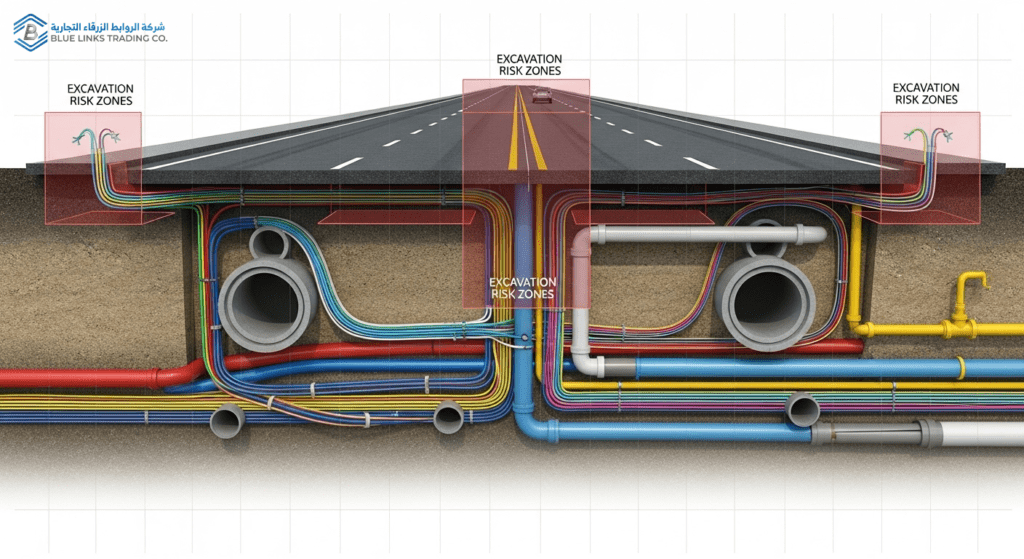
In Saudi Arabia, road construction is rarely just asphalt, curbs, and traffic management. Beneath most urban corridors, contractors work above a dense and often evolving network of power cables, fiber optics, water lines, sewer connections, and municipal chambers. When timelines are tight and the site is active, a single excavation mistake can escalate into service outages, safety incidents, rework, and reputational damage—sometimes within minutes.
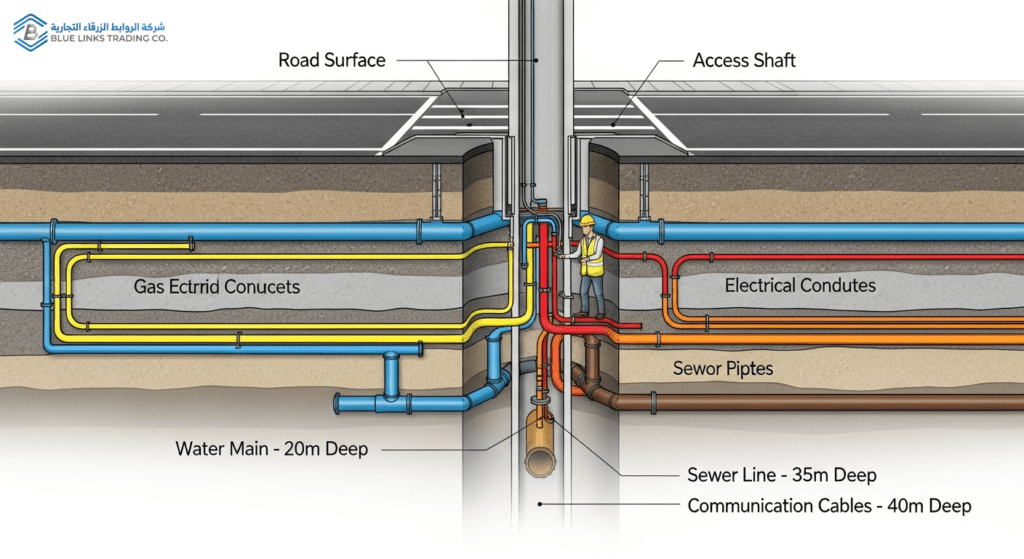
This is exactly why Suction excavation in road projects is gaining attention as an execution method, not a theoretical “safer option.” In live road environments, the biggest risk is not the soil—it is what the bucket cannot see. Once excavation becomes blind, the probability of striking critical utilities increases, especially near intersections, medians, sidewalks, bridge approaches, and areas with repeated utility upgrades.
Saudi infrastructure programs are also pushing for higher reliability, stronger governance, and predictable delivery outcomes aligned with national development priorities. Within that context, the shift toward safer field execution methods supports broader objectives associated with Saudi Vision 2030—where infrastructure performance, safety, and continuity are treated as measurable outcomes, not assumptions.
At the project level, roadworks face a clear operational contradiction: teams must excavate quickly, yet they must also protect underground assets with near-surgical precision. That contradiction is where suction excavation becomes practical—because it replaces mechanical force with controlled soil removal. When integrated with a disciplined excavation risk management approach, it reduces uncertainty around exposed services and lowers the impact of unexpected underground conditions.
For contractors working under Saudi road regulations and stakeholder oversight, the goal is not only to “finish the trench.” The goal is to finish without striking utilities, without widening the cut, and without turning a targeted repair into a full lane closure. This is the operational lens through which Suction excavation in road projects must be evaluated in the Saudi road sector—by risk exposure, field control, and continuity of surrounding services.
The Core Problem in Road & Infrastructure Projects
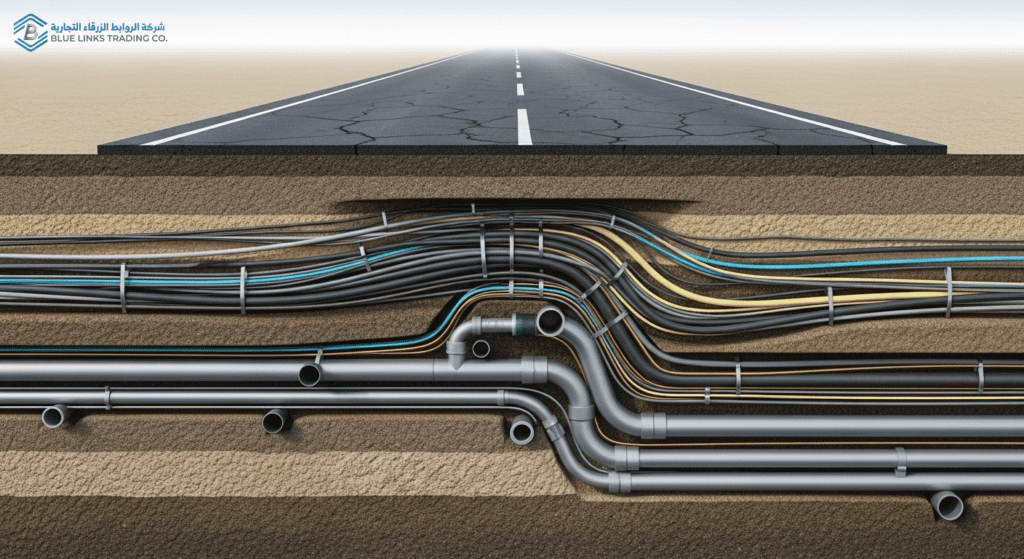
Traditional excavation methods were designed for open ground, not for modern Saudi road corridors layered with live utilities. Mechanical digging tools operate on force and speed, which becomes a liability when excavation takes place above undocumented or partially mapped services. In many urban road projects, drawings do not fully reflect years of utility expansions, emergency repairs, or third-party installations.
The most common failure point occurs when excavation reaches shallow depths where power and telecom lines intersect with water and drainage networks. A single strike can disrupt multiple services at once—electricity, data connectivity, and municipal operations—turning a routine road task into a multi-agency incident. These risks are magnified in projects involving night works, phased traffic diversions, or accelerated delivery schedules.
Another challenge is soil instability around exposed utilities. Mechanical buckets often loosen surrounding material beyond the target zone, increasing the risk of settlement beneath pavements and sidewalks. Over time, this leads to surface deformation, premature asphalt failure, and costly corrective works. For road authorities and contractors alike, such outcomes undermine asset lifespan and maintenance planning.
In response, project teams increasingly reassess how excavation risk is managed at the execution level. This shift mirrors practices already adopted in other sensitive sectors, such as non-destructive excavation in Saudi airports, where precision and operational continuity are non-negotiable. The same logic applies to roads carrying daily traffic loads and public services.
Within this context, Suction excavation in road projects addresses a core limitation of traditional methods: lack of control. By removing soil gradually and selectively, suction systems allow engineers to expose utilities without disturbing adjacent layers. This capability is particularly valuable when roadworks intersect with high-voltage cables, fiber networks, or aging water infrastructure that cannot tolerate vibration or impact.
Saudi road projects are therefore not challenged by excavation itself, but by uncertainty beneath the surface. Reducing that uncertainty is the first step toward safer, more predictable execution—and it sets the foundation for adopting non-mechanical excavation techniques as part of standard road construction practice.
Why Suction Excavation Is the Safest Operational Alternative
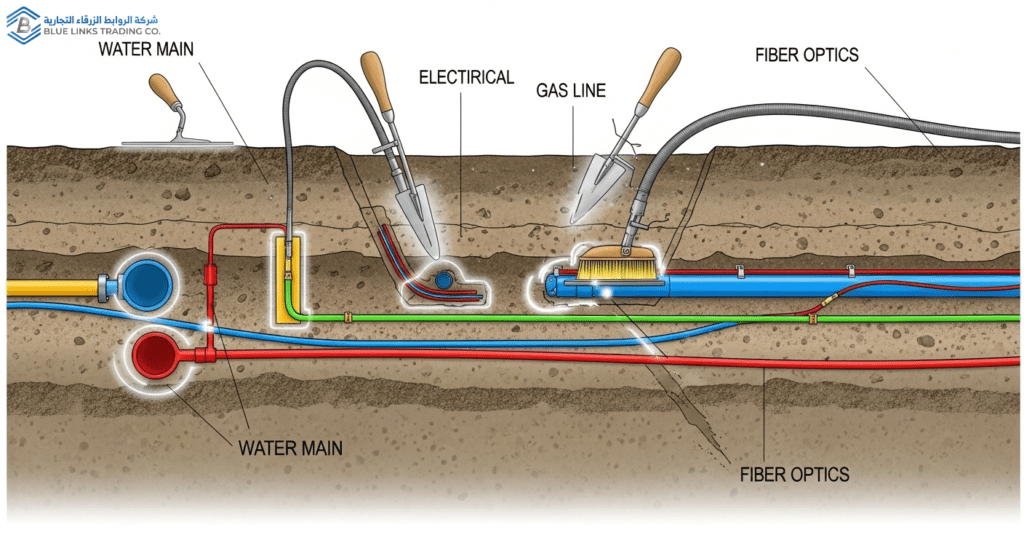
Unlike mechanical digging, suction excavation operates on control rather than force. Instead of cutting blindly through soil layers, high-powered airflow removes material gradually, allowing crews to expose underground assets with full visibility. This distinction is critical in road environments where utilities often run parallel, overlap vertically, or pass through constrained corridors beneath active lanes.
At its core, Suction excavation in road projects follows the principles of non-destructive excavation. Soil is loosened and extracted without direct contact between metal tools and buried infrastructure. As a result, the risk of rupturing power cables, fiber lines, or pressurized pipelines is dramatically reduced—especially during shallow excavation stages where most incidents occur.
This operational approach aligns closely with broader industry adoption of non-traditional excavation methods in Saudi Arabia, where safety, predictability, and asset protection take priority over raw excavation speed. In roadworks, where a single mistake can shut down traffic corridors or critical services, this balance becomes essential.
Another advantage lies in excavation accuracy. Suction systems allow crews to work within narrowly defined boundaries, minimizing disturbance to surrounding soil. This precision helps preserve road subgrade integrity and reduces the likelihood of long-term settlement beneath asphalt or concrete surfaces. Over the lifecycle of a road asset, such control contributes directly to durability and maintenance efficiency.
From an execution standpoint, suction excavation also supports phased road construction strategies. Crews can expose and verify utilities before asphalt cutting or trenching begins, enabling better coordination between civil works, utility owners, and traffic management teams. In this way, Suction excavation in road projects becomes a planning tool as much as a construction technique.
As Saudi road projects grow more complex and interconnected with smart infrastructure, excavation can no longer be treated as a purely mechanical task. The safest alternative is one that combines visibility, control, and adaptability—qualities that suction excavation delivers consistently across diverse road environments.
The Role of MTS Suction Excavators in Road Projects
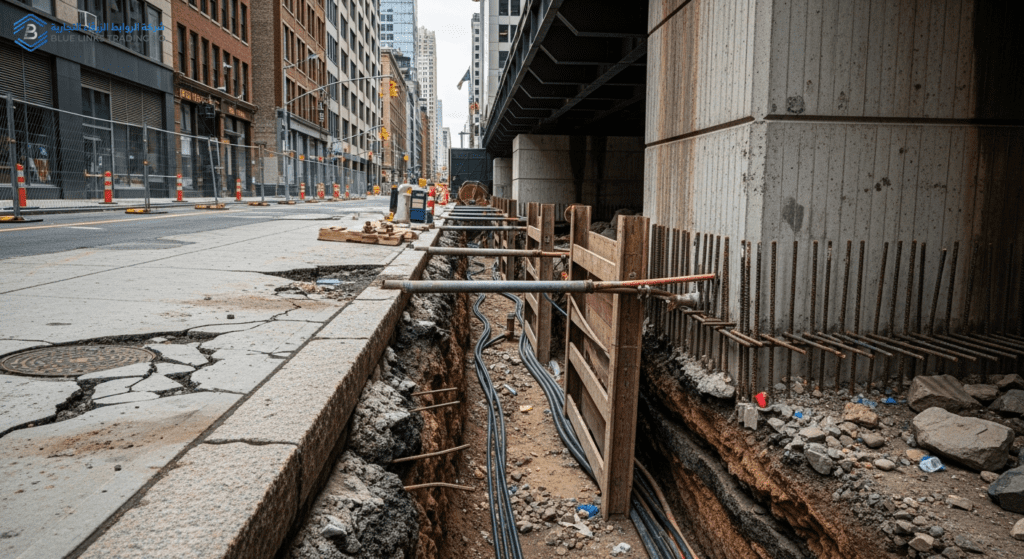
Within active road corridors, excavation tasks are rarely isolated. They are tightly linked to traffic flow, utility coordination, and public safety. This is where MTS suction excavators move beyond being equipment and function as execution tools designed for controlled, high-risk environments. Their role in Suction excavation in road projects is defined by where precision matters most—before, during, and after surface cutting.
One of the primary applications is utility exposure prior to asphalt cutting or trenching. By verifying the exact position and depth of services, crews reduce the risk of accidental strikes once mechanical work begins. This approach is increasingly used alongside coordinated surveys such as GPR combined with suction excavation, which helps confirm utility paths in congested road sections.
MTS systems are also deployed around inspection chambers, valve pits, and service crossings where multiple networks converge. In these locations, traditional excavation often requires widening the cut to avoid damage, increasing restoration scope and traffic disruption. Suction excavation allows localized access without undermining adjacent pavement or curbstones.
Emergency road repairs represent another critical use case. When a sudden utility failure occurs beneath a live roadway, response time and damage control are paramount. Using suction excavator systems, teams can expose the affected area quickly while keeping the excavation footprint minimal. This capability supports faster reinstatement and reduces the need for extended lane closures.
Road projects frequently involve constrained environments—narrow medians, bridge approaches, sidewalks, and areas adjacent to barriers or structures. MTS suction excavators are engineered to operate efficiently in such conditions, where maneuverability and reach are limited. Their controlled excavation process minimizes vibration and lateral soil movement, protecting both utilities and nearby structures.
In complex urban developments, roadworks increasingly intersect with smart infrastructure and digital networks. The same execution logic applied in suction excavation for smart city environments is now being extended to road projects, where data cables and sensor networks require careful handling. In these scenarios, Suction excavation in road projects supports continuity—not just of traffic, but of connected services that modern cities depend on.
By integrating MTS suction excavators into road construction workflows, contractors gain a method that adapts to varying site conditions without sacrificing safety or control. This adaptability is what positions suction excavation as a practical execution standard within Saudi road infrastructure projects.
Key MTS Technologies That Matter in Road Projects
The effectiveness of Suction excavation in road projects depends not only on the method itself, but on the engineering technologies that control airflow, reach, depth, and operational stability. MTS suction excavators are designed with these variables in mind, making them suitable for complex road environments where standard vacuum systems fall short.
High Suction Performance for Controlled Soil Removal
MTS systems deliver suction capacities exceeding 130 kg, enabling consistent soil extraction across compacted subgrades, mixed backfill, and moisture-affected layers commonly found beneath roads. This level of performance allows crews to maintain steady excavation without resorting to mechanical force, even when working around sensitive utilities.
In practical terms, this capability reduces stop-start cycles during excavation and supports cleaner exposure of cables and pipelines. When paired with properly selected vacuum excavation equipment, road crews gain predictable performance across different soil conditions.
Dual Fan and Triple Fan Systems
Road projects often require excavation at varying depths and distances from the equipment position. MTS addresses this through Dual Fan and Triple Fan configurations, which enhance airflow stability over extended hose lengths. This is especially important in urban roads where equipment placement may be restricted by traffic, barriers, or narrow shoulders.
By maintaining suction efficiency over distance, these systems allow excavation to proceed without repositioning the machine repeatedly—reducing disruption to traffic management plans and improving overall productivity in Suction excavation in road projects.
MegaVac Technology for High-Demand Conditions
In scenarios involving deep excavation, dense material, or simultaneous exposure of multiple utilities, MegaVac technology provides the additional capacity required to maintain control. This capability becomes critical in major road upgrades, intersections, and utility corridors where excavation demand fluctuates rapidly.
MegaVac systems are commonly deployed in high-risk environments beyond roads as well, including suction excavation in desert environments, demonstrating their adaptability to Saudi site conditions.
POWERARM and EVOARM Working Arms
Precision at the excavation point is just as important as suction power. MTS working arms—such as POWERARM and EVOARM—enable accurate positioning of the suction hose directly over the target area. This reduces unnecessary soil disturbance and improves operator control when working near live utilities or structural elements.
For road crews operating in tight spaces near curbs, medians, and bridge structures, these articulated arms significantly enhance safety and efficiency. They also reduce operator fatigue and support longer, more controlled excavation cycles.
When combined, these technologies transform suction excavation from a generic concept into a reliable execution system. Understanding how they function together is essential when evaluating equipment options for Suction excavation in road projects, where performance margins are often narrow and operational mistakes carry high consequences.
Choosing the Right MTS Model for Road Projects
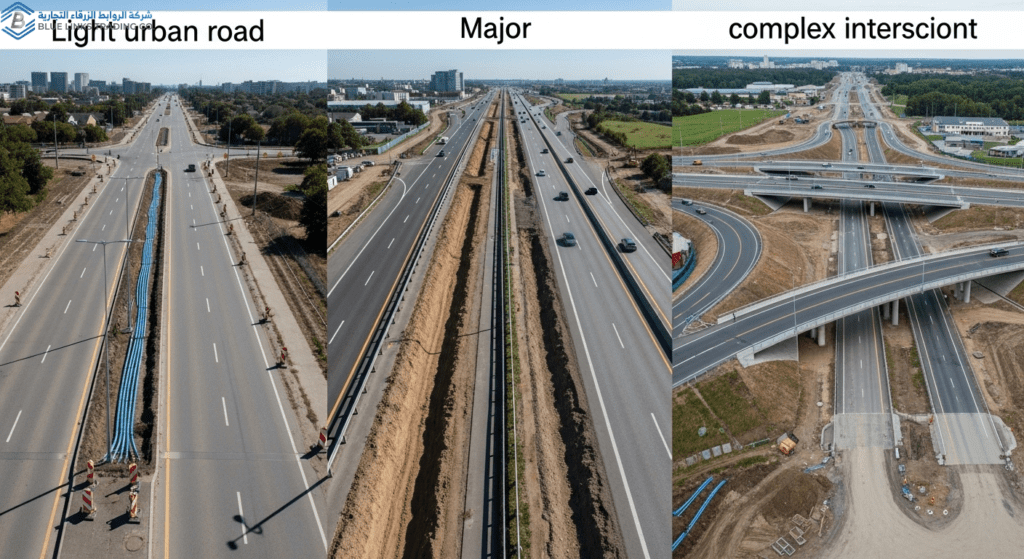
Selecting the appropriate equipment is a decisive factor in the success of Suction excavation in road projects. Road environments vary significantly—from dense urban streets to large highway expansions—and each setting places different demands on suction capacity, reach, maneuverability, and operational endurance. MTS addresses this variability through a structured range of models designed to match specific project conditions.
DINO 8 for Urban Roads and Medium-Scale Works
The MTS DINO 8 suction excavator is well suited for municipal roads, inner-city corridors, and utility exposure tasks where space is limited and precision is critical. Its balanced suction performance allows crews to expose cables and pipelines beneath sidewalks, medians, and service lanes without widening the excavation footprint.
In projects involving frequent stops, phased traffic control, or night work, this model offers the flexibility needed to maintain steady progress while minimizing surface disruption.
DINO 12 for Larger Road and Infrastructure Projects
For wider roads, arterial upgrades, and projects involving deeper utility corridors, the MTS DINO 12 suction excavator provides increased capacity and reach. Its enhanced airflow stability supports excavation over longer distances, which is particularly valuable when equipment placement is constrained by traffic lanes or safety barriers.
This model is often selected for roadworks where multiple utilities must be exposed along extended sections, allowing teams to maintain efficiency without compromising control.
DINO TRIPLE for Complex and High-Risk Utility Networks
In locations where underground networks are highly congested or poorly documented, the DINO TRIPLE suction excavator offers advanced suction consistency through its triple-fan configuration. This capability ensures reliable soil removal at greater depths and distances, reducing the need for repeated repositioning.
Such performance is critical in intersections, bridge approaches, and road crossings where excavation tolerance is minimal and risk exposure is high.
MEGAVAC for Heavy-Duty Road Applications
Major road expansions, industrial access roads, and projects involving dense or compacted materials may require extreme suction performance. In these cases, MEGAVAC extreme-capacity systems deliver the power needed to maintain control under demanding conditions.
Although typically associated with heavy-duty environments, MEGAVAC units are increasingly considered in road projects where depth, material resistance, and operational continuity intersect.
Understanding the relationship between project scale, site constraints, and equipment capability is essential when planning Suction excavation in road projects. By aligning the MTS model selection with actual field requirements, contractors can reduce execution risk, improve predictability, and maintain tighter control over both schedule and cost.
A Realistic Use Case from Saudi Road Projects
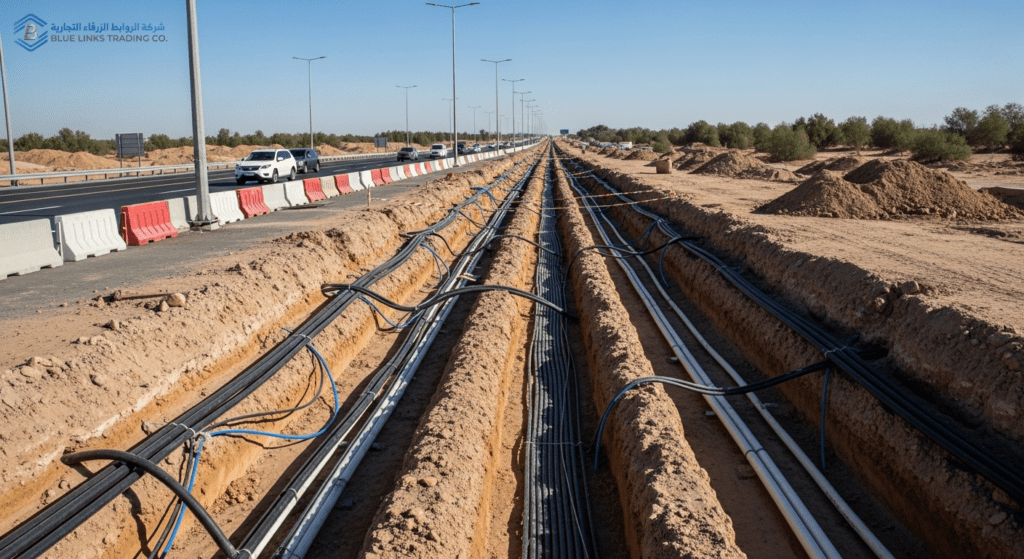
To understand the practical value of Suction excavation in road projects, consider a common scenario faced by contractors in Saudi urban environments. A road expansion project is underway along a busy arterial street, scheduled to be executed in phases to maintain traffic flow. During preparatory works, legacy drawings indicate the presence of utility corridors—but their exact depth and alignment remain uncertain.
Before asphalt cutting begins, the project team deploys suction excavation to verify underground conditions. Using controlled soil removal, crews expose sections of power and fiber-optic lines running parallel to the roadway. This step allows engineers to confirm clearances and adjust cutting limits without relying solely on assumptions.
In this scenario, suction excavation is performed in coordination with established practices already used in suction excavation for Saudi power and telecom networks, where service continuity is critical. By adopting the same level of precision in roadworks, the project avoids service interruptions and eliminates the need for emergency repairs.
Once utilities are safely exposed and protected, mechanical excavation proceeds with confidence. The excavation footprint remains narrow, restoration scope is reduced, and traffic disruption is limited to planned windows. What could have escalated into a multi-day shutdown becomes a controlled, predictable operation.
This example reflects how Suction excavation in road projects shifts excavation from a reactive task to a proactive risk-control measure. Instead of responding to incidents after they occur, project teams reduce uncertainty before critical stages begin.
Quick Facts: Suction Excavation in Road Projects
• Protects live power, telecom, water, and sewer networks beneath roads
• Enables precise excavation without mechanical contact
• Reduces the need for wide trenching and surface demolition
• Supports faster execution with fewer unplanned stoppages
• Lowers repair costs and long-term maintenance risks
🟦 Frequently Asked Questions About Suction Excavation in Road Projects
Conclusion and Professional Call to Action
In a complex execution environment such as Saudi road and infrastructure projects, traditional excavation methods are no longer a safe or practical option when working near live and buried utilities. The intersection of power networks, telecom lines, water systems, and wastewater pipelines beneath active roadways—combined with traffic flow and strict timelines—demands precise solutions that reduce risk without disrupting operations or increasing unplanned repair costs.
Suction excavation in road projects, powered by MTS Suction Excavator systems, provides an advanced non-destructive excavation approach tailored to modern road construction and maintenance. By enabling accurate exposure of underground assets without mechanical contact or vibration, this method protects pavement layers, preserves utility integrity, and supports efficient execution—particularly in dense urban environments.
As road and infrastructure development accelerates across the Kingdom, adopting non-destructive excavation methods has become a strategic necessity. These techniques help ensure service continuity, minimize operational risk, and achieve higher safety standards. For deeper technical insight into the engineering differences between traditional and advanced excavation methods, refer to the article
Non-Traditional Excavation in Saudi Arabia
,
which explains how suction excavation plays a key role in protecting road infrastructure.
📩 Contact Us to Select the Right Suction Excavation Solution for Your Road Project
The Blue Links Trading Co. team is ready to assess work sites within road and infrastructure projects, evaluate excavation risks, and provide precise engineering recommendations to select the most suitable MTS Suction Excavator—ensuring accurate execution, reduced failures, and full protection of critical underground utilities, fully aligned with Saudi Vision 2030 objectives.
With Blue Links Trading Co., Suction excavation in road projects becomes a strategic tool to enhance execution efficiency, reduce operational risk, and achieve the highest safety standards across road and infrastructure projects in Saudi Arabia.