

Before the First Dig: Hidden Excavation Risks Delaying Saudi Infrastructure Projects
Excavation Risk as a Project-Level Delay Multiplier

In Saudi infrastructure projects, excavation is often treated as a routine site activity—scheduled, delegated, and operationally contained. Yet in high-value, schedule-sensitive environments, this assumption consistently proves fragile. What appears minor at ground level frequently evolves into a project-level disruption with consequences far beyond the excavation zone.
The real issue is not how excavation is performed, but how its risks are positioned within decision-making frameworks. When excavation risks are underestimated or compartmentalized, they become silent delay multipliers. A brief interruption can escalate into cascading schedule conflicts, regulatory pressure, and contractual exposure that no recovery plan fully absorbs.
This dynamic is especially pronounced in Saudi infrastructure projects, where delivery timelines are tightly linked to public services, interdependent contractors, and regulatory oversight. In such environments, excavation risks in Saudi infrastructure projects are rarely isolated incidents; they are inflection points that test governance, coordination, and accountability at the management level.
Rather than originating from technical failure, many delays stem from early decision blind spots—moments when excavation-related uncertainty was acknowledged but not elevated to a strategic concern. By the time the impact becomes visible on schedules and dashboards, the cost of inaction has already compounded.
When Minor Excavation Incidents Trigger Major Schedule Delays
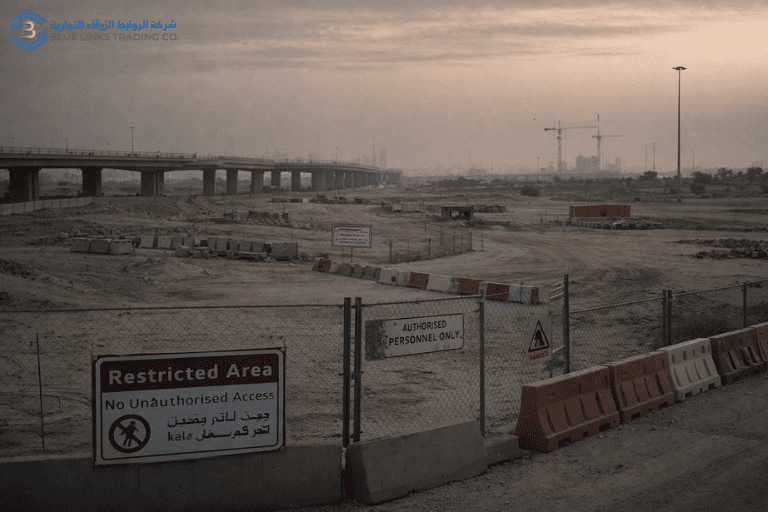
In large Saudi infrastructure projects, delays rarely begin with dramatic failures. More often, they start with a contained excavation-related incident that appears manageable within the daily site workflow. The initial disruption may seem temporary, but its downstream impact quickly extends beyond the excavation scope.
Once an incident occurs, work sequences are interrupted, inspections are triggered, and approvals are paused. These pauses rarely affect a single activity. Instead, they ripple across interconnected schedules, forcing dependent contractors to stand by, resequence tasks, or halt mobilized resources altogether.
What turns a minor incident into a major delay is not the event itself, but the speed at which it exits the site and enters the project governance layer. Reporting escalations, revised timelines, and coordination gaps expose how excavation risks in Saudi infrastructure projects intersect directly with planning assumptions made long before execution began.
In many cases, excavation-related delays reveal structural weaknesses in how risks were allocated and monitored at the project level. When excavation is treated as a localized activity rather than a schedule-sensitive dependency, even brief interruptions can destabilize milestone commitments across the entire delivery chain.
This pattern mirrors broader observations highlighted in analyses of traditional excavation risk in Saudi mega projects, where early-stage underestimation consistently leads to late-stage schedule compression and loss of control.
From Schedule Disruption to Financial and Contractual Exposure

Once excavation-related delays move beyond schedule adjustments, their impact quickly becomes financial. What began as a short interruption evolves into extended standby costs, remobilization expenses, and unplanned administrative overhead. These costs rarely remain isolated; they accumulate quietly while attention remains focused on recovering lost time.
In Saudi infrastructure projects, financial exposure is tightly linked to contractual structure. Delay penalties, milestone-based payments, and interdependent scopes amplify the effect of even limited schedule slippage. As timelines shift, responsibilities blur, and excavation-related delays often become the trigger for claims, counterclaims, and prolonged commercial disputes.
At this stage, excavation risks in Saudi infrastructure projects are no longer perceived as operational issues. They surface as contractual stress points, testing how risk was allocated, priced, and governed at the decision-making level. Financial discussions begin to dominate progress meetings, diverting focus from execution to damage control.

The escalation is rarely driven by a single cost item. Instead, it reflects a compounding effect—overlapping claims, revised cash flow forecasts, and strained coordination between project stakeholders. Similar patterns are observed in broader analyses of excavation risk management, where early underestimation leads to disproportionate financial exposure later in the project lifecycle.
As financial pressure increases, tolerance for uncertainty diminishes. Decisions become reactive, timelines defensive, and contractual relationships increasingly adversarial. By the time excavation-related risks are fully recognized at this level, their financial footprint is already embedded within the project’s commercial reality.
Reputational and Strategic Damage Beyond the Project Timeline

As excavation-related delays persist, their impact extends beyond schedules and financial metrics. In Saudi infrastructure projects, repeated disruptions—regardless of scale—begin to shape perceptions of reliability, governance, and decision quality. Reputational damage does not emerge suddenly; it accumulates through patterns that stakeholders quietly track.
Clients, regulators, and delivery partners rarely assess performance based on a single incident. Instead, they observe how disruptions are managed, communicated, and contained. When excavation-related issues repeatedly escalate into delays, confidence in project leadership erodes, even if contractual obligations are eventually met.
At this stage, excavation risks in Saudi infrastructure projects transition from operational concerns into strategic liabilities. They influence how contractors are viewed in future tenders, how consortium roles are negotiated, and how risk premiums are applied in subsequent projects. The cost is not measured only in penalties, but in diminished competitive positioning.
These reputational effects are closely tied to broader coordination and dependency structures within large programs. When excavation disruptions expose weak alignment between planning, procurement, and execution, they echo challenges often discussed in the context of supply chain management in mega projects, where localized issues rapidly affect system-wide confidence.
Over time, decision-makers become more cautious, approvals slow, and oversight intensifies. What began as a narrowly scoped excavation incident ultimately reshapes how risk is perceived across the entire organization—long after the site activity itself has concluded.
Decision Accountability and the Cost of Underestimating Excavation Risk

In Saudi infrastructure projects, excavation-related delays ultimately expose a question of accountability rather than execution. By the time schedules slip, costs escalate, and reputational pressure mounts, the origin of the problem is rarely traced back to a single site event. Instead, it reflects earlier decisions where excavation risk was acknowledged but not elevated to a project-critical concern.
This pattern highlights how excavation risks in Saudi infrastructure projects are shaped long before ground is broken. When risks are categorized as routine, their potential to disrupt governance structures, contractual balance, and stakeholder confidence is systematically underestimated. The result is not a technical failure, but a strategic blind spot.
Large-scale programs depend on alignment between planning, procurement, and delivery. When excavation risk is isolated from this alignment, it weakens decision coherence across the project lifecycle. This disconnect becomes increasingly visible under the regulatory scrutiny and public accountability frameworks governing Saudi infrastructure delivery, as emphasized in official development oversight by the Saudi Ministry of Transport and Logistics Services.
From a broader perspective, international infrastructure assessments consistently show that schedule overruns are rarely caused by execution alone. Strategic risk misclassification—particularly during early planning—remains a dominant factor in major project delays, a trend echoed in global infrastructure analyses published by the World Bank.

Ultimately, excavation-related incidents act as stress tests for decision-making systems. They reveal whether risk was actively governed or quietly deferred. In environments where timelines are unforgiving and reputational capital is hard-earned, the true cost of underestimating excavation risk is not measured at the site—but at the leadership level, where early decisions shape outcomes long before delays become visible.