

Excavation Decisions That Put Saudi Projects at Risk
Excavation as an Owner-Level Risk Decision

In Saudi Arabia’s high-value infrastructure environment, excavation is no longer viewed as a routine construction activity. At the ownership level, it represents an early governance decision with long-term consequences. The excavation decision risk for Saudi projects begins well before contractors mobilize, often at the same table where budgets, schedules, and accountability frameworks are approved.
For project owners, the primary concern is not how excavation is performed, but how its associated risk is carried forward across the life of the project. Early decisions shape exposure to delays, contractual claims, regulatory scrutiny, and reputational pressure. Once these risks materialize, they rarely remain isolated; they cascade through procurement, approvals, and public oversight.
This is why excavation is increasingly evaluated as part of broader risk governance discussions, alongside topics such as schedule certainty and dependency management. In large programs, excavation-related uncertainty often interacts with other strategic risks already mapped at the owner level, particularly those addressed in excavation risk management frameworks used to protect capital-intensive developments.
Saudi projects operate under heightened visibility and regulatory sensitivity. Public service continuity, stakeholder confidence, and alignment with national development objectives all amplify the cost of early misjudgment. International infrastructure risk guidance, including frameworks highlighted by organizations such as the World Bank’s infrastructure risk programs, consistently emphasizes that early-stage decisions carry a disproportionate share of downstream risk.
Within this context, excavation choices are assessed not for operational convenience, but for their ability to reduce uncertainty at the governance level. For owners, confidence is built when early decisions support predictable outcomes, minimize escalation, and preserve executive focus on strategic delivery rather than crisis response.
Risk Ownership and Liability Exposure

From an ownership perspective, excavation risk is inseparable from liability. In Saudi projects, responsibility does not stop at contract award or delegation to delivery teams. When failure occurs, the question is rarely about who executed the work, but who approved the decision that allowed risk to enter the project in the first place. This is where excavation decision risk for Saudi projects becomes a matter of executive accountability rather than site performance.
Project owners carry the ultimate exposure when delays trigger claims, when disruptions escalate into regulatory attention, or when safety incidents attract public scrutiny. These outcomes are often traced back to early decisions made under assumptions of control or predictability that later prove fragile. Once embedded, such decisions are difficult to reverse without compounding cost and schedule impact.
In complex infrastructure programs, excavation-related liability rarely exists in isolation. It intersects with contractual structures, insurance frameworks, and dispute resolution mechanisms. This interconnected exposure explains why owners increasingly align excavation decisions with broader assessments found in excavation risks in Saudi infrastructure projects, where risk is evaluated across interfaces rather than individual activities.
Regulatory environments in the Kingdom further amplify this exposure. Disruptions affecting public services, transport corridors, or utilities can escalate beyond contractual boundaries into governance-level intervention. Guidance from international oversight bodies, such as infrastructure risk principles outlined by the OECD infrastructure governance programs, reinforces the importance of owner-side decision discipline in managing liability before execution begins.
For project owners, reducing liability is less about eliminating risk entirely and more about ensuring that approved decisions do not introduce unmanaged uncertainty. Confidence emerges when early excavation choices align with the project’s risk tolerance, legal posture, and public accountability expectations, allowing leadership to maintain control over outcomes rather than react to escalation.
Schedule Protection and Predictability
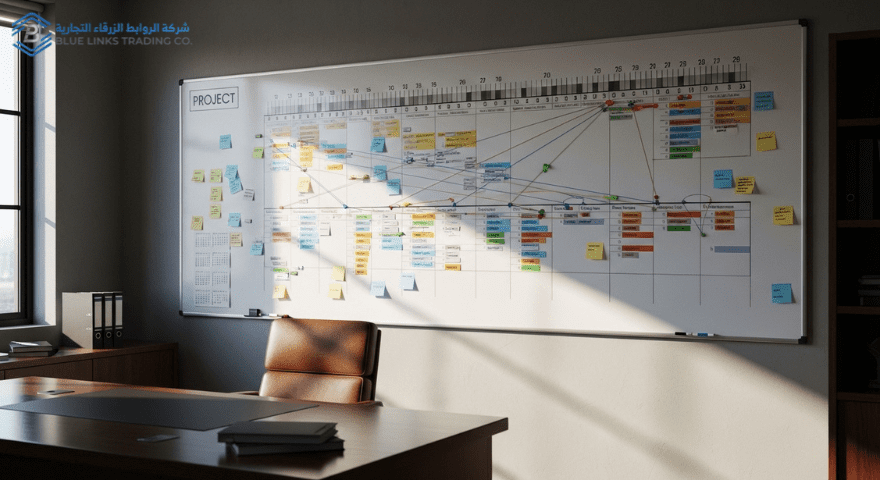
For Saudi project owners, schedule performance is not measured by speed alone, but by predictability. Early decisions that introduce uncertainty often become silent drivers of delay, even when progress appears acceptable on paper. This is where excavation decision risk for Saudi projects directly intersects with schedule protection at the governance level.
Unpredictable outcomes place pressure on approval chains, disrupt sequencing across dependent work packages, and weaken confidence in milestone commitments. From an owner’s standpoint, the most damaging delays are not those that occur openly, but those that emerge gradually as early assumptions fail under real-world conditions.
Large infrastructure programs depend on tightly coordinated interfaces. Excavation-related uncertainty can propagate into procurement timelines, authority approvals, and third-party coordination. These cascading effects are commonly examined within broader discussions of traditional excavation risk in Saudi mega projects, where schedule slippage is rarely the result of a single event, but of early decisions that underestimated exposure.
Owners therefore prioritize decisions that support stable planning horizons. Predictability allows executive teams to maintain control over commitments made to stakeholders, financiers, and regulators. It also reduces management distraction, enabling leadership to focus on strategic delivery rather than constant schedule mitigation.
In Saudi Arabia’s publicly visible developments, schedule reliability carries reputational weight. Missed milestones attract scrutiny and erode trust, even when delays are technically defensible. By treating excavation selection as a schedule risk decision rather than a logistical preference, owners reinforce confidence that timelines are governed, not gambled.
Asset and Public Service Protection
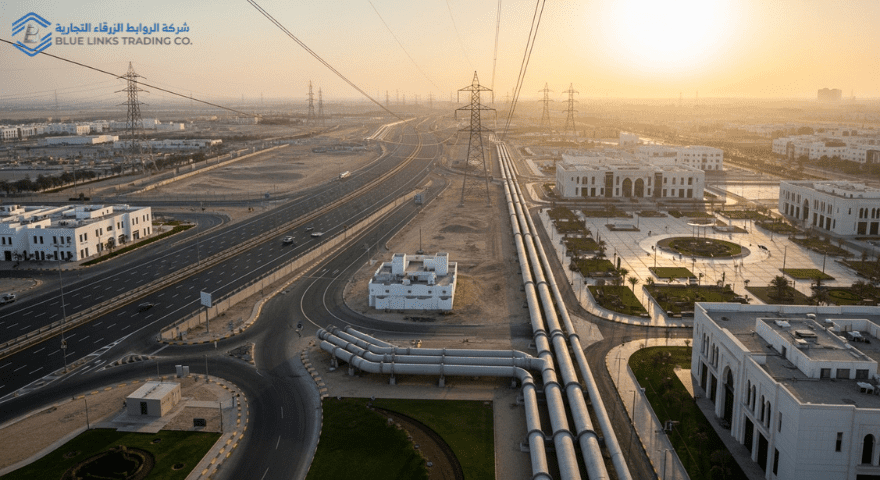
In Saudi Arabia’s dense infrastructure environment, excavation decisions are closely tied to asset protection and public service continuity. Owners are accountable not only for new construction, but for safeguarding existing networks that support daily life. The excavation decision risk for Saudi projects becomes critical when early choices threaten assets whose failure would trigger regulatory escalation or public disruption.
Utilities, transport corridors, and municipal services operate within tightly regulated frameworks. Any disruption—planned or unplanned—can elevate project issues beyond delivery teams into executive and governmental oversight. For owners, the reputational cost of service interruption often exceeds the immediate financial impact.
This risk is magnified in projects delivered alongside live systems. Asset sensitivity forces owners to evaluate excavation decisions through a broader lens of interface risk, coordination discipline, and escalation thresholds. These considerations are frequently aligned with governance insights discussed in excavation risk management approaches that prioritize protection over short-term convenience.
Public visibility further intensifies accountability. In high-profile developments, even minor disruptions can attract scrutiny from authorities and stakeholders, compressing response time and increasing management pressure. Owners therefore favor decisions that minimize the probability of unintended impact, even when execution teams believe risks are manageable.
By framing excavation choices around asset and service protection, project owners reinforce confidence that development objectives will not compromise operational continuity. This perspective supports stable relationships with regulators and preserves trust, ensuring that projects advance without triggering unnecessary intervention or reputational exposure.
Governance, Approvals, and Executive Accountability

At the governance level, excavation decisions are rarely isolated technical approvals. In Saudi projects, they move through layered review structures that include executive committees, risk boards, and external stakeholders. This is where excavation decision risk for Saudi projects becomes inseparable from approval discipline and leadership accountability.
Every early decision carries a governance signature. Once approved, it defines the boundaries within which delivery teams operate and limits the ability of executives to distance themselves from outcomes. When risks materialize, scrutiny focuses on why a decision was accepted, not how it was implemented.
Owners therefore evaluate excavation choices against their internal governance frameworks. Decisions that reduce ambiguity simplify approval flows, shorten escalation paths, and protect senior leadership from repeated intervention. This governance logic aligns closely with broader supply and coordination structures discussed in supply chain management in mega projects, where clarity of decision authority is essential to maintaining control.
In complex programs, unclear or optimistic early assumptions increase management load. Executives are drawn into operational discussions, approvals multiply, and confidence erodes across stakeholder groups. Governance resilience is strengthened when early excavation decisions are defensible, transparent, and aligned with the project’s declared risk posture.
For Saudi project owners, accountability is not avoided by delegation. It is managed through disciplined decision-making that limits exposure and preserves executive focus. When excavation risk is addressed at the approval stage, governance structures remain stable and leadership retains control over project direction.
Reputation, Long-Term Value, and Strategic Confidence

Beyond cost and schedule, excavation decisions influence how Saudi project owners are perceived over the long term. Reputation is built not only on delivery success, but on the quality of judgment demonstrated at critical decision points. The excavation decision risk for Saudi projects extends into future tenders, stakeholder trust, and institutional credibility.
Owners operating within giga and mega programs understand that each project becomes a reference point. Early decisions that lead to disruption or escalation are remembered long after technical justifications fade. Conversely, disciplined choices that prevent issues reinforce confidence among regulators, partners, and funding entities.
Strategic confidence grows when owners consistently demonstrate risk-aware governance. Excavation decisions aligned with long-term value reduce the need for defensive explanations and protect leadership narratives. This perspective complements broader partnership thinking reflected in strategic partnerships in Saudi supply chains, where trust is sustained through predictable, accountable decision-making.
In Saudi Arabia’s development landscape, reputation is cumulative. Each project contributes to an owner’s perceived risk tolerance and management maturity. Decisions that minimize uncertainty strengthen negotiating positions in future programs and reduce resistance during approvals and oversight.
By viewing excavation through the lens of long-term value, owners move beyond short-term optimization. They protect not only individual projects, but their institutional standing within a highly competitive and visible development environment.
🟦 Frequently Asked Questions on Excavation Decision Risk
Conclusion: Safer Excavation Starts with Ownership Decisions

In Saudi Arabia’s infrastructure environment, excavation safety is not defined at the site level. It is established much earlier—within boardrooms and approval committees where risk, accountability, and confidence are weighed. The excavation decision risk for Saudi projects highlights how early governance choices shape outcomes far beyond execution.
Project owners who recognize excavation as a strategic risk decision reduce exposure to delays, liability escalation, and reputational pressure. By prioritizing predictability, asset protection, and disciplined approvals, leadership teams preserve executive focus and maintain control throughout the project lifecycle.
Ultimately, safer outcomes emerge when responsibility is acknowledged at the decision stage. In a development landscape defined by scale, visibility, and zero tolerance for disruption, Saudi project owners reinforce long-term success by ensuring that excavation risk is managed where it truly begins: with informed, accountable ownership decisions.
This article is intended as a strategic risk brief for project owners, consultants, and decision-makers seeking to understand how early excavation-related decisions influence governance stability, liability exposure, and long-term project confidence.