

Technical Readiness Is What Determines Project Continuity—Not Execution
Project Continuity Is No Longer Guaranteed
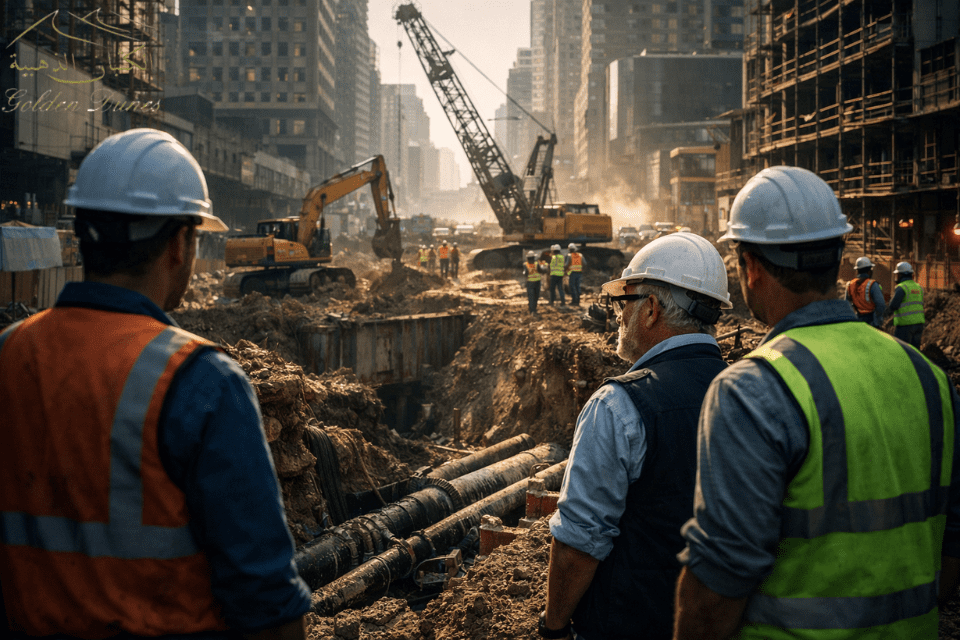
In large-scale infrastructure projects, continuity is often treated as a natural outcome of execution. If the schedule is followed, if the teams are deployed, and if the work progresses — the project should move forward without interruption. But in reality, project continuity is far more fragile than it appears.
Today’s infrastructure environments are no longer simple or predictable. Urban density, interconnected utility systems, and increasing regulatory expectations have transformed projects into highly sensitive ecosystems. In such conditions, even small gaps before execution begins can lead to disproportionate consequences once work is underway.
This is where technical readiness becomes a decisive factor. Not as a technical checklist, but as a strategic condition that determines whether a project can sustain momentum without disruption. When technical readiness is incomplete, continuity is not just challenged — it is structurally at risk.
Many of the disruptions observed in modern infrastructure projects are not caused by execution failure, but by decisions made before execution even starts. Incomplete data, misaligned assumptions, and limited system visibility create hidden exposure that only becomes visible when it is too late to respond efficiently.
As highlighted in infrastructure risk analysis, risks embedded in early-stage planning tend to escalate rapidly once execution begins, especially in complex urban environments. These risks are not always operational — they are often systemic.
According to global infrastructure assessments such as those published by the World Bank, project disruptions are frequently linked to gaps in preparation, coordination, and information accuracy — not just on-site performance. This reinforces the idea that continuity is not secured by execution alone, but by the level of readiness that precedes it.
Understanding this shift is critical. Because in modern infrastructure systems, continuity is no longer defined by how fast work progresses — but by how well the project is prepared to handle complexity before it even begins.
The Gap Between Planning and Execution

One of the most critical yet underestimated threats to project continuity lies in the gap between planning and execution. While projects often appear fully prepared on paper, the transition from planning to real-world implementation frequently reveals inconsistencies that were not addressed early enough.
In many infrastructure projects, execution begins while key technical elements remain unresolved. Data may be partially validated, assumptions may not fully reflect actual site conditions, and coordination between stakeholders may still be evolving. These gaps are rarely visible at the planning stage, but they become highly disruptive once execution is underway.
This is where technical readiness becomes more than a preparatory phase — it becomes a risk control mechanism. Without sufficient technical readiness, projects are effectively moving forward with blind spots that compromise their ability to maintain continuity under real conditions.
The challenge is not the absence of planning, but the illusion of completeness. Many project plans are structurally sound, yet operationally fragile. They assume alignment between design, data, and execution environments — an alignment that often does not exist in complex infrastructure systems.
As discussed in infrastructure planning practices, even well-structured planning processes can fail to capture real-world variability if technical validation is not fully integrated before execution. This creates a disconnect between what is expected and what actually unfolds on site.
From a continuity perspective, this gap is not just a planning issue — it is a structural vulnerability. When execution begins without full technical clarity, projects are forced into reactive decision-making, increasing the likelihood of delays, disruptions, and cascading coordination failures.
Research from OECD infrastructure frameworks highlights that early-stage readiness gaps are among the leading causes of project inefficiencies, particularly in large-scale and high-dependency infrastructure systems. These inefficiencies often remain hidden until execution exposes them under pressure.
Ultimately, the transition from planning to execution is not a smooth progression — it is a stress test. And without sufficient technical readiness, many projects fail that test before they even realize it has begun.
Infrastructure Visibility and Information Readiness
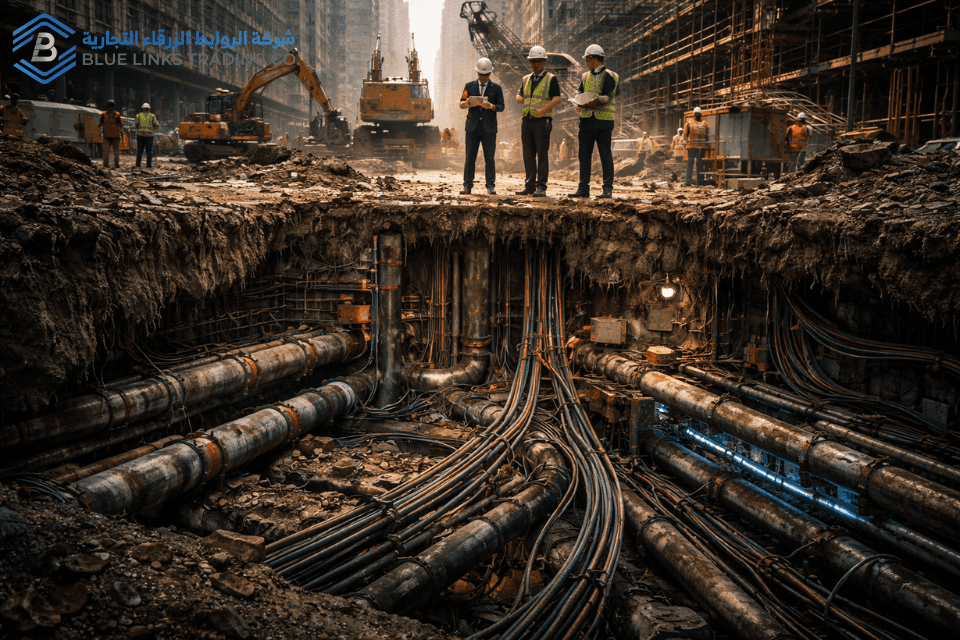
In modern infrastructure projects, what cannot be seen often represents the greatest source of risk. Beneath every construction site lies a dense network of interconnected systems — utilities, communication lines, and critical assets that must be accurately understood before any execution begins.
The challenge is not only the existence of these systems, but the limited visibility surrounding them. In many cases, infrastructure data is incomplete, outdated, or fragmented across multiple stakeholders. This creates a condition where decisions are made based on partial understanding rather than verified reality.
This is where technical readiness becomes directly linked to information quality. Without reliable infrastructure visibility, technical readiness cannot be fully achieved. The result is a project environment where uncertainty is embedded into every decision, increasing exposure to disruption from the very beginning.
In complex urban environments, the margin for error is extremely small. A minor misalignment between expected and actual conditions can trigger operational interruptions, force unplanned adjustments, and delay critical project milestones. These are not isolated incidents — they are symptoms of insufficient information readiness.
As explored in infrastructure risk analysis in Saudi projects, limited visibility into underground systems significantly increases the probability of unexpected disruptions. These disruptions often originate from gaps in data accuracy rather than failures in execution.
From a strategic perspective, infrastructure visibility is not just a technical requirement — it is a continuity enabler. Projects that operate with high levels of information clarity are better equipped to anticipate risks, coordinate effectively, and maintain stable progress under pressure.
According to insights from McKinsey infrastructure research, poor data integration and lack of real-time visibility are among the leading contributors to delays and inefficiencies in large infrastructure programs. This reinforces the idea that information readiness is a prerequisite for execution stability.
Ultimately, without sufficient visibility, projects are not just navigating complexity — they are navigating uncertainty. And without technical readiness grounded in accurate information, continuity becomes a matter of chance rather than control.
Coordination Readiness Across Stakeholders
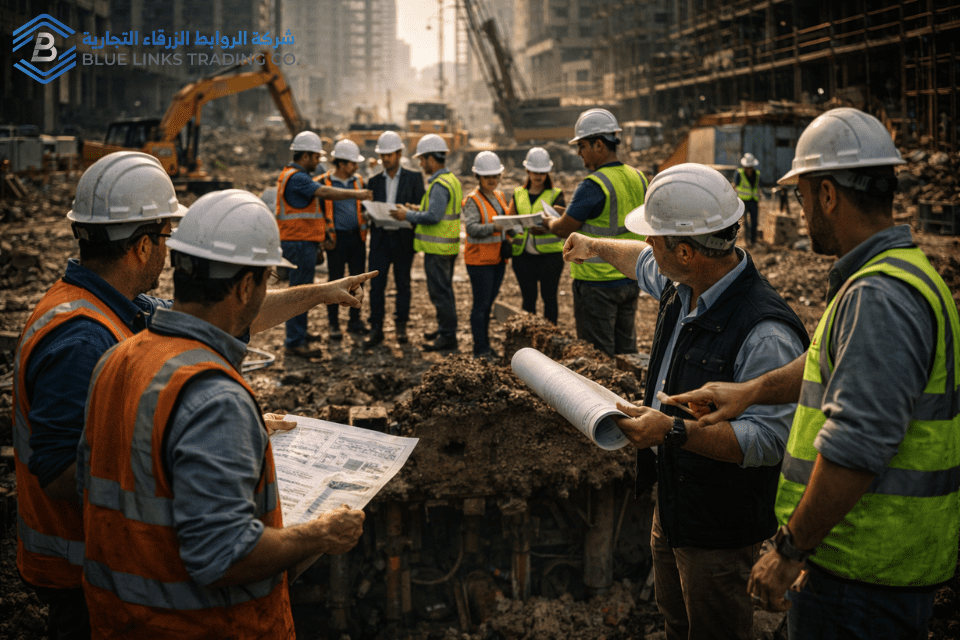
Project continuity in large infrastructure environments is not driven by individual performance — it is driven by collective alignment. No matter how strong each stakeholder may be independently, the absence of coordination readiness can quickly destabilize the entire project ecosystem.
Modern infrastructure projects involve multiple layers of stakeholders, including engineering teams, contractors, infrastructure authorities, and utility operators. Each operates within its own scope, priorities, and timelines. Without clear alignment, these parallel tracks can easily diverge, creating friction that disrupts continuity.
This is where technical readiness extends beyond data and planning — it becomes a coordination framework. True technical readiness requires that all stakeholders operate with a shared understanding of project conditions, dependencies, and constraints before execution begins.
When coordination readiness is incomplete, projects are forced into reactive alignment during execution. Decisions become fragmented, responsibilities overlap, and delays propagate across multiple workstreams. What starts as a minor misalignment can escalate into system-wide disruption.
As highlighted in infrastructure governance practices, lack of stakeholder alignment is one of the primary contributors to inefficiencies in complex projects. Governance structures may exist, but without practical coordination readiness, they fail to prevent disruption.
The issue is not communication alone — it is synchronization. Stakeholders may be informed, but not aligned. And in high-dependency infrastructure systems, even small timing gaps between stakeholders can trigger cascading delays that affect the entire project timeline.
Global project studies, including those from Project Management Institute (PMI), emphasize that misalignment between stakeholders is a leading cause of project underperformance. These misalignments often originate from insufficient preparation before execution, rather than failures during execution itself.
From a continuity standpoint, coordination is not a support function — it is a structural requirement. Without technical readiness that ensures stakeholder alignment, projects operate in fragmented environments where continuity cannot be sustained.
Schedule Pressure vs Technical Preparedness

In high-stakes infrastructure projects, time is often treated as the primary driver of success. Deadlines are fixed, milestones are tightly monitored, and pressure to accelerate execution becomes constant. But under this pressure, one critical factor is frequently compromised — technical readiness.
Projects are often pushed to begin execution before all technical elements are fully validated. The assumption is that remaining gaps can be addressed along the way. While this approach may appear efficient in the short term, it introduces instability that directly threatens long-term continuity.
This tension between speed and preparation creates a structural dilemma. On one side, there is urgency to deliver. On the other, there is the need for technical readiness to ensure stability. When urgency dominates, projects move forward without sufficient preparedness, increasing exposure to disruption.
The consequences of this imbalance are rarely immediate — but they are inevitable. As execution progresses, unresolved technical issues begin to surface. What could have been addressed early becomes a source of delay, rework, and operational conflict under pressure.
As explored in project decision risk analysis, early execution without sufficient validation increases the likelihood of reactive decision-making. This reactive mode not only slows progress but also amplifies risk across the project lifecycle.
From a strategic perspective, accelerating execution without readiness does not save time — it redistributes it into future disruptions. Delays are not eliminated; they are deferred and often magnified when they occur under more complex conditions.
According to infrastructure performance insights from World Economic Forum, schedule-driven execution without adequate preparation is a recurring pattern in underperforming projects. These projects often face compounded delays due to issues that originate in early-stage readiness gaps.
Ultimately, project timelines are not protected by speed alone. They are protected by the level of preparedness that supports execution. Without technical readiness, acceleration becomes a risk factor — not a competitive advantage.
🟦 Frequently Asked Questions About Technical Readiness
Continuity Depends on Readiness, Not Execution Alone

In complex infrastructure environments, project continuity is no longer defined by how efficiently execution is managed, but by how well the project is prepared before execution begins. The assumption that continuity is a natural outcome of progress has proven to be increasingly unreliable in modern project conditions.
Across planning, information visibility, stakeholder coordination, and schedule pressure, one common pattern emerges — disruptions are rarely caused by execution failure alone. They are the result of gaps that exist before execution starts. These gaps remain hidden until real-world conditions expose them under pressure.
This is why technical readiness must be viewed as a strategic priority rather than a preparatory step. It is the foundation that enables projects to operate with stability, absorb complexity, and maintain continuity even in highly dynamic environments.
As discussed throughout infrastructure risk management strategies, early-stage readiness plays a critical role in preventing disruptions that escalate during execution. Projects that invest in readiness are not only reducing risk — they are strengthening their ability to sustain performance over time.
In large-scale and high-dependency systems, continuity is not secured by reacting effectively to problems. It is secured by minimizing the likelihood of those problems occurring in the first place. This shift requires a change in how readiness is perceived — from a checklist to a strategic control layer.
Ultimately, the question is no longer whether a project can execute successfully, but whether it is prepared to sustain that execution without interruption. And in today’s infrastructure landscape, that answer is determined by the level of technical readiness embedded into the project from the very beginning.