

DINOMEGAVAC: Defining the Extreme-Capacity Excavation Threshold
When Excavation Reaches Structural Limits
Large-scale infrastructure and heavy industrial projects operate within environments where excavation is no longer a routine construction activity, but a structural decision that directly affects safety, continuity, and asset integrity. In these conditions, excavation challenges are not defined by access alone, but by the limits imposed by interconnected subsurface systems, operational constraints, and the scale of material handling required.
Projects involving power generation facilities, large industrial zones, and national infrastructure corridors often reach a point where conventional excavation approaches are unable to maintain predictable performance. At this stage, excavation must be assessed as a system-level function rather than an equipment task, particularly when operations must continue without disruption to surrounding assets.
This shift in project requirements has driven increased reliance on non-traditional excavation approaches that prioritize control, visibility, and operational stability. Within the Saudi infrastructure landscape, these challenges are closely linked to the broader evolution of non-traditional excavation in Saudi Arabia, where excavation strategies are evaluated based on their ability to operate safely at scale rather than on isolated mechanical performance.
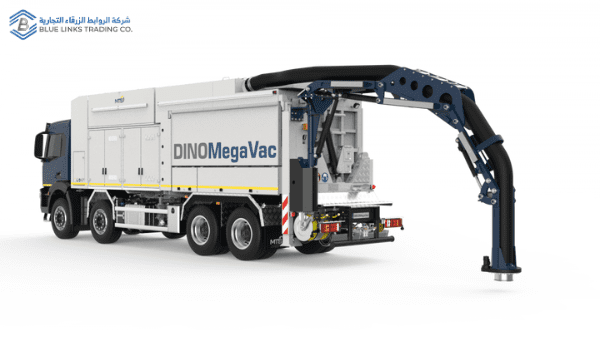
It is within this context that DINOMEGAVAC extreme capacity vacuum excavation is positioned—not as a machine or product, but as a response to structural excavation limits encountered in mega-scale and high-risk environments. Understanding when excavation reaches these limits is the first step in determining whether standard capacity systems remain sufficient or whether an extreme-capacity excavation class becomes operationally necessary.
Why Standard High-Capacity Systems Stop Scaling
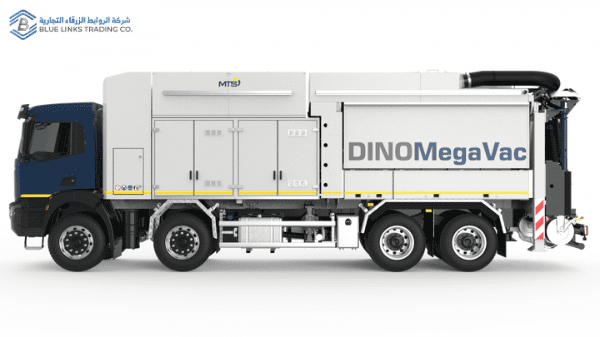
As infrastructure projects expand in size and complexity, excavation challenges evolve beyond what standard high-capacity systems are designed to manage. In mega-scale industrial and infrastructure environments, limitations do not appear suddenly; they emerge gradually as projects push operational boundaries related to access control, material routing, and uninterrupted site activity.
Standard vacuum excavation systems are typically optimized for defined operational ranges and predictable site conditions. When excavation zones become deeply integrated with live infrastructure, extended work corridors, or continuous operations, these systems begin to face structural constraints that are not resolved through incremental capacity increases alone.
In such environments, excavation performance is influenced by factors such as coordination with parallel construction activities, protection of buried assets, and the need to maintain safe working conditions without isolating large sections of the site. These pressures expose the scaling limits of conventional systems, where operational stability becomes more critical than raw excavation capability.
This reality is increasingly recognized across Saudi Arabia’s large infrastructure programs, particularly within sectors that demand long-term operational continuity. Strategic planning for these projects often aligns excavation decisions with broader frameworks such as supply chain management in mega projects, where system resilience and workflow predictability outweigh short-term performance gains.
At this stage of project maturity, DINOMEGAVAC extreme capacity vacuum excavation becomes relevant as a system-level classification. It represents the point at which excavation requirements exceed the practical scaling limits of standard high-capacity solutions, signaling the need for a different operational architecture rather than an incremental upgrade.
DINOMEGAVAC as an Extreme-Capacity Excavation Class
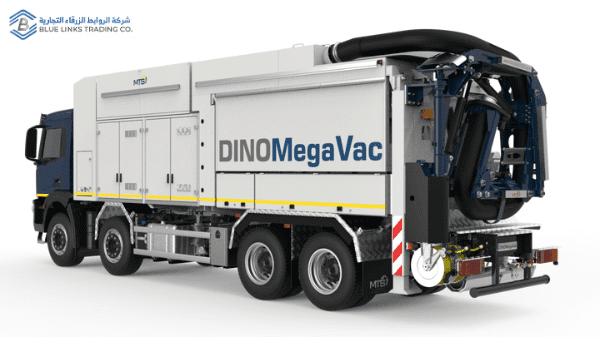
Within large infrastructure and heavy industrial projects, excavation requirements are not defined solely by depth or access constraints, but by the overall system pressure placed on excavation workflows. When operational environments demand sustained material handling across complex, interconnected zones, excavation must be approached as a capacity class rather than a discrete equipment choice.
DINOMEGAVAC extreme capacity vacuum excavation represents this classification. It defines an operational tier applied when project conditions exceed the structural limits of standard excavation systems. Rather than focusing on mechanical attributes, this class addresses how excavation integrates with site logistics, asset protection strategies, and continuous operations.
In this context, DINOMEGAVAC is not positioned as a product or model, but as a system architecture designed to function under extreme project pressures. These pressures typically arise in environments where excavation must proceed alongside active infrastructure, constrained access corridors, and strict safety controls, without introducing instability into surrounding operations.
By framing excavation at the system level, decision-makers are able to evaluate excavation strategies based on operational resilience rather than isolated performance indicators. This approach aligns with advanced planning practices increasingly adopted across Saudi Arabia’s industrial sectors, where excavation decisions are closely linked to broader infrastructure protection and continuity objectives.
Understanding DINOMEGAVAC extreme capacity vacuum excavation as a classification allows project teams to determine when standard capacity systems remain appropriate and when an extreme-capacity architecture becomes necessary to support long-duration, high-complexity excavation activities.
Operational Environments That Trigger the Need for DINOMEGAVAC
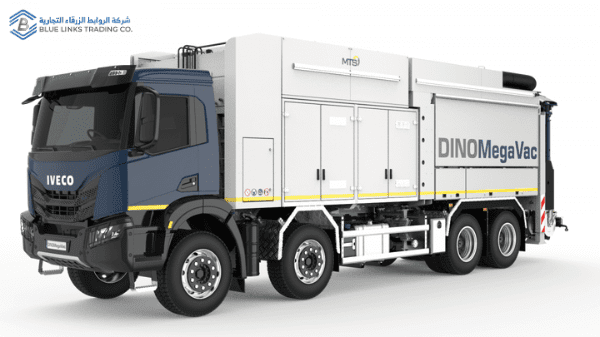
Extreme-capacity excavation is not driven by isolated site challenges, but by operational environments where excavation must function as part of a tightly controlled system. These environments impose cumulative pressures on access, safety, and continuity that exceed the design scope of standard excavation approaches.
Mega infrastructure
Mega infrastructure developments involve extended corridors, layered subsurface assets, and parallel construction activities operating within the same footprint. Excavation in these settings must align with long-term infrastructure planning rather than short-duration task execution. As excavation zones expand across interconnected assets, maintaining stability and predictability becomes more critical than localized excavation performance.
In such projects, excavation strategies are increasingly evaluated alongside frameworks such as supply chain management in mega projects, where coordination, sequencing, and system resilience determine overall project success.
Power generation
Power generation facilities present environments where excavation activities coexist with live operational systems. Subsurface work around energy infrastructure requires strict control to avoid service interruptions and safety incidents. In these conditions, excavation must be executed within defined operational envelopes that prioritize continuity and asset protection over speed-driven methods.
Extreme-capacity excavation classifications become relevant when excavation tasks extend across multiple zones within active facilities, requiring consistent system performance without introducing operational risk.
Industrial shutdown-free sites
Industrial sites designed to operate without shutdown windows represent some of the most demanding excavation environments. Here, excavation must proceed without disrupting production flows, access routes, or safety systems. Traditional excavation approaches struggle under these constraints, as they are often dependent on isolation or partial shutdowns to maintain control.
DINOMEGAVAC extreme capacity vacuum excavation is triggered in these environments as a system-level response to sustained operational pressure, enabling excavation to integrate into continuous industrial workflows rather than interrupt them.
System-Level Planning Considerations
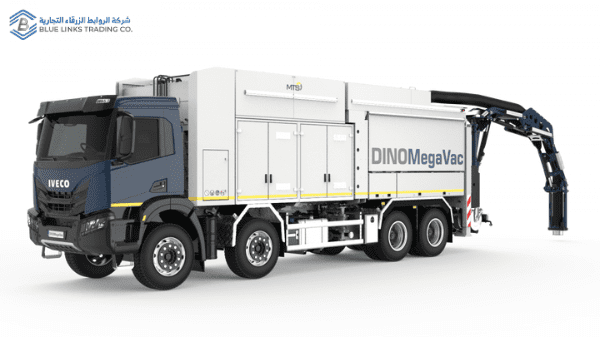
When excavation requirements approach extreme-capacity thresholds, planning can no longer focus on individual tasks or isolated work zones. Instead, excavation must be integrated into the overall project system, aligning with scheduling, safety management, logistics coordination, and long-term asset protection strategies.
At this level of complexity, excavation planning prioritizes workflow predictability and operational continuity. Decisions are made based on how excavation interacts with parallel activities, access restrictions, and active infrastructure, rather than on short-term execution speed. This approach allows project teams to maintain control across extended timelines and interconnected environments.
System-level planning also requires close coordination between engineering, operations, and procurement functions. Excavation is evaluated as part of a broader industrial ecosystem, where equipment availability, operational readiness, and technical support must align with project objectives. This perspective reflects best practices increasingly applied within industrial procurement in Saudi Arabia, where solution reliability and long-term support are critical selection factors.
From a technical planning standpoint, this approach aligns with globally recognized principles of non-destructive methodologies, where operational integrity and risk mitigation take precedence over intrusive execution methods during complex infrastructure works.
DINOMEGAVAC extreme capacity vacuum excavation fits within this planning framework as an operational classification used to address sustained excavation demands under constrained conditions. Its relevance emerges during early planning phases, where identifying excavation limits in advance helps reduce downstream risks, avoid reactive adjustments, and support stable execution throughout the project lifecycle.
By treating excavation as a system component rather than a standalone activity, decision-makers are better equipped to determine when standard capacity solutions remain sufficient and when an extreme-capacity architecture becomes necessary to preserve operational integrity.
Where Lower-Capacity Systems Remain the Right Choice
Not all infrastructure or industrial projects require extreme-capacity excavation architectures. In many controlled environments, standard vacuum excavation systems continue to provide effective, predictable performance when project conditions remain within defined operational limits.
Lower-capacity systems are typically well suited for projects where excavation zones are localized, access conditions are manageable, and surrounding infrastructure can be isolated without affecting broader operations. These environments allow excavation activities to remain task-oriented rather than system-driven.
Within this context, solutions such as DINO 8 and DINO 12 are commonly applied to standard infrastructure and maintenance activities. Their role is defined by operational scope rather than by scale escalation, supporting projects where excavation demands do not extend across interconnected or continuously active environments.
Understanding where these lower-capacity systems remain appropriate is a critical part of excavation planning. Applying extreme-capacity classifications prematurely can introduce unnecessary complexity, while selecting standard systems beyond their effective scope can compromise workflow stability.
DINOMEGAVAC extreme capacity vacuum excavation becomes relevant only when project conditions exceed these boundaries, reinforcing the principle that excavation capacity should be aligned with project structure rather than generalized performance expectations.
Strategic Role of Extreme-Capacity Excavation in National Infrastructure
As national infrastructure programs grow in scale and complexity, excavation decisions increasingly influence overall project resilience rather than isolated construction outcomes. In this context, extreme-capacity excavation is no longer viewed as a tactical solution, but as a strategic enabler that supports long-term infrastructure performance.
Large infrastructure corridors, industrial expansion zones, and integrated utility networks require excavation approaches that can operate within tightly controlled systems. When excavation activities are aligned with national development objectives, they contribute directly to reduced operational risk, improved coordination across project phases, and greater protection of critical assets.
This strategic alignment is particularly evident within Saudi Arabia’s national development agenda, where transport, energy, and industrial infrastructure form a core pillar of Vision 2030 infrastructure and logistics programs, emphasizing long-term system reliability over short-term execution gains.
Within Saudi Arabia’s infrastructure landscape, extreme-capacity excavation classifications support the execution of projects where continuity, safety, and system reliability are non-negotiable. These classifications allow decision-makers to anticipate excavation constraints early and integrate appropriate system architectures into project planning rather than relying on reactive solutions during execution.
DINOMEGAVAC extreme capacity vacuum excavation plays a role at this strategic level by providing a clear operational reference point. It defines when excavation requirements transition from standard execution to system-critical operations, helping align excavation planning with broader infrastructure frameworks such as strategic partnerships in the Saudi supply chain, where long-term coordination and reliability are essential.
By embedding excavation decisions within national infrastructure strategies, project stakeholders can ensure that excavation supports—not constrains—the delivery of complex, high-impact developments.
🟦 Frequently Asked Questions (FAQ)
Conclusion: Capacity Is a Project Decision, Not a Machine Choice
As infrastructure and industrial projects continue to expand in scale and operational complexity, excavation capacity can no longer be treated as a secondary technical detail. In environments defined by interconnected assets, continuous operations, and high-risk interfaces, excavation decisions directly influence long-term project stability and execution predictability.
DINOMEGAVAC extreme capacity vacuum excavation reflects this shift in perspective. Rather than representing a specific piece of equipment, it defines an operational classification applied when excavation requirements exceed the structural and coordination limits of standard capacity systems.
Recognizing when excavation transitions from task-based execution to system-critical activity enables project teams to plan proactively, reduce operational risk, and maintain control across extended project lifecycles. This distinction reinforces a core principle in modern infrastructure delivery: capacity must align with project structure, not generalized assumptions.
Organizations managing large-scale infrastructure and industrial developments benefit most from partners who understand excavation as part of a broader system. Early evaluation of excavation thresholds, operational constraints, and capacity classifications supports predictable execution and long-term asset protection.
🏗️⚙️ Partner with Experts in System-Level Excavation Planning
Applying DINOMEGAVAC extreme capacity vacuum excavation is not about selecting larger equipment, but about aligning excavation strategy with project-wide operational realities. Successful implementation depends on early-stage planning, cross-functional coordination, and a clear understanding of system-level excavation limits.
Blue Links Trading Company supports infrastructure owners, industrial operators, and project teams by providing strategic insight into excavation capacity classifications, operational planning considerations, and long-term execution support aligned with Saudi Arabia’s most demanding project environments.
With Blue Links Trading Company, organizations engage a partner experienced in
system-level excavation planning, capacity evaluation, and risk-controlled execution across Saudi Arabia’s most complex infrastructure and industrial projects.
Blue Links Trading Company — supporting excavation decisions with strategic clarity,
operational alignment, and long-term project confidence.