Why Suction Excavation in Saudi Railway Projects Matters
Introduction: Saudi Arabia’s railway network at a turning point
Saudi Arabia is investing heavily in modern rail infrastructure as part of its long-term transformation agenda, connecting major cities, industrial hubs, ports, and logistics zones under Vision 2030. As new corridors are built and existing lines are upgraded, railway owners and contractors face a difficult balance: expand capacity and improve reliability while protecting the sensitive underground assets that keep the network running.
Traditional mechanical digging around tracks, stations, and depots can easily damage signalling cables, fibre lines, drainage pipes, and foundations that sit directly beneath or beside the ballast. Every accidental strike can mean costly repairs, unplanned service interruptions, and serious safety risks for workers on site. This is where Suction excavation in Saudi railway projects emerges as a strategic tool, offering a non-destructive way to expose and handle buried infrastructure with far less risk than conventional methods.
Over the last decade, Saudi infrastructure teams have shown growing interest in non-traditional excavation methods that combine safety, precision, and speed. Among these solutions, MTS suction excavators supplied by Blue Links Trading Company have proven especially relevant for the constrained, highly regulated, and time-sensitive environment of modern rail projects.
Traditional excavation challenges in railway environments
Railway construction and maintenance sites are among the most sensitive environments in national infrastructure. Tracks carry signalling cables, communication lines, drainage channels, and structural layers that must remain intact for trains to operate safely. In many cases, these utilities lie only a few centimeters below the ballast, making traditional digging risky and unpredictable.
Mechanical excavation methods frequently lead to issues such as accidental cable strikes, broken drainage pipes, or destabilized ballast. These incidents not only delay work but may also force railway operators to halt train movement until repairs are completed. For contractors working under strict time windows, every hour of downtime significantly impacts project delivery and operational continuity.
Another challenge is working in confined or restricted areas near active tracks. Heavy equipment cannot always maneuver safely between rails, signalling systems, and narrow passages. As a result, teams often turn to slower manual digging, which increases labor requirements and exposes workers to unnecessary hazards—all factors that Suction excavation in Saudi railway projects directly solves through precision and controlled soil removal.
With the rise of mega infrastructure programs, experts have highlighted the need for safer, more controlled excavation technologies. Reports such as those found in hydro and suction excavation insights explain how non-destructive excavation techniques reduce risk and improve reliability, especially in sectors where buried utilities are dense and critical.
What is the MTS Suction Excavator? A safer non-destructive excavation method
Suction excavation is classified as a form of non-destructive excavation, relying on controlled high-airflow suction rather than mechanical force to remove soil, ballast, sand, or debris. This approach makes it ideal for environments where underground assets must be exposed with maximum precision and minimum disturbance—exactly the challenge faced in Suction excavation in Saudi railway projects.
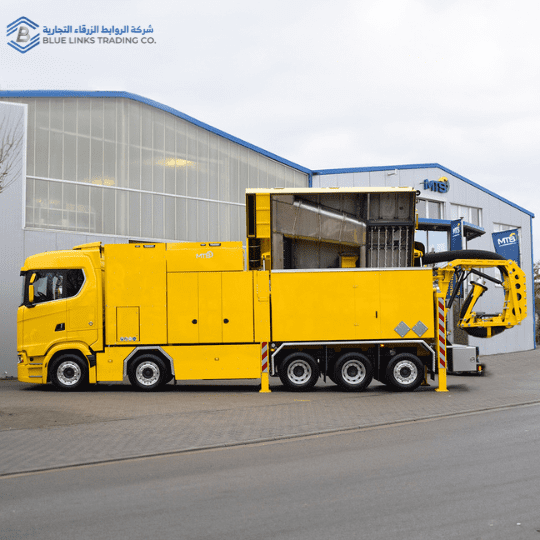
MTS, a leading German manufacturer of suction excavators, has developed one of the world’s most advanced systems for infrastructure works. Their machines use dual, triple, or even quadruple fan configurations capable of generating more than 130 kg of suction power, allowing safe excavation even in areas where cables and sensitive utilities lie directly beneath the surface. High-capacity filtration chambers, automatic filter cleaning, and cyclone separation ensure consistent airflow even in damp or compacted soil.
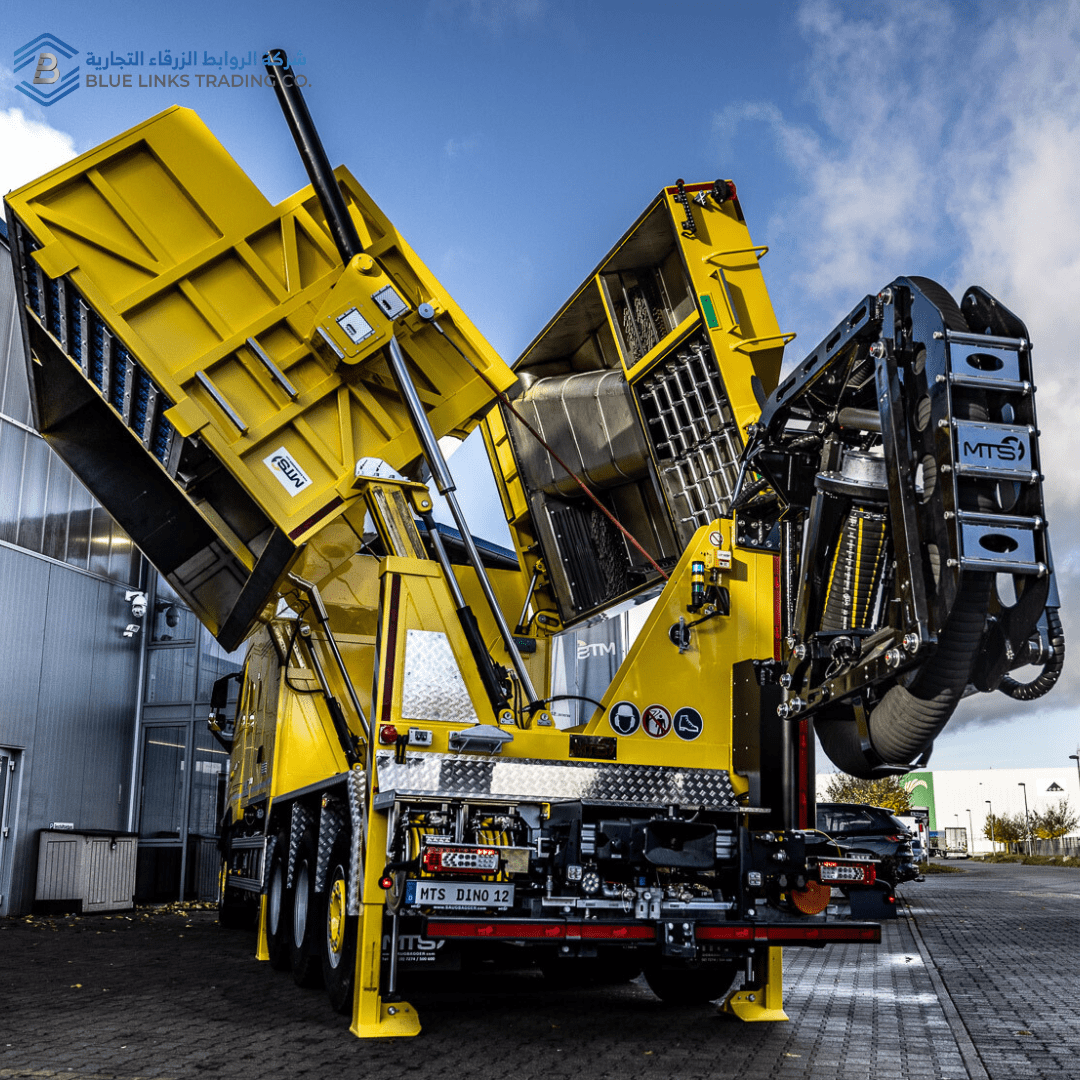
One of the most distinctive features of the MTS fleet is the FORCEARM family—POWERARM, EVOARM, and MEGAARM—which provide precise hose maneuverability with up to 180° rotation. This enables operators to work efficiently alongside tracks, between rails, or next to signalling posts without repositioning the vehicle. For deeper or long-distance excavation, models like the DINOTRIPLE and DINOMEGAVAC further enhance reach and performance.
To understand the full technical capabilities of these machines, engineers can explore the detailed specifications within the MTS DINO suction excavator guide, which outlines airflow performance, arm systems, filtration technology, and container capacities across all models used in railway and civil infrastructure works.
In Saudi Arabia, the exclusive supplier of MTS systems is Blue Links Trading Company (BLTCO), which has provided suction excavators, technical support, and operator training to public and private infrastructure projects since 2014. Their experience plays a key role in supporting Suction excavation in Saudi railway projects as the country modernizes and expands its national rail network.
The role of suction excavation in railway construction and maintenance
Railway environments require the highest levels of precision because even minor damage to signalling or communication lines can lead to operational delays and safety concerns. This is why Suction excavation in Saudi railway projects has become an essential method for exposing underground assets without the risks associated with traditional digging.
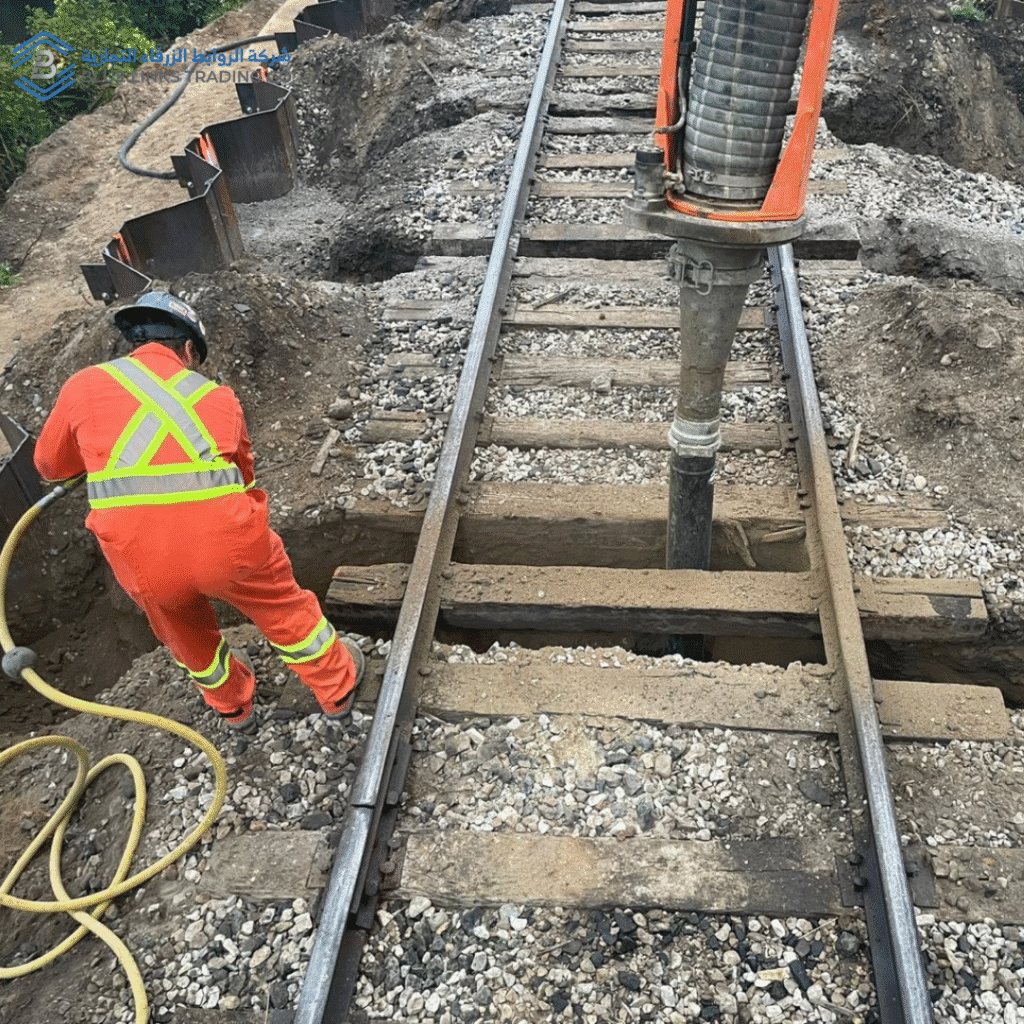
One of the most valuable applications is the ability to remove ballast safely. Suction excavators can extract gravel and underlying soil with exceptional accuracy, allowing maintenance teams to inspect, repair, or replace buried utilities without disturbing the surrounding track structure. This is especially important in stations, turnouts, metro corridors, and areas with dense signalling networks.
Drainage maintenance is another critical task. Railway drainage channels often become clogged with sand—common in desert regions—along with mud and debris caused by heavy rainfall. Suction excavators clear these channels efficiently, restoring proper water flow and reducing the risk of track flooding. Such performance is essential in a country where sand migration and harsh climate conditions heavily impact railway assets.
Beyond the track bed itself, suction systems are widely used for cleaning cable troughs, manholes, inspection chambers, and under-track crossings. Their ability to work in narrow or restricted zones, without heavy mechanical force, reduces downtime and minimizes the need for track closures. This contributes directly to more reliable operations and shorter maintenance windows.
Modern rail projects also benefit from the integration of non-destructive methods into broader smart-city and infrastructure strategies. Insights found in studies such as
suction excavation in smart cities highlight how precision excavation supports the long-term sustainability and resilience of urban and transport systems.
This approach is fully aligned with the national objectives outlined in the Saudi Vision 2030 transport and logistics strategy, which emphasizes safety, efficiency, and smart infrastructure adoption.
Additionally, global best practices such as those recommended by the Common Ground Alliance for safe non-destructive excavation reinforce the importance of using controlled suction methods to prevent utility strikes and improve operational safety in rail environments.
The most suitable DINO models for railway projects in Saudi Arabia
Different railway maintenance environments require different performance levels, and one of the advantages of MTS equipment is the diversity of its DINO fleet. Each model offers unique capabilities that support Suction excavation in Saudi railway projects across urban, intercity, and remote desert sections.
The DINO8 is widely chosen for railway works that require a balance between power and compact mobility. With its 8 m³ container and dual-fan system, it is ideal for tasks such as cable exposure, ballast cleaning, and drainage maintenance along congested or urban rail corridors where maneuverability matters most.
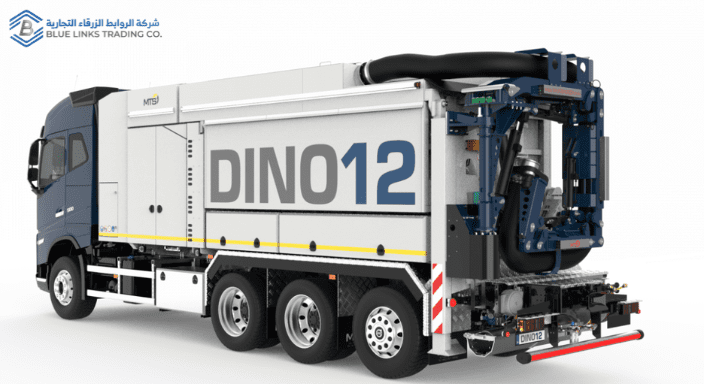
For higher-volume maintenance sections, the DINO12 provides a significant advantage. Its 12 m³ container reduces the number of unloading cycles, making it a strong choice for long-distance intercity lines or maintenance projects on double-track corridors. Its POWERARM and optional MEGAARM give operators enhanced control when working around signalling assets.
When projects demand long-distance suction or deeper excavation, the DINOTRIPLE stands out. Its triple-fan technology delivers increased airflow, enabling efficient gravel removal, sub-ballast exposure, and deep utility excavation even when the vehicle must remain parked at a distance from the track.
For extreme cases—such as deep foundation exposure or severe sand accumulation—the DINOMEGAVAC offers unmatched power through its quadruple-fan configuration. This model is especially useful in desert regions where dense or compacted material can obstruct drainage or signalling pathways over time.
A complete comparison of technical specifications and use cases can be found within the DINO excavator models overview, which helps project managers and engineers select the best configuration for each railway scenario.
Operational use case: A realistic example from Saudi Arabia
To understand the practical impact of Suction excavation in Saudi railway projects, consider a scenario involving maintenance on a busy intercity rail corridor connecting two major regions. The site required exposing buried signalling cables and clearing a blocked drainage channel beneath the ballast layer—tasks typically associated with high operational risk.
Before suction technology was introduced, teams relied on mechanical digging and manual excavation. These methods demanded longer work windows, increased the chance of hitting critical underground assets, and required partial train movement suspension during the operation. Such delays created cascading effects on passenger schedules, freight movement, and overall network reliability.
By deploying an MTS suction excavator, the maintenance team completed the excavation in a fraction of the time. The machine removed ballast and compacted soil with high precision, exposing infrastructure cleanly and without damage. The drainage system was restored quickly, preventing further water accumulation and minimizing future maintenance demand.
The improvement in safety and efficiency aligns with findings from studies on mega project performance optimization, which highlight how advanced technologies reduce downtime and improve long-term asset availability across national infrastructure programs.
In this example, the suction excavator reduced track closure time by over 40%, eliminated the risk of cable strikes, and enabled full service to resume earlier than scheduled. Such outcomes demonstrate how this technology supports large-scale rail modernization efforts under Saudi Arabia’s Vision 2030 strategy.
Why partnering with Blue Links Trading Company is a strategic advantage
As the exclusive supplier of MTS suction excavators in the Kingdom, Blue Links Trading Company (BLTCO) plays a foundational role in supporting Suction excavation in Saudi railway projects. Their expertise extends beyond equipment supply, offering consulting, operator training, and continuous technical support tailored to the unique challenges of the railway sector.
BLTCO provides guidance on selecting the right DINO model for each application—whether the project involves ballast replacement, drainage clearing, deep utility exposure, or long-distance suction work near active tracks. Their understanding of Saudi rail environments enables railway authorities and contractors to adopt technology confidently and reduce operational risk.
What makes BLTCO particularly valuable is their integration into the broader industrial ecosystem of the Kingdom. Their approach aligns closely with national objectives, ensuring that suction excavation contributes to safer, more efficient, and more sustainable rail operations. Detailed insights into their capabilities can be found on the official Blue Links company profile, which demonstrates their long-standing role in supporting major infrastructure and supply-chain projects throughout Saudi Arabia.
From initial consultation to after-sales maintenance and spare parts support, BLTCO ensures that suction excavators operate at maximum reliability—helping railway authorities meet the demands of Vision 2030 and maintain one of the region’s most advanced rail networks.
🟦 Frequently Asked Questions (FAQ)
Conclusion & Next Steps
As Saudi Arabia continues modernizing and expanding its national railway network, the need for safer, more accurate, and more efficient excavation methods has become essential.
The adoption of Suction excavation in Saudi railway projects has already demonstrated clear value—reducing downtime, preventing cable damage, improving drainage performance, and enhancing safety across urban rail corridors, intercity lines, and high-risk maintenance zones.
By combining the world-class capabilities of MTS suction excavators with the technical support and field expertise of
Blue Links Trading Co., railway authorities and contractors gain a powerful, proven method that aligns with the performance, sustainability, and reliability goals of Vision 2030.
From ballast replacement and cable exposure to drainage rehabilitation and deep utility access, Blue Links Trading Co. continues to serve as the
strategic backbone supporting safer and more efficient railway operations across the Kingdom.
Their technical consulting, model selection, operator training, and after-sales support ensure optimal performance throughout every project stage.
When you choose Blue Links, you gain more than equipment — you gain a specialized partner who understands the challenges of complex rail environments and stands beside your team from planning to execution.
Each project reflects the company’s commitment to precision, safety, and engineering excellence without compromise.
🚆 Looking to enhance safety and efficiency in Saudi railway projects?
Partner with Blue Links Trading Co. — the official supplier of
MTS suction excavators in Saudi Arabia.
Whether you manage railway maintenance, utility exposure, or high-precision infrastructure operations,
Blue Links delivers reliability, technical expertise, and long-term performance across the Kingdom.
With Blue Links Trading Co., every railway project becomes a partnership for success—combining
advanced MTS technology with Saudi engineering excellence to power the future of the Kingdom’s rail infrastructure.
Blue Links Trading Co. — advancing Saudi railway performance through precision, safety, and innovation.