

Suction Excavator: The Safe, Precise, Zero-Damage Excavation Technology
Across modern infrastructure projects, digging around buried utilities is no longer just about speed – it is about safety, precision, and control. Instead of relying only on mechanical buckets and breakers, many project owners now choose the vacuum excavator as a smarter, safer way to expose cables, pipes, and sensitive assets without damage.
This article explains what a vacuum excavation unit is, how it works, and why it has become a key technology for power networks, telecom corridors, railways, and smart city projects in Saudi Arabia and the wider GCC. You will also see how advanced European designs and local expertise in the Kingdom combine to offer a reliable, non-destructive excavation solution.

What Is a Suction Excavator?
A non-destructive excavation truck is a high-power vacuum system mounted on a truck chassis that removes soil and loose material through a large suction hose instead of digging with a traditional bucket. Rather than cutting through the ground blindly, the operator loosens the soil with air or water and lets the powerful airflow lift the material into a debris tank. This process allows the unit to uncover utilities with minimal mechanical contact and far less risk of accidental strikes.
In many technical references, this technology is described as an advanced form of vacuum excavation that combines strong suction power, precise control, and robust filtration to handle a wide range of materials, from dry sand to gravel and slurry. Independent industry overviews, such as those found in specialised vacuum excavation standards and encyclopedic resources, underline its role as a safer alternative to conventional excavation equipment for congested utility corridors.
How Suction Excavators Deliver Safe, Non-Destructive Digging
The safety advantage of this system comes from the way it handles the ground. Instead of forcing steel teeth or hydraulic breakers into unknown soil, the operator first loosens the upper layer using compressed air or low-pressure water. The loosened material is then removed by a controlled airflow through the vacuum hose. Because the tool tip does not strike directly against pipes or cables, the risk of cutting power lines, fibre optics, or gas pipes is dramatically reduced compared with traditional excavation.
On crowded job sites, this non-destructive approach is especially valuable. The vacuum excavator can work close to live assets, under existing pipe racks, and in narrow streets where heavy machinery would be difficult to position. By limiting the size of the excavation footprint and avoiding unnecessary damage, project teams can maintain service continuity, reduce rework, and comply more easily with safety and insurance requirements.
Key Components of a Modern Suction Excavator
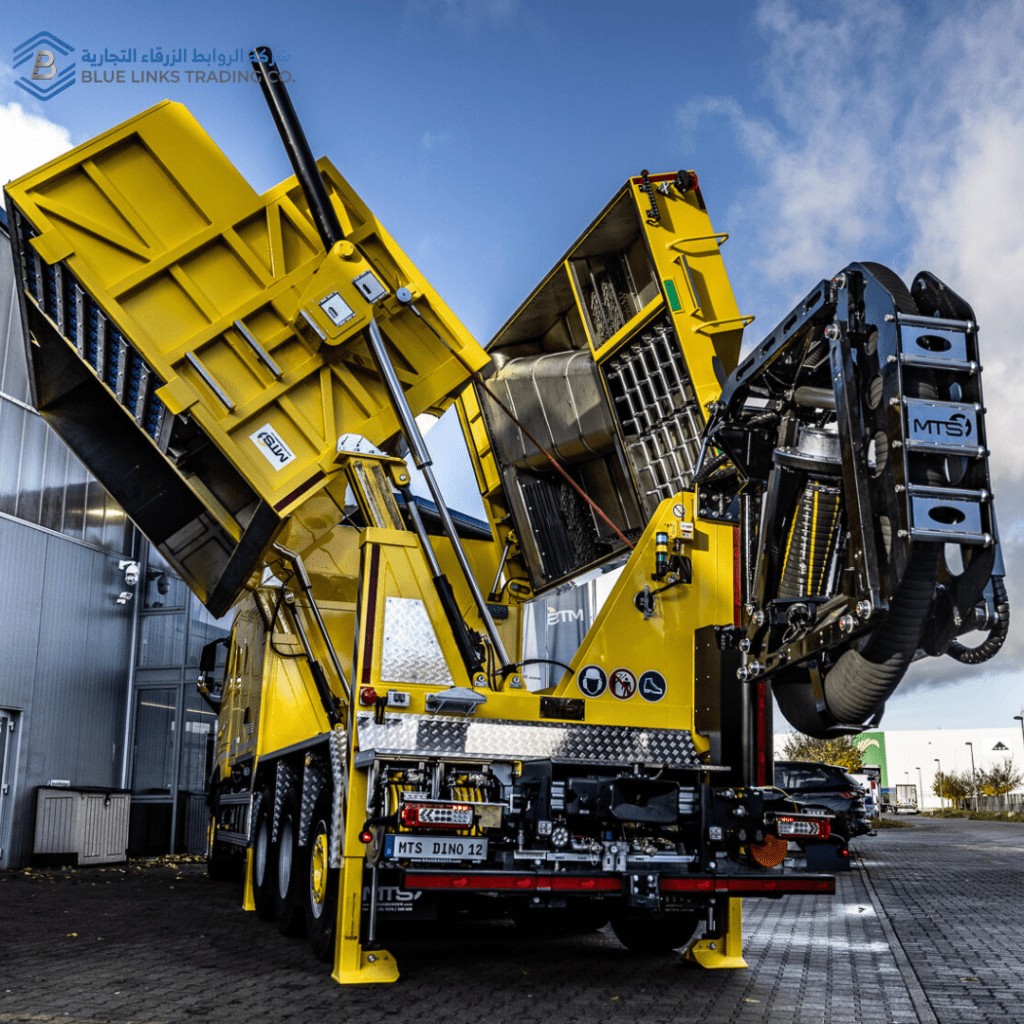
Modern units combine several specialised systems to deliver reliable NDD (non-destructive digging) performance on demanding construction projects. At the heart of the machine is a fan or turbine system that generates a powerful vacuum stream capable of lifting soil, ballast, and debris through the suction hose. This airflow passes through a filtration and separation chamber where material is deposited in the debris tank while dust is captured by filters before the air is released.
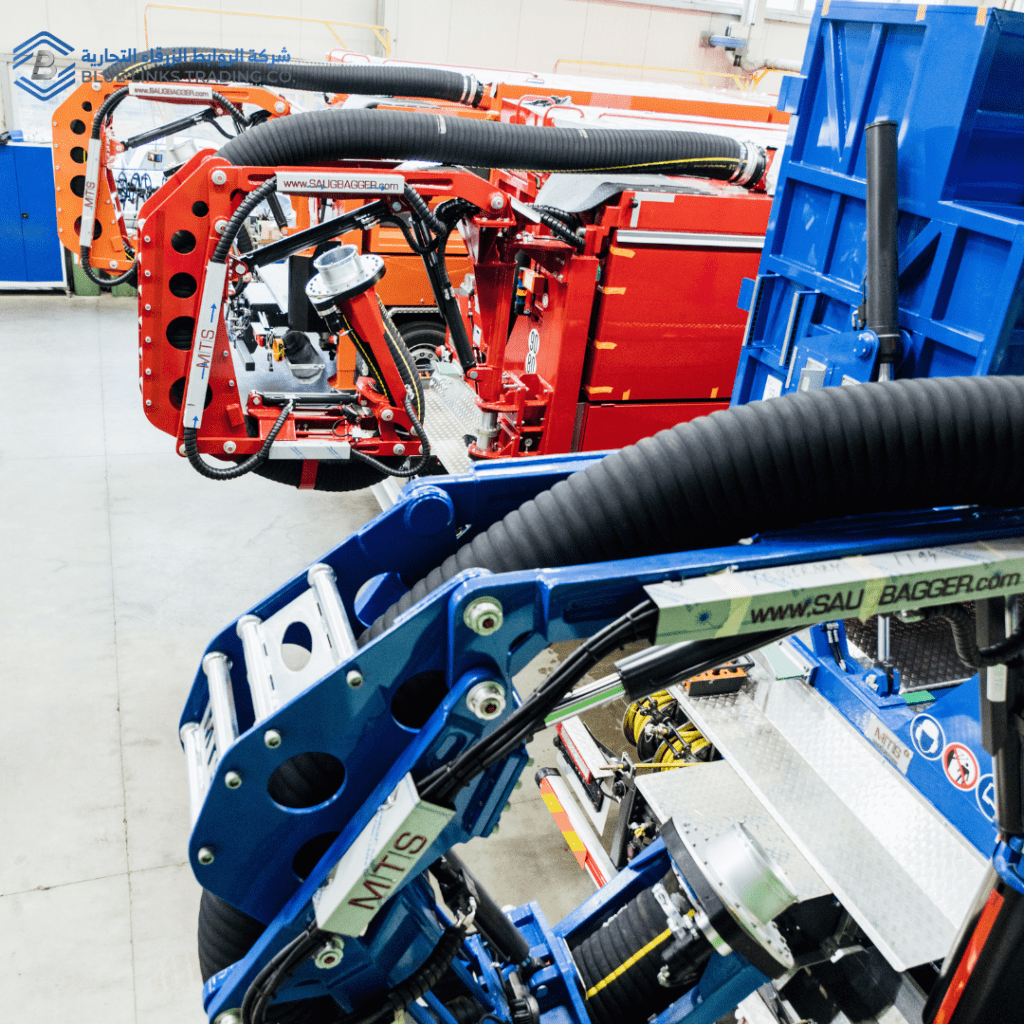
A heavy-duty debris tank, hydraulic tipping mechanism, and rugged truck chassis allow the equipment to operate as a mobile vacuum truck that can travel between sites and discharge material safely at authorised locations. Articulated booms and suction arms give the operator flexible reach around obstacles, while remote-control systems and cameras improve visibility in tight working areas. For readers who need a deeper technical breakdown of fan systems, filtration stages, and boom configurations, it is useful to consult a dedicated guide such as the detailed MTS overview provided in the MTS suction excavator guide, which explains how each component contributes to safe, efficient excavation.
The World of Suction Excavators
Although the idea of using airflow to move soil has existed for decades, the modern vacuum excavator emerged when infrastructure owners realised that traditional digging methods could no longer keep up with the density of underground utilities. As cities expanded and networks for electricity, water, gas, and fibre optics overlapped, every uncontrolled bucket strike became a potential outage, safety incident, or legal claim. Vacuum technology offered a way to excavate with far more control.
Today, these non-destructive excavation units are widely deployed across Europe, the Middle East, and other regions where utility corridors are congested and downtime is costly. Industry references and independent engineering reports highlight how this technology gradually moved from niche equipment for specialist contractors to a mainstream solution that many network operators now specify in their own safety guidelines for work near critical assets.
Evolution of Vacuum and Suction Technology
Early vacuum trucks were mainly designed for cleaning sewers and industrial tanks, not for precise excavation. Over time, manufacturers refined airflow management, added stronger fans and turbines, and redesigned collection tanks so the units could handle heavier ground material without clogging. This evolution turned the concept of simple vacuum cleaning into dedicated vacuum excavation systems capable of controlled digging around buried infrastructure.
Modern designs optimise airflow paths, filtration surfaces, and hose diameters to deliver consistent suction power even at longer distances from the truck. Some high-end units combine multiple fans or advanced turbine technology to maintain performance in demanding conditions such as deep excavations or heavy, wet soil. For project teams comparing fan-based and turbine-based configurations, detailed technical comparisons like the one found in specialised DINO unit overviews such as MTS DINO suction excavators in Saudi Arabia are particularly useful when selecting the right configuration.
Why Suction Excavators Became Essential in Infrastructure Projects
Infrastructure owners value the vacuum excavator because it reduces uncertainty. When drawings are outdated or GPS positions are approximate, mechanical excavation can unintentionally cut a live cable or damage a pressurised pipeline. By contrast, vacuum-based excavation removes soil carefully around the asset, revealing its true depth and alignment before any mechanical tool is allowed near it. This approach aligns strongly with modern risk management policies and zero-harm safety programmes.
In large-scale projects such as rail corridors, metro lines, and power transmission upgrades, the ability to expose utilities quickly without interruption is a major advantage. Non-destructive excavation means fewer emergency repairs, fewer claims from utility owners, and less disruption to traffic and local communities. As more clients demand proof of safe working methods in tender documents, contractors that invest in advanced NDD excavation units often find it easier to qualify for high-value projects where safety, reliability, and compliance are non-negotiable.

How a Suction Excavator Works
A modern vacuum excavator operates using a high-power airflow system that safely removes soil and debris without direct contact with underground utilities. This non-destructive approach makes it ideal for complex environments such as electricity and fiber-optic networks, metro corridors, and dense urban infrastructure.
1. Airflow Generation Through a High-Power Fan System
The process begins when the machine’s fan system creates a controlled negative-pressure zone inside the air chamber. This powerful airflow enables the excavation system to lift soil, sand, gravel, and light construction waste efficiently, even in narrow or sensitive worksites.
2. Dislodging Soil Without Damaging Utilities
Unlike mechanical digging tools, the suction method loosens the ground using air velocity rather than impact. This ensures safe excavation around power cables, telecom ducts, and water lines—reducing the risk of costly strikes or outages. It remains the preferred non-destructive technique in Saudi Arabia, especially in smart city projects and heavily congested corridors.
3. Material Intake Through the Suction Hose
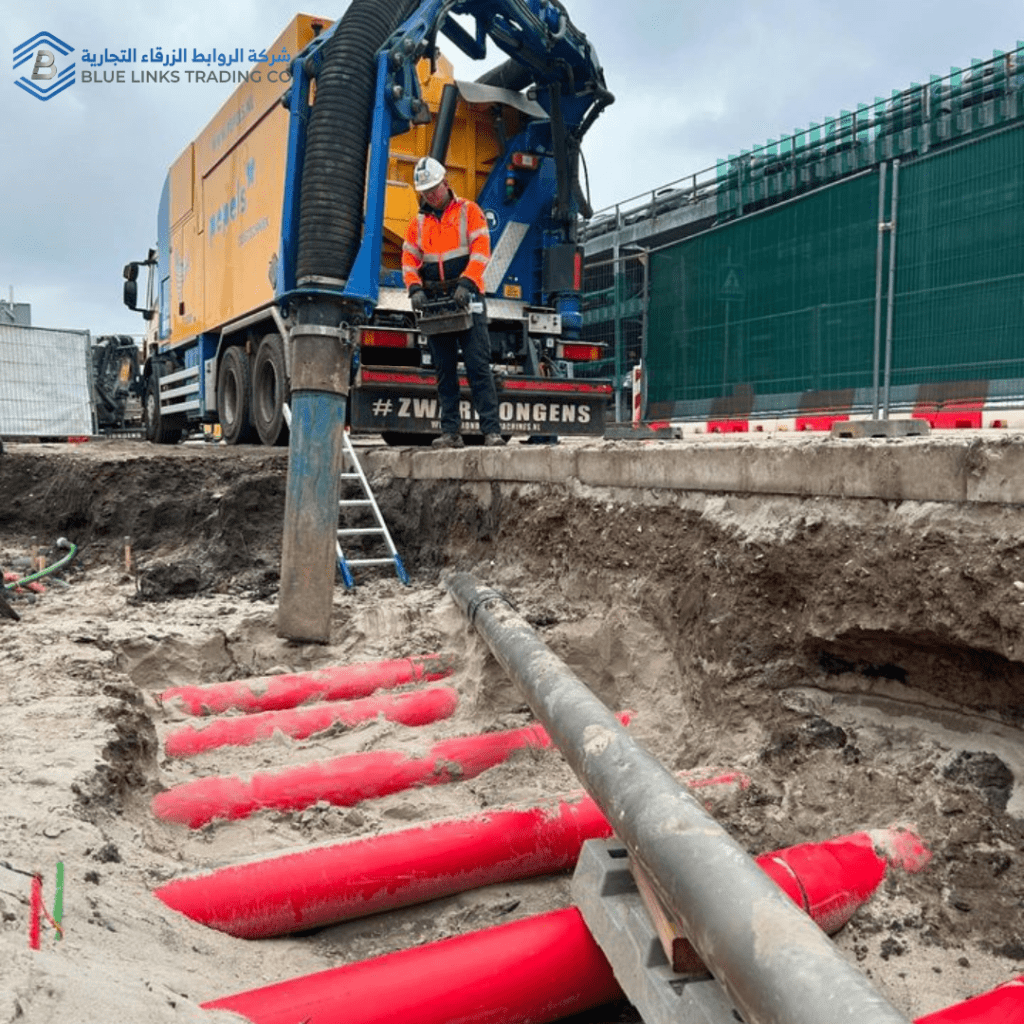
The loosened material is then drawn through a reinforced suction hose directly into the debris container. A high-performance suction excavator can remove several cubic meters of material per hour, depending on soil characteristics and airflow output.
4. Filtration and Debris Separation
Inside the machine, a multi-stage filtration system separates dust from heavier material before releasing clean air back into the environment. This improves visibility on site and allows excavation even in confined urban areas with minimal environmental impact.
5. Safe Material Discharge
Once the excavation is complete, the operator can tilt the debris tank to discharge the collected material in a controlled manner. This capability makes the vacuum excavator highly efficient for projects requiring fast cycles and continuous operation.
Why This Workflow Matters
This step-by-step process is what makes the suction technique significantly safer and more precise than traditional digging. The ability to excavate with virtually zero contact risk is a major reason why leading infrastructure companies rely on this technology for critical projects.
Advantages of Suction Excavators
A modern vacuum excavation system delivers a wide range of operational, safety, and environmental advantages, making it the preferred solution for non-destructive excavation across Saudi Arabia. Its ability to work safely around underground utilities aligns perfectly with the needs of electricity and telecom projects undergoing rapid expansion under Vision 2030.
1. Zero-Damage Excavation for Underground Utilities
Traditional digging tools often risk striking power cables, fibre-optic networks, or water pipelines—causing costly outages and dangerous incidents. By eliminating direct mechanical contact, the suction excavator ensures safe exposure of buried utilities during maintenance, inspection, or route preparation. This is why many companies rely on advanced MTS-based excavation solutions in sensitive corridors.
2. Faster and More Precise Than Mechanical Digging
Mechanical excavation can be slow and requires constant manual adjustments, especially in areas with dense cabling. In contrast, the airflow-driven process used by modern suction systems enables rapid material removal with exceptional precision. This efficiency shortens project timelines—particularly in smart city developments and large-scale infrastructure upgrades.
3. Reduced Environmental and Site Impact
The controlled suction process minimises dust, reduces trench size, and limits disruption to surrounding areas. This makes the technology ideal for urban environments, hospitals, residential zones, and active commercial districts where noise and vibration levels must remain low.
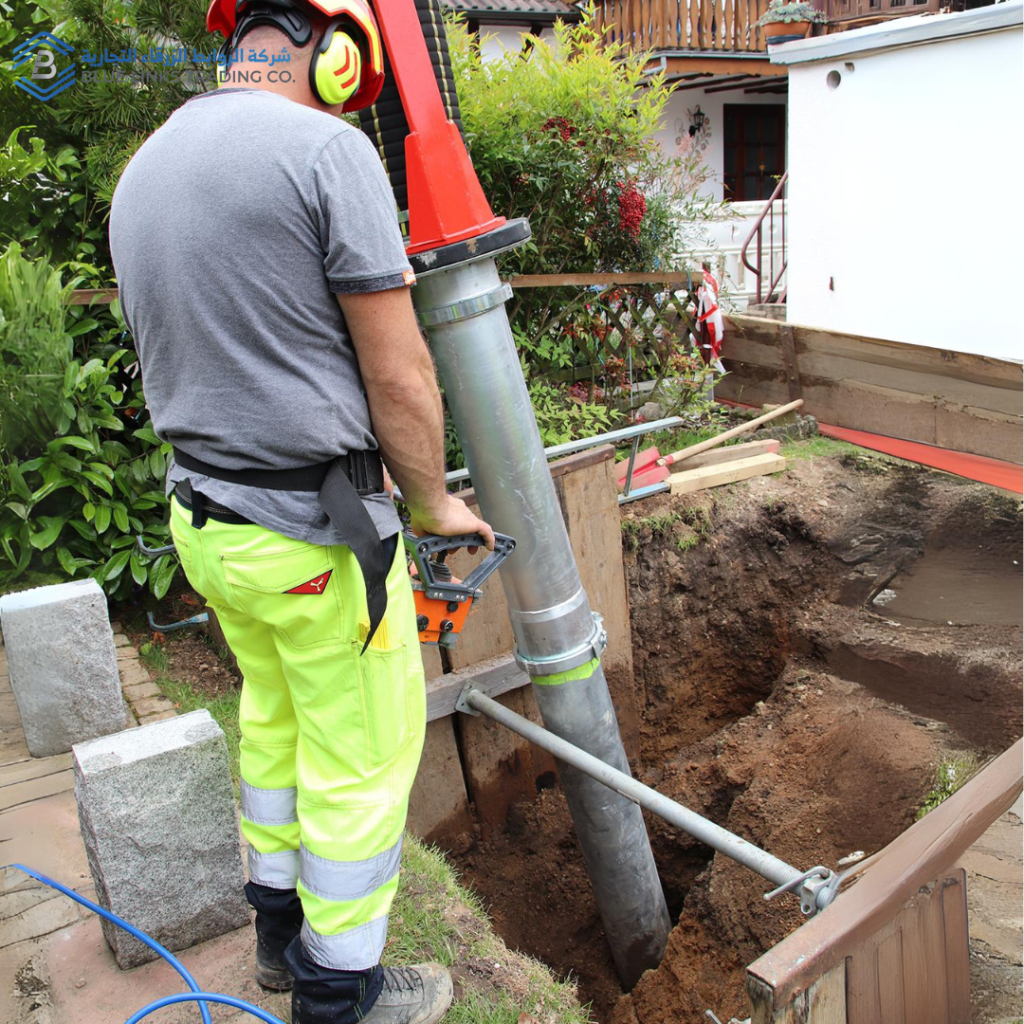
4. Superior Safety for Workers and the Public
By reducing ground disturbance and eliminating the need for heavy impact machinery, this method improves overall site safety. It significantly lowers the likelihood of utility strikes, excavation collapses, and accidental injuries—supporting safer operational standards across the region.
5. Cost-Efficient Over the Full Project Lifecycle
Although the initial deployment cost may be higher than mechanical digging, the reduction in utility damage, downtime, and rework makes vacuum excavation far more cost-effective over the long term. This is especially valuable in mega-projects such as NEOM, The Red Sea, and major power network upgrades, where delays can lead to major financial penalties.
6. Suitable for Diverse Soil Conditions
From heavy desert sand to compacted soil, suction-based excavation performs reliably across varying ground types. Its versatility makes it the preferred option for challenging environments, including desert regions and deep trenching scenarios.
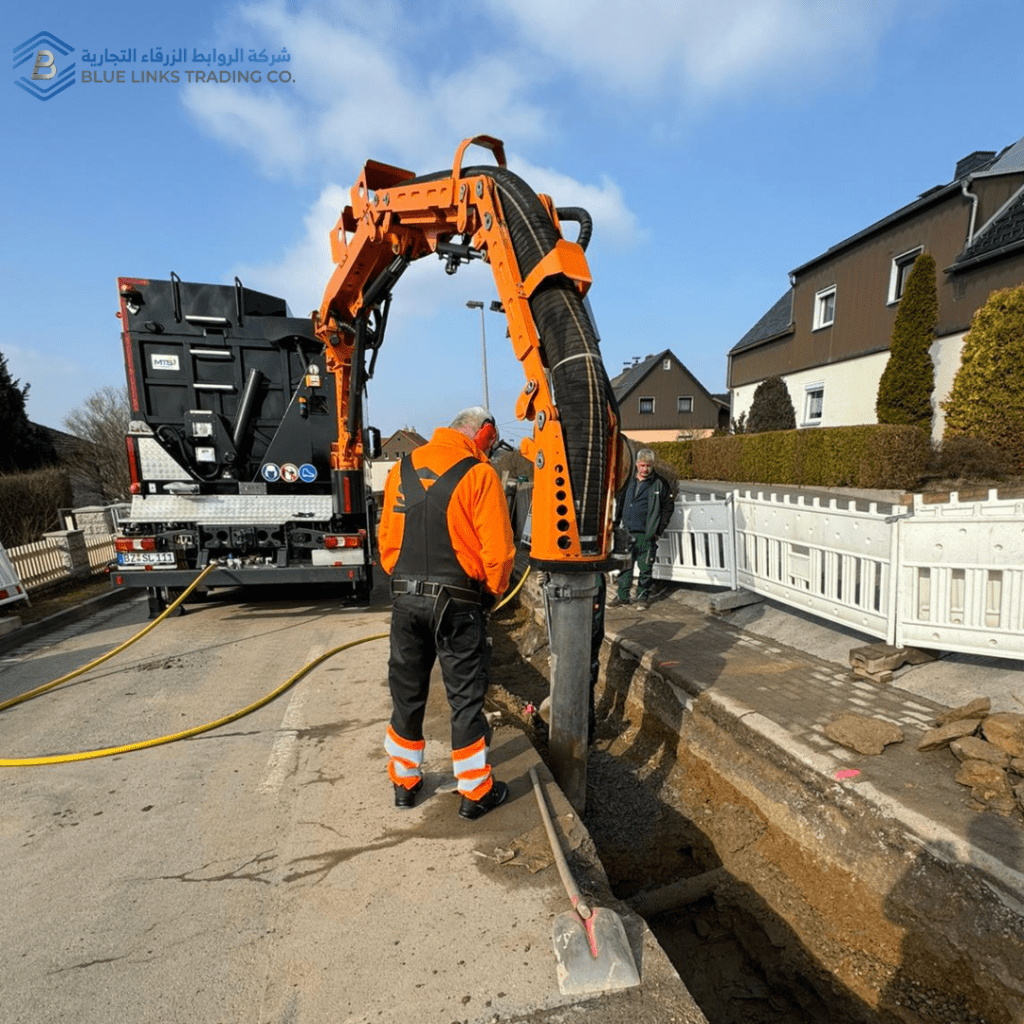
Suction Excavator vs Hydro Excavator
When choosing the right non-destructive digging method, project engineers often compare the dry-excavation approach of a suction excavator with the water-based operation of hydro excavation systems. Both are widely used in utility, telecom, and infrastructure projects, but each delivers different advantages depending on soil type, project scale, and operational requirements across Saudi Arabia.
Key Technical Differences
The suction method relies on high-powered airflow generated by fans or turbines, allowing completely dry excavation without using water. By contrast, hydro excavation uses pressurised water to break the soil before vacuuming it. While hydrovacs can perform well in extremely compact soil, they create slurry that must be transported and disposed of—adding cost, time, and environmental impact.
This is one reason many Saudi contractors now prefer dry, non-destructive excavation for cleaner, faster site operations.
Efficiency and Performance in Saudi Conditions
The desert environment places unique demands on excavation equipment. A vacuum-based excavator performs exceptionally well in dry and sandy soil, offering precise excavation without generating mud or excess waste. Hydrovacs, however, may struggle because water absorption increases slurry production, slowing down operations and adding significant logistics requirements.
Operational Safety and Utility Protection
Both systems are safer than mechanical digging, but the dry method provides greater control when exposing fibre-optic cables, medium-voltage lines, or water pipelines. Clean, dry excavation reduces contact risk and improves visibility—an essential factor for utility risk management in dense urban corridors.
Which Method Works Best in Saudi Arabia?
For most applications—particularly telecom, electricity, and smart-city infrastructure—the suction method is preferred in Saudi Arabia due to its speed, safety, and ability to operate without water. Hydro excavation still has value in extremely compact or frozen soil conditions, but its higher disposal cost and dependency on water make it less practical for large-scale regional projects.
Vacuum Excavator & Vacuum Truck Technology
While a suction excavator is engineered primarily for non-destructive digging, a vacuum truck is built for industrial suction tasks such as waste removal, sludge extraction, and material transport.
Understanding the technical differences between both systems helps contractors in Saudi Arabia choose the right equipment for their operational needs.
Differences Between Vacuum Trucks and Suction Excavators
A vacuum truck uses high-pressure suction designed for carrying wet or dry materials over longer distances, making it suitable for industrial cleaning and municipal services.
In contrast, a suction excavator is optimized for precision excavation around underground utilities, where accuracy and safety are essential.
Its airflow system, arm configuration, and debris handling mechanisms are engineered for construction and utility projects—not general waste extraction.
When Vacuum Excavation Is the Better Choice
Vacuum excavation is ideal when working near live electricity cables, fiber-optic lines, or water networks where traditional methods pose a high risk of strikes.
It prevents accidental damage and improves operational safety, especially during excavation risk management.
This approach also enhances control in narrow access areas, reducing surface disruption and minimizing restoration costs.
Key Advantages of Vacuum Excavation Systems
Vacuum excavation provides superior control, reduced noise levels, and improved environmental performance.
For contractors seeking predictable outcomes and compliance with safety standards, vacuum systems outperform mechanical tools in almost all utility projects.
Their ability to remove soil without direct contact significantly reduces hazards and supports long-term equipment reliability—especially when supported by planned
predictive maintenance.
How Suction Power Enhances Precision
Unlike vacuum trucks, suction excavator units use highly calibrated airflow designed to extract soil with minimal force on surrounding utilities.
This makes them essential in telecom upgrades, power grid expansions, and complex infrastructure corridors where precision is non-negotiable.
Smart Deployment in Urban and Industrial Environments
In dense city centers, vacuum excavation reduces noise and vibration, making it suitable for nighttime operations or sensitive neighborhood work.
Industrial zones benefit from its ability to remove material efficiently without interrupting ongoing operations—making vacuum excavation a strategic tool across Saudi Arabia’s modern infrastructure projects.
Suction Excavator Models: Lightweight, Standard & Heavy-Duty
Modern infrastructure projects in Saudi Arabia require different levels of power, mobility, and precision—making it essential to choose the right suction excavator model for each application.
From lightweight urban units to heavy-duty industrial models, every configuration is designed to achieve maximum efficiency and safety in non-destructive excavation.
Lightweight Models for Urban and Narrow Access Worksites
Lightweight suction excavator units are ideal for congested environments such as city streets, residential zones, and commercial districts.
They offer exceptional maneuverability while maintaining strong suction performance.
These models are commonly used for telecom upgrades, cable exposure, and maintenance projects where minimal surface disruption is required.
Standard Models for Most Utility and Construction Projects
Standard units represent the industry’s balance between power and mobility.
They can operate efficiently in energy projects, fiber installation, and general construction.
Their versatility makes them the most widely used option across Saudi Arabia’s expanding utility and infrastructure networks.
Heavy-Duty Models for Deep and High-Volume Excavation
Heavy-duty suction excavator systems are engineered for large-scale projects requiring maximum airflow, deep digging capability, and high-volume material removal.
These units are especially important in industrial zones, rail corridors, and megaproject environments like NEOM and the Red Sea.
Fan Systems vs Turbine Systems
Fan-based systems deliver high airflow and are typically used in applications requiring fast soil removal and precision near sensitive assets.
Turbine systems, however, generate higher vacuum pressure, making them suitable for deep or dense soil layers.
Choosing between the two depends on soil type, depth, and required extraction speed.
Rear Arm vs Side Arm Configurations
Rear-mounted arms provide excellent reach and stability for open-area excavation, while side-mounted arms offer enhanced maneuverability in tight spaces.
Selecting the right configuration improves project efficiency and minimizes operational delays.
When to Choose a Quad-Fan High-Performance Model
Quad-fan units—with significantly greater suction power—are the preferred choice for demanding excavation work including deep trenches, industrial maintenance, and complex utility exposure.
For example, MTS quad-fan systems are known for their advanced engineering and efficiency, making them a leading choice in Saudi Arabia’s infrastructure sector.
Learn more about advanced technologies in our MTS suction excavator guide.
DINO Suction Excavator Models
For specialized industrial applications, DINO models provide enhanced performance and flexibility, particularly in scenarios requiring high airflow and controlled extraction.
Their reliability has made them a preferred solution across complex construction and utility environments.
Explore our comparative overview in the DINO Excavator Models guide.
Find the Right Suction Excavator for Your Project
Choosing the right suction excavator is a critical decision that directly impacts excavation quality, speed, and safety—especially in complex utility environments across Saudi Arabia.
Each project requires a tailored approach based on soil conditions, depth, access limitations, and utility density.
Selecting the Ideal System Based on Project Size
Large industrial developments, metro expansions, and railway corridors often require high-capacity systems capable of sustained airflow and deep extraction.
In contrast, urban maintenance operations benefit from compact units optimized for maneuverability.
Understanding the project scale ensures that the suction excavator delivers consistent performance without unnecessary fuel consumption or operational delays.
Soil Type, Depth & Utility Density Considerations
Soil conditions differ significantly between coastal regions, rocky terrains, and desert zones.
Loose sand demands high-volume airflow, while compact clay requires greater suction pressure.
Depth and utility concentration also influence equipment selection—particularly in environments where non-destructive digging is essential, such as underground utility exposure.
When to Choose a High-Performance Quad-Fan Unit
Quad-fan systems are ideal when projects require deep excavation, rapid soil removal, or safe exposure of dense utility clusters.
They provide exceptional airflow and are commonly used in gigaprojects and industrial zones.
For advanced German-engineered technologies, explore our overview of MTS excavation systems designed specifically for demanding conditions.

Vacuum Excavation vs Mechanical Digging
Mechanical excavation remains suitable for open, low-risk areas—but cannot match the precision or safety of vacuum systems near critical infrastructure.
Vacuum excavation significantly reduces the likelihood of utility strikes, service interruptions, and costly repairs.
For smart-city applications where accuracy is essential, see our insights on suction excavation in smart cities.
When Vacuum Excavation Is the Better Choice
Vacuum excavation excels in projects requiring non-destructive methods, such as electricity upgrades, fiber-optic installations, telecom maintenance, and trenching in tight urban areas.
It also ensures predictable safety standards and complies with modern infrastructure requirements under Saudi Arabia’s development initiatives.
On-Site Support & Advisory for Equipment Selection
Because every project condition is unique, many contractors rely on specialized engineering consultation to identify the most suitable suction excavator model.
Our team provides technical support, documentation, and site-specific recommendations to ensure safe and efficient excavation workflows.
Applications of Suction Excavation in Saudi Arabia
Saudi Arabia’s rapid infrastructure expansion—across power networks, fibre-optic systems, metro corridors, and emerging smart-city zones—has positioned the suction excavator as an essential tool for safe and efficient excavation. Its ability to remove soil without damaging underground assets has transformed how engineers approach utility work in both urban and desert environments.
Electricity and Telecom Utility Networks
The growth of fibre-optic and medium-voltage networks demands ultra-precise excavation with zero tolerance for utility damage. Using controlled airflow, a vacuum excavation system enables utility teams to expose cables safely—making it ideal for projects where even a minor strike can trigger outages or significant financial penalties. For more insights into preventing such risks, refer to our guide on excavation risk management.
Railway Corridors and Metro Infrastructure
Saudi Arabia’s expanding rail and metro systems require controlled excavation near sensitive assets, including signalling lines and drainage structures. A suction-based excavator provides precise trenching and debris removal without disrupting operations, supporting the long-term reliability of national transportation megaprojects.
Desert and Heavy-Sand Environments
Traditional excavation tools often struggle in loose or shifting desert soil. By maintaining stable digging and reducing collapse risks, a dry-excavation system performs exceptionally well in sandy regions across the Kingdom. To learn more about techniques optimised for harsh terrain, explore our dedicated overview of suction excavation in desert environments.
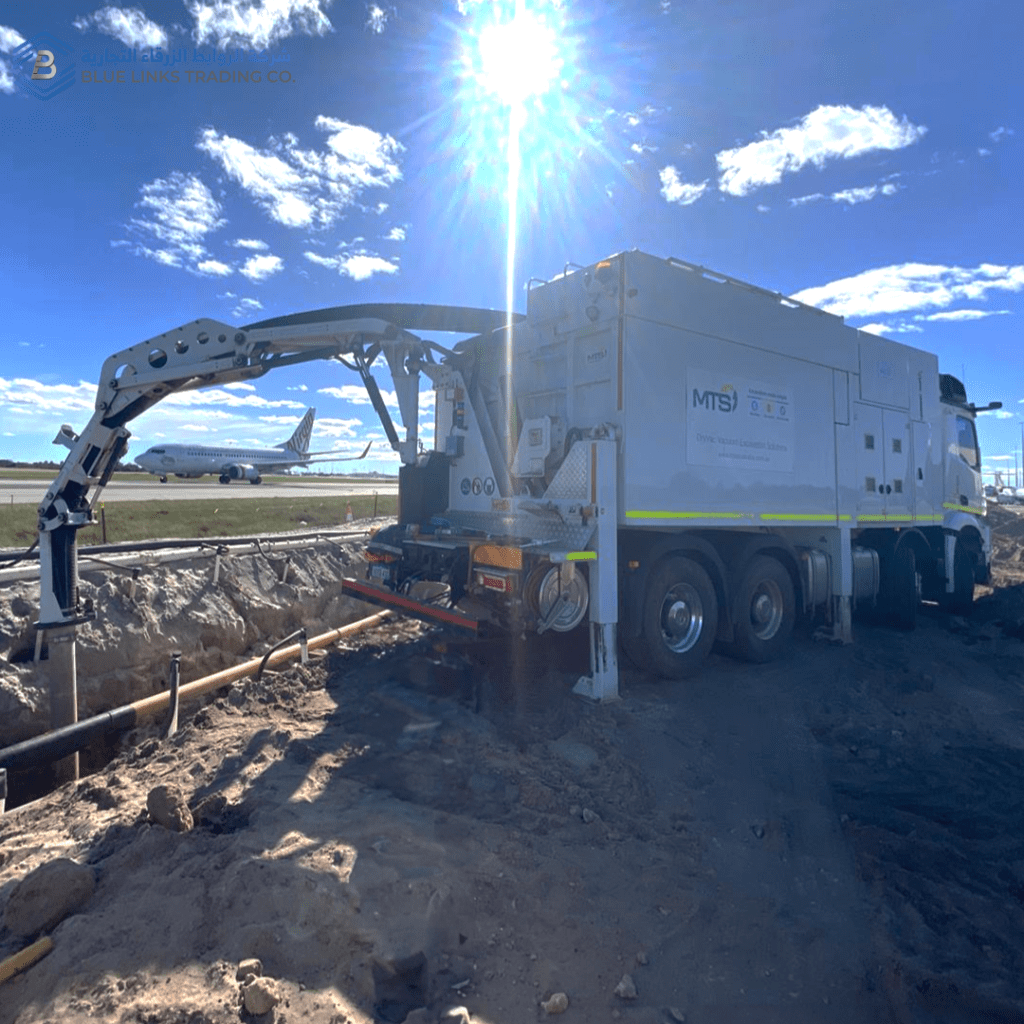
Urban Areas and Narrow Access Worksites
Dense city centres—such as Riyadh, Jeddah, and Dammam—require excavation with minimal noise, dust, and surface disruption. The suction method excels in narrow streets, residential neighbourhoods, and commercial zones where traditional mechanical digging is impractical. This capability directly supports smart-city goals and modern non-destructive excavation practices.
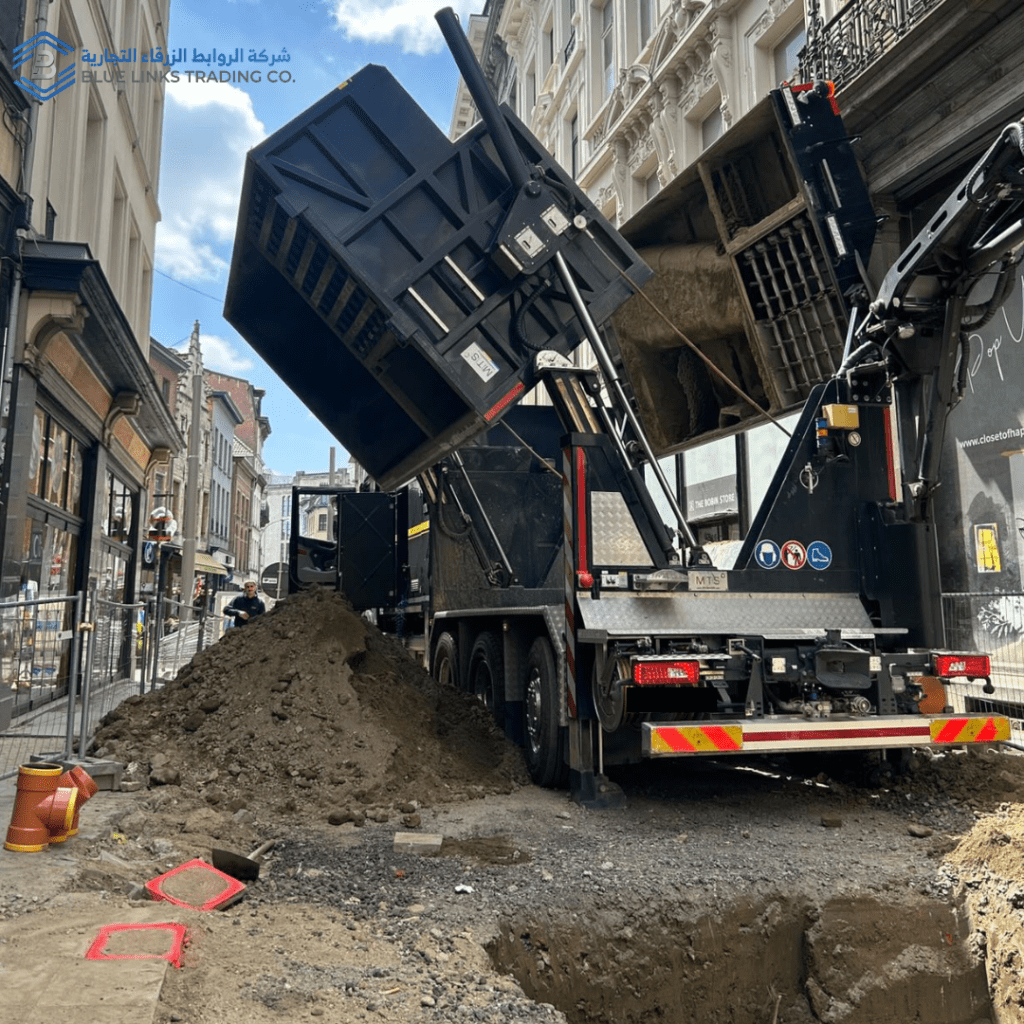
Water Pipelines and Municipal Infrastructure
Municipal engineering teams rely on this technology to expose ageing pipelines, repair leaks, and conduct preventive maintenance without interrupting public services. Dry excavation minimises contamination risks and enables rapid reinstatement of essential utilities.
Prices for Vacuum Excavators: Global Insight
Globally, investment levels vary depending on chassis type, power output, fan or turbine configuration, and advanced features such as remote controls or specialised filtration. Models range from compact units to large multi-fan systems designed for heavy industrial applications.
Key Factors Affecting Equipment Cost
Major pricing variables include airflow performance, debris-tank volume, number of fans, boom design, and whether the machine supports dry, wet, or combined suction modes. Additional options—like enhanced filtration or custom storage—also influence final cost.
Why Professional Operation Reduces Total Project Cost
Skilled teams using the correct equipment for each task can dramatically reduce rework, emergency repairs, and schedule overruns. Minimising utility strikes and limiting surface disruption often makes vacuum excavation more cost-effective overall than conventional digging.
The Possibilities of Vacuum Technology
Vacuum technology has developed into a precise excavation method that supports safe utility exposure and controlled material removal in complex environments—far beyond its original industrial cleaning applications.
Advanced Uses in Telecom, Power, and Smart Cities
In telecom and power networks, it is used for trial pits, cable verification, and preparing routes for new ducts. In smart-city zones, it enables safe work in dense utility corridors and tunnel sections where traditional excavation poses high risks, aligning with national development and infrastructure policies.
Future Trends in Non-Destructive Excavation
Next-generation systems are expected to incorporate smart controls, telematics, and remote diagnostics that support predictive maintenance. Combined with digital mapping and utility-location tools, vacuum excavation will continue playing a central role in safe, data-driven infrastructure delivery.
MTS Suction Excavators – Driving Efficiency in Construction
MTS is recognised globally for engineering high-performance systems designed for demanding construction and utility projects. Their German-built platforms deliver strong airflow, robust filtration, and flexible boom configurations suited for complex worksites.
German Engineering and Performance Standards
MTS machines are built around advanced fan and filtration technologies that ensure consistent power and reliable performance, even in harsh environments. Detailed explanations are available in the MTS suction excavator guide and the company’s broader coverage of MTS technology.
Why MTS Units Lead the Market in Saudi Arabia
Their combination of European engineering and local application expertise makes them an excellent fit for energy corridors, rail projects, and smart-city infrastructure. Paired with technical support and operator training, these solutions help contractors achieve safer, faster, and more efficient excavation.
Choosing a Trusted Suction Excavation Partner in Saudi Arabia
Selecting the right supplier is just as important as choosing the right equipment. Project owners need a partner familiar with regional soil conditions, utility-owner standards, and vacuum-excavation best practices.
Technical Support, Training, and Project Advisory
A reliable supplier provides more than equipment delivery—they offer project consultation, certified operator training, and on-site support. Working with an official dealer such as Blue Links Trading ensures access to genuine technology, spare parts, and specialised engineering guidance.
Documentation, Safety Compliance, and Local Experience
Comprehensive documentation—including datasheets and operating procedures—is essential for compliant operations. Partners with established experience in Saudi Arabia help align deployment with utility requirements, contractor safety policies, and national regulations. Learn more through the Blue Links Trading Company profile and its broader industrial and technical services.
🟦 Frequently Asked Questions (FAQ)
Conclusion & Next Steps
As Saudi Arabia continues to expand its infrastructure across power networks, fiber corridors, railways, metro lines, and smart-city zones, the need for safer and more precise excavation methods is greater than ever.
Conventional digging carries a high risk of striking underground assets, causing outages, delays, and costly repair claims.
In contrast, modern suction excavation offers a controlled, non-contact approach that protects buried utilities while keeping projects on schedule — aligning with Saudi Arabia’s digital and infrastructure vision as outlined in Saudi Vision 2030 Digital Transformation Program.
By combining advanced MTS suction excavator technology with local engineering expertise, project owners and contractors in the Kingdom gain a reliable method for working in dense utility corridors, narrow urban streets, and harsh desert environments. This approach supports the safety and telecom standards published by the Communications, Space & Technology Commission (CST), ensuring compliance during excavation around telecom and power assets.
Choosing the right supplier is just as important as choosing the right machine.
A knowledgeable partner can help you define suitable models, plan safe workflows, support operators on site, and ensure full compliance with local utility and contractor requirements.
This turns suction excavation from a single piece of equipment into a long-term strategic advantage for your projects.
⚡🚧 Work With a Suction Excavation Specialist in Saudi Arabia
Partner with Blue Links Trading Co. to bring proven MTS suction excavation technology to your projects.
Whether you manage utility upgrades, metro and rail developments, industrial facilities, or smart-city infrastructure,
Blue Links provides technical consulting, model selection support, operator training, and after-sales service tailored to Saudi conditions.
With Blue Links Trading Co., you gain more than advanced equipment —
you gain a long-term technical partner who understands Saudi soil conditions, utility standards,
and the real-world challenges of working around critical underground assets.
Blue Links Trading Co. — supporting Saudi infrastructure with precision excavation, safety, and engineering excellence.