

Water & Wastewater Suction Excavation for Damage-Free Utility Works
Why Water & Wastewater Excavation Is a High-Risk Operation in Saudi Cities
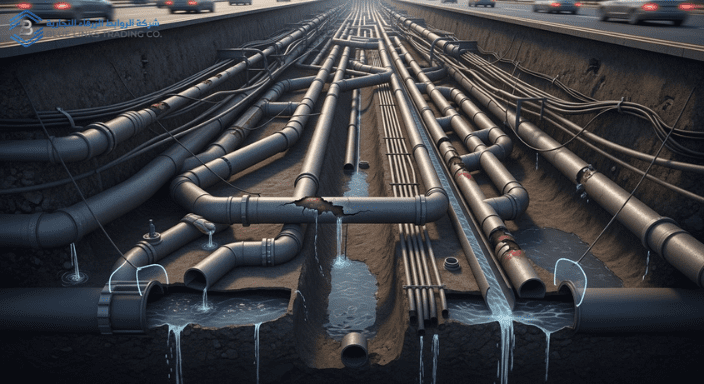
Excavation activities within active water and wastewater networks represent one of the most operationally sensitive tasks in Saudi Arabia’s urban infrastructure. Unlike open construction sites, underground utility corridors in major cities carry live water pipelines, sewer lines, telecom cables, and power infrastructure operating simultaneously beneath limited surface space.
In this environment, any excavation decision becomes a risk management challenge rather than a purely construction task. A single misjudgment during soil removal can result in pipe rupture, wastewater leakage, service interruption, or emergency road closures—outcomes that directly impact public health, municipal operations, and project timelines.
As Saudi cities expand under national infrastructure programs and smart city initiatives, the margin for error continues to shrink. Regulatory bodies and utility operators increasingly prioritize excavation methods that minimize disturbance to live networks while maintaining execution efficiency. This shift has accelerated the adoption of water wastewater suction excavation as a practical, field-proven alternative to mechanical digging.
Unlike traditional excavation tools that rely on direct mechanical contact with the soil, suction-based systems enable controlled material removal without physical impact on buried assets. This capability becomes critical when working near pressurized water lines, aging sewer networks, or undocumented utility crossings—conditions commonly encountered in dense urban districts.
Within this context, non-traditional excavation methods are no longer viewed as optional technologies. They are increasingly treated as operational requirements aligned with national infrastructure resilience goals outlined in Saudi Arabia’s long-term water strategy and urban development frameworks.
Global utility damage prevention studies consistently show that non-destructive excavation significantly reduces underground utility strikes, repair costs, and project delays. Organizations such as the Common Ground Alliance emphasize vacuum and suction excavation as a primary mitigation tool in high-risk utility environments, particularly where live services must remain operational during works.
Risks of Traditional Excavation Near Water and Sewer Networks
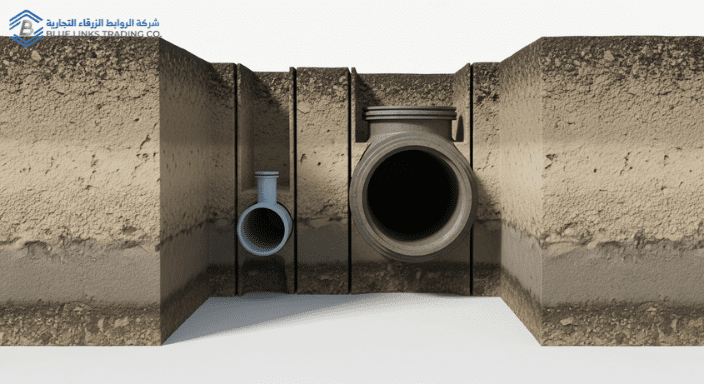
Traditional mechanical excavation methods—such as backhoes, breakers, and manual digging—remain widely used across infrastructure projects. However, when applied near live water and wastewater networks, these methods introduce a level of operational uncertainty that is difficult to control within dense urban environments.
The primary risk stems from direct mechanical contact with the soil. Excavator buckets and hand tools offer limited precision once underground assets are exposed, increasing the likelihood of pipe deformation, hairline cracks, or sudden ruptures—especially in aging sewer lines or pressurized water mains.
In Saudi cities, where utility corridors often contain overlapping services installed over different development phases, undocumented crossings are common. Mechanical excavation in such conditions significantly elevates the probability of accidental strikes, resulting in wastewater overflows, contamination risks, and unplanned service outages.
From an operational standpoint, the consequences extend beyond physical damage. Emergency repairs frequently trigger traffic diversions, extended road closures, and additional permitting requirements, all of which increase execution time and inflate project costs. These cascading effects have made excavation-related incidents a central concern in excavation risk management strategies across the utility sector.
Another critical limitation of conventional digging is its incompatibility with live-network maintenance. In many water and wastewater projects, shutting down services is either impractical or prohibited. Mechanical excavation offers little flexibility in such scenarios, forcing operators to choose between increased risk or service disruption.
By contrast, water wastewater suction excavation addresses these challenges by separating soil removal from mechanical force. The ability to expose pipelines and sewer structures without physical contact fundamentally changes the risk profile of excavation activities near critical utilities.
International utility safety frameworks, including guidance from the International Water Association, increasingly recognize non-destructive excavation techniques as a best practice for protecting water and wastewater assets in urban infrastructure projects.
How Water Wastewater Suction Excavation Works as a Non-Destructive Solution
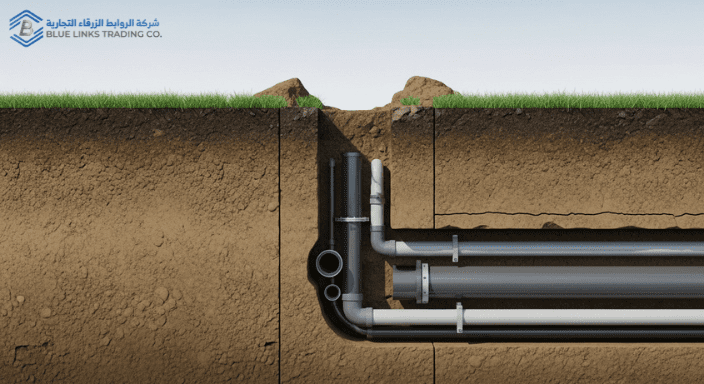
The principle behind water wastewater suction excavation is fundamentally different from conventional digging. Instead of applying mechanical force to break and remove soil, suction excavation systems rely on controlled airflow to extract material layer by layer, allowing underground assets to be exposed safely and accurately.
In water and wastewater projects, this approach is particularly effective because it eliminates direct contact with pipes, joints, and surrounding support structures. Pressurized water mains, gravity-based sewer lines, and manhole connections can be uncovered without introducing stress points that often lead to cracks or long-term degradation.
Modern suction excavation systems integrate high-capacity vacuum units with precision control arms, enabling operators to work within confined spaces such as narrow streets, sidewalks, and service corridors. This makes the technology well-suited for urban utility environments where access is limited and excavation tolerances are extremely tight.
Unlike generic digging tools, professional suction excavators are designed to adapt suction power, hose diameter, and arm reach based on site conditions. This flexibility allows engineers to adjust excavation intensity according to soil type, moisture level, and proximity to live water or wastewater infrastructure.
Another operational advantage lies in visibility and control. As soil is removed incrementally, utility lines become visible earlier in the process, allowing crews to verify alignment, depth, and condition before proceeding further. This proactive exposure significantly reduces uncertainty during excavation and supports safer decision-making on site.
For large-scale or technically demanding environments, advanced vacuum excavation systems offer higher airflow capacity and extended reach. These configurations are particularly valuable when working around deep sewer chambers, large-diameter pipelines, or congested underground utility zones.
By combining precision, adaptability, and non-contact operation, suction excavation transforms excavation from a high-risk activity into a controlled engineering process—one that aligns with the operational requirements of modern water and wastewater infrastructure projects in Saudi Arabia.
Where Suction Excavation Is Applied in Water & Wastewater Projects
Across Saudi Arabia’s urban infrastructure, water wastewater suction excavation is applied in a wide range of operational scenarios where precision and risk reduction are critical. Its flexibility allows utility teams to address both planned construction activities and unplanned maintenance interventions without compromising network integrity.
Exposing Water and Sewer Lines
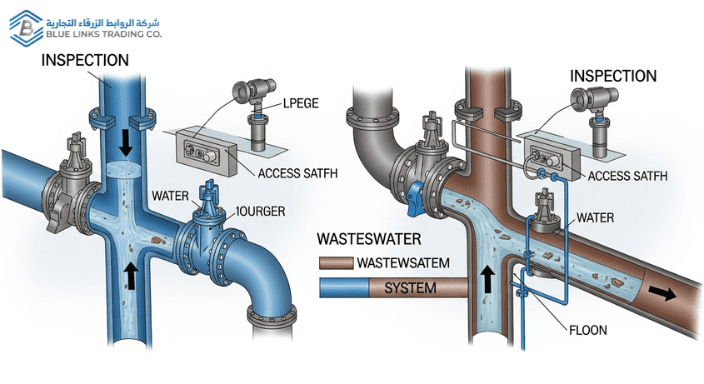
One of the most common applications involves controlled exposure of buried water pipelines and sewer lines for inspection, connection, or repair. Suction excavation enables crews to locate and uncover utilities accurately, even in areas with incomplete records or overlapping services, without risking accidental damage.
This capability becomes particularly important in congested corridors where water, wastewater, power, and telecom networks coexist. In such environments, combining suction excavation with precise equipment selection—such as the MTS DINO 8 suction excavator—allows operators to work efficiently within limited space while maintaining full control over soil removal.
Maintenance and Emergency Interventions
During emergency repairs, such as leaks near pressurized water mains or blockages adjacent to sewer connections, time and safety are equally critical. Traditional excavation often forces service shutdowns, whereas suction-based methods allow targeted access while keeping surrounding networks operational.
This approach significantly reduces response time and limits surface disruption, making it well-suited for maintenance operations supported by structured equipment maintenance programs that ensure system readiness during critical interventions.
Manholes and Inspection Chambers
Construction, rehabilitation, or expansion of manholes and inspection chambers presents unique challenges due to confined geometry and proximity to active sewer lines. Suction excavation provides a controlled method to remove surrounding material without destabilizing existing structures.
For deeper or more demanding applications, high-capacity configurations such as the MTS DINO 12 suction excavator enable efficient material handling while maintaining non-destructive execution standards.
Rerouting and Network Modifications
In network upgrades or rerouting projects, particularly within expanding urban zones and smart city developments, suction excavation supports phased implementation with minimal disruption. Its precision allows engineers to work close to live assets while adapting excavation depth and reach as network geometry changes.
By supporting these diverse use cases, water wastewater suction excavation has become an essential operational tool for utility providers and contractors seeking safer execution, reduced downtime, and long-term infrastructure protection.
MTS Technologies Supporting Water & Wastewater Suction Excavation
The effectiveness of water wastewater suction excavation depends not only on the excavation principle itself, but also on the technologies that enable consistent performance across varying site conditions. In water and wastewater projects, excavation requirements can change significantly based on depth, soil composition, access limitations, and proximity to live networks.
MTS suction excavator systems are engineered to address these variables through modular fan configurations and articulated control arms, allowing operators to adapt equipment performance to the specific demands of each project phase.
Dual Fan, Triple Fan, and MegaVac Systems
For routine urban utility works, dual fan systems provide sufficient suction power for exposing water pipes, sewer lines, and manholes at moderate depths. These systems balance airflow efficiency with fuel consumption, making them suitable for daily maintenance and localized interventions.
More complex projects—such as deep sewer access, extended horizontal reach, or wet and compacted soils—often require higher airflow capacity. Triple fan configurations increase suction force and stability, enabling consistent material removal without compromising precision near sensitive assets.
In heavy-duty applications involving large material volumes or extreme distances, MegaVac systems deliver maximum suction capacity. Equipment such as the DINO MegaVac is specifically designed for demanding environments where standard configurations may not provide sufficient performance.
POWERARM and EVOARM Control Systems
Equally critical to suction performance is the ability to position and control the suction hose accurately. MTS POWERARM and EVOARM systems allow precise articulation of the suction pipe, enabling operators to work safely around water mains, sewer connections, and inspection chambers.
These control arms are particularly valuable in confined urban locations, where limited access and restricted movement increase the risk of unintended contact with underground utilities. By maintaining full operator control, POWERARM and EVOARM systems support non-destructive excavation even in highly constrained environments.
When integrated into modern MTS DINO suction excavators, these technologies ensure that water wastewater suction excavation remains precise, adaptable, and reliable across a wide range of water and wastewater infrastructure scenarios.
Selecting the Right MTS Model for Water & Wastewater Scenarios
Selecting the appropriate equipment configuration is a decisive factor in the success of water wastewater suction excavation projects. Water and wastewater operations vary significantly in scale, depth, and access conditions, requiring suction excavators that are matched precisely to each scenario rather than deployed as one-size-fits-all solutions.
Compact Urban Interventions and Precision Works
In dense city centers, sidewalks, and narrow service corridors, maneuverability and precision take priority over raw capacity. Compact suction excavators are particularly effective for exposing service connections, valve chambers, and shallow sewer lines without disrupting surrounding infrastructure.
Models such as the DINO 4.5 suction excavator and the DINO 6 precision suction excavator are well-suited for these environments, offering controlled suction performance while maintaining excellent access in restricted urban spaces.
Standard Municipal Water and Sewer Operations
For most municipal water and wastewater projects—including routine maintenance, pipeline exposure, and manhole works—mid-range suction excavators provide the optimal balance between capacity and flexibility. These operations typically involve moderate excavation depths and require sustained performance throughout the workday.
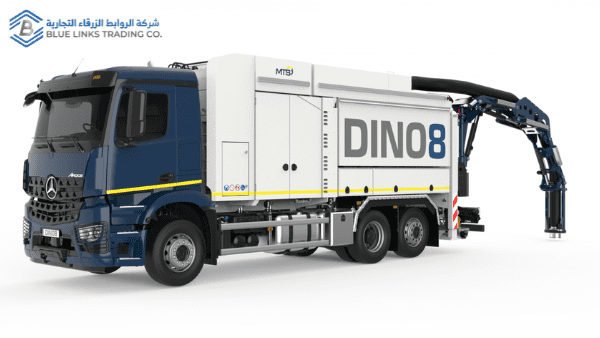
The MTS DINO 8 suction excavator is commonly selected for such applications, as it combines sufficient container volume with precise control, making it a reliable workhorse for daily utility operations.
Large-Scale Networks and Extended Excavation Depths
As project scale increases—particularly in trunk sewer installations, large-diameter water pipelines, or deep inspection chambers—higher capacity and extended reach become essential. In these scenarios, operators must manage greater soil volumes while maintaining non-destructive execution near live assets.
The MTS DINO 12 suction excavator addresses these requirements by reducing the frequency of material unloading and supporting longer excavation cycles, which improves overall productivity on large municipal projects.

Complex Sites and High-Demand Applications
In technically challenging environments—such as congested utility hubs, deep sewer access points, or locations requiring extended horizontal reach—advanced suction configurations are required. Triple fan systems provide enhanced airflow stability, enabling efficient excavation under demanding conditions.
For extreme applications involving significant depth, distance, or material volume, solutions such as the DINO TRIPLE suction excavator or MegaVac systems are deployed to ensure uninterrupted performance and safe material handling.
By aligning equipment selection with specific project conditions, utility operators can maximize the effectiveness of water wastewater suction excavation while maintaining safety, efficiency, and long-term infrastructure protection.

Real-World Use Case: Step-by-Step Suction Excavation Near Live Water Lines
A common scenario in Saudi urban environments involves emergency intervention near a live water main located beneath a high-traffic street. In such cases, maintaining water supply continuity while accessing the affected section becomes a primary operational requirement rather than a secondary consideration.
Site Conditions and Operational Constraints
The site typically includes a pressurized water pipeline running parallel to an active sewer line, with limited surface access due to surrounding sidewalks, traffic lanes, and existing utilities. Conventional excavation would normally require partial service shutdowns and extended safety buffers, increasing disruption and response time.
To mitigate these risks, the project team selects water wastewater suction excavation as the preferred method, allowing precise soil removal while preserving the integrity of live networks.

Controlled Utility Exposure
Using a suction excavator equipped with articulated control arms, operators begin removing soil incrementally around the suspected leak area. The suction hose is positioned to avoid direct contact with the pipeline, enabling gradual exposure of the water main and adjacent sewer infrastructure.
In medium-depth urban applications, equipment such as the MTS DINO 8 suction excavator provides sufficient airflow capacity while maintaining precise control in confined spaces.
Inspection, Repair, and Risk Reduction
Once the pipeline is safely exposed, maintenance teams can visually inspect the affected section, confirm the source of the leak, and perform targeted repairs without destabilizing surrounding soil or structures. Throughout this process, water service remains operational in adjacent areas, avoiding widespread disruption.
The non-contact nature of suction excavation significantly reduces the risk of secondary damage to nearby sewer lines, valves, and service connections—an outcome that is difficult to guarantee with mechanical digging methods.
Execution Efficiency and Site Restoration
After repairs are completed, the controlled excavation zone allows for efficient backfilling and surface restoration. Reduced excavation width and minimal disturbance shorten reinstatement time, enabling traffic flow and pedestrian access to resume quickly.
This scenario illustrates how water wastewater suction excavation transforms emergency utility interventions into controlled engineering operations, balancing safety, speed, and service continuity within complex urban infrastructure networks.
Frequently Asked Questions (FAQ)
Conclusion: Precision Excavation as a New Standard for Water & Wastewater Projects
As Saudi Arabia’s cities continue to grow and utility corridors become increasingly congested, excavation within water and wastewater networks can no longer rely on conventional assumptions. Every intervention now carries implications for service continuity, public safety, and long-term infrastructure integrity.
Within this reality, water wastewater suction excavation has emerged as a practical operational response rather than an optional technique. By enabling non-destructive, highly controlled soil removal, suction excavation allows project teams to work confidently around live pipelines, aging sewer assets, and undocumented crossings without introducing unnecessary risk.
Whether applied during emergency access, planned maintenance, or network expansion, precision-based excavation supports faster execution while minimizing disruption to surrounding infrastructure. More importantly, it shifts excavation from a reactive task into a managed process aligned with modern risk control and asset protection strategies.
For organizations responsible for delivering water and wastewater projects in sensitive urban environments, adopting suction excavation is not simply a technical upgrade. It represents a strategic alignment with the future of utility development in the Kingdom—where precision, predictability, and resilience define successful project delivery.
📩 Discuss Your Water & Wastewater Excavation Requirements
Blue Links Trading Company works closely with contractors, consultants, and infrastructure stakeholders to align suction excavation technologies with real operational conditions. Through technical assessment, equipment selection, and deployment support, we help ensure that MTS solutions are applied where precision and control matter most.
With Blue Links Trading Company, suction excavation becomes more than a method—it becomes a controlled execution strategy that supports safer delivery, reduced operational exposure, and long-term protection of Saudi Arabia’s critical water and wastewater infrastructure.