
Supplier Performance Management in Saudi Industrial Projects
Why Supplier Performance Management Matters in Saudi Industrial Projects

In Saudi industrial projects, supplier delays are not just minor operational problems. A late shipment, missing documentation, weak supplier communication, or poor technical matching can directly affect project timelines, site readiness, cost control, and overall execution quality. This is why Supplier Performance Management has become an essential part of modern procurement and supply chain control.
For companies working in industrial, infrastructure, oil and gas, utilities, construction, and logistics projects, supplier performance can determine whether a project moves smoothly or faces repeated disruption. A supplier may offer a competitive price, but if delivery is inconsistent, documentation is incomplete, or technical support is weak, the real cost of that supplier can become much higher than expected.
In Saudi Arabia, the growth of large-scale industrial and infrastructure projects has increased the need for more structured supplier management. Project teams can no longer depend only on basic purchasing decisions. They need clear performance metrics, regular performance reviews, and practical methods to evaluate supplier performance before, during, and after the procurement process.
Supplier Performance Management gives procurement teams a more accurate view of supplier performance. It helps them monitor delivery commitment, quality compliance, technical accuracy, responsiveness, supplier risk, and the ability to support project requirements under real working conditions. This makes the procurement process more controlled, measurable, and aligned with project objectives.
For businesses looking to improve industrial procurement in Saudi Arabia, managing supplier performance is not only about avoiding problems. It is also about building stronger supplier relationships, improving supply chain management, reducing hidden risks, and making better procurement decisions based on real performance data.
When supplier performance is measured properly, companies can identify performance gaps early, address specific performance issues before they escalate, and choose the right supplier for future project phases. This approach supports better planning, stronger accountability, and more reliable project delivery across Saudi industrial environments.
What Is Supplier Performance Management?

Supplier Performance Management is the structured process of evaluating, monitoring, and improving the performance of suppliers across the full procurement lifecycle. It helps companies understand whether each supplier is meeting the expected standards for quality, delivery, technical compliance, responsiveness, documentation, and long-term reliability.
In industrial projects, supplier performance management is not limited to reviewing suppliers after an order is delivered. It begins before supplier selection, continues during procurement execution, and remains important after delivery through performance reviews, issue tracking, and continuous improvement. This makes it a practical management framework for reducing uncertainty and improving supplier accountability.
A strong supplier performance management process allows procurement teams to move beyond price-based decisions. Instead of choosing a supplier only because of cost, companies can assess supplier performance based on real performance indicators such as delivery accuracy, product quality, response time, technical support, and the supplier’s ability to meet project requirements under pressure.
For Saudi industrial projects, this process is especially important because many projects depend on complex equipment, specialized materials, international sourcing, customs coordination, and strict delivery schedules. Without clear supplier performance metrics, procurement teams may not identify supplier risk until the project is already affected.
Effective supplier performance management helps companies create a clear view of supplier performance. It also supports better supplier relationships because expectations become measurable, transparent, and linked to project outcomes. When suppliers understand how they are evaluated, they are more likely to improve performance, maintain communication, and address any performance gaps before they become larger operational problems.
In simple terms, supplier performance management is the process of making supplier decisions based on evidence, not assumptions. It helps project teams evaluate supplier capabilities, manage supplier performance during execution, and build a stronger procurement system that supports quality, reliability, and better project delivery.
Supplier Performance Management vs Supplier Relationship Management

Although Supplier Performance Management and supplier relationship management are closely connected, they are not the same thing. Supplier relationship management focuses on building, maintaining, and improving the relationship between the company and its suppliers. Supplier performance management focuses more directly on measuring how suppliers actually perform against agreed expectations.
In other words, supplier relationship management looks at the quality of cooperation, communication, trust, and long-term collaboration. Supplier performance management looks at measurable results such as delivery performance, quality compliance, technical accuracy, response time, documentation quality, and the ability to meet project requirements.
The Difference Between SPM and SRM
The main difference between SPM and SRM is that SPM is performance-driven, while SRM is relationship-driven. A company may have a strong relationship with a supplier, but that does not always mean the supplier is performing well. At the same time, a supplier may deliver good short-term results but still need better relationship management to support long-term project cooperation.
For industrial projects, both approaches are important. Supplier performance management gives procurement teams the data needed to evaluate supplier performance, while supplier relationship management helps maintain productive communication and cooperation. When both are used together, companies can build stronger supplier relationships without losing control over quality, delivery, and accountability.
How Supplier Relationships Improve Supplier Performance
Strong supplier relationships can improve supplier performance when they are supported by clear expectations and regular performance reviews. Suppliers need to understand the required standards, delivery deadlines, technical specifications, and communication process from the beginning. This creates a more transparent environment where performance issues can be discussed early and resolved before they affect the project.
In Saudi industrial projects, this balance is especially important because suppliers may be local, regional, or international. Each supplier may have different lead times, documentation requirements, shipping conditions, and technical support capabilities. A structured project procurement process helps align supplier relationships with real project performance requirements.
Why Strong Supplier Management Needs Performance Monitoring
Proper supplier management includes performance monitoring because trust alone is not enough to protect project outcomes. Procurement teams need performance metrics, supplier scorecard systems, delivery tracking, quality checks, and clear communication records to understand the real performance of suppliers.
Without monitoring and managing supplier performance, companies may continue working with suppliers who appear reliable on the surface but create repeated delays, documentation gaps, technical issues, or hidden project costs. This is why effective supplier performance management should be treated as a continuous process, not a one-time review at the end of a purchase order.
When supplier relationships are supported by measurable performance data, companies can make better decisions. They can reward reliable suppliers, support supplier development where needed, address any performance gaps, and replace weak suppliers before they create bigger procurement or project risks.
Key Supplier Performance Metrics Every Project Should Track
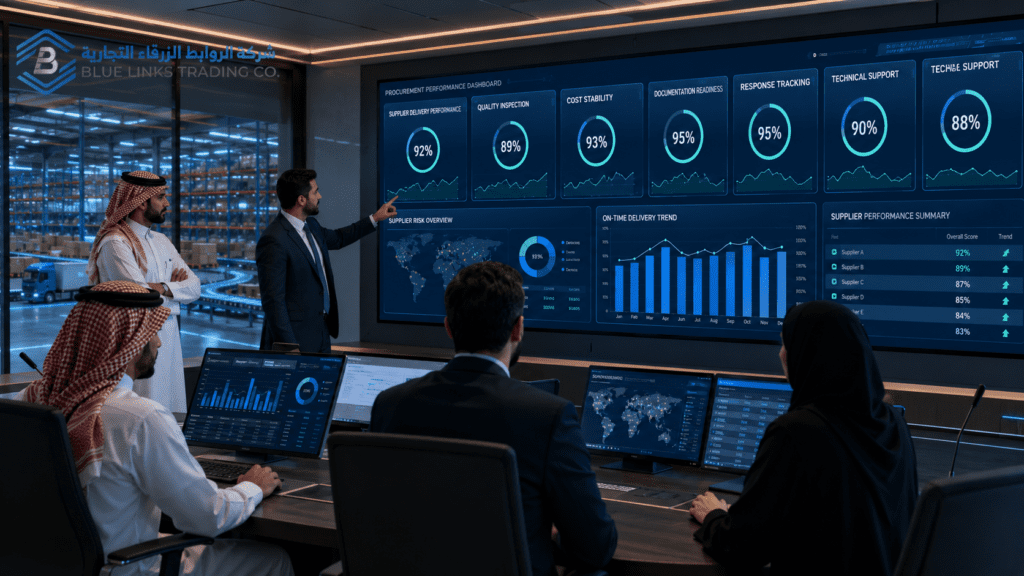
To make Supplier Performance Management practical, companies need clear supplier performance metrics that reflect real project requirements. Without measurable indicators, supplier evaluation becomes based on personal judgment, past impressions, or short-term pricing instead of actual performance data.
In Saudi industrial projects, performance metrics help procurement teams compare suppliers more accurately, monitor supplier performance during execution, and identify performance gaps before they affect delivery schedules or site operations. These metrics also support better supplier management because every supplier understands what will be measured and how their performance will be reviewed.
Delivery Performance and Timeline Commitment
Delivery performance is one of the most important key performance indicators in industrial procurement. A supplier may provide high-quality materials or equipment, but if deliveries arrive late, the project may face installation delays, idle manpower, equipment downtime, or additional logistics costs.
Tracking supplier delivery performance should include order confirmation dates, production progress, shipping status, customs readiness, actual arrival dates, and site handover timing. This gives procurement teams a clearer view of supplier performance and helps them take action before delays become critical.
Quality Compliance and Technical Accuracy
Quality compliance measures whether the supplier delivers products, equipment, documents, and technical specifications according to project requirements. In industrial environments, even a small technical mismatch can create major problems during installation, commissioning, or long-term operation.
This is why companies should evaluate supplier performance based on inspection results, rejected items, non-conformance reports, warranty claims, and the supplier’s ability to correct technical issues quickly. A strong quality review process supports better supplier evaluation and reduces the risk of repeated performance issues.
Cost Stability and Commercial Reliability
Cost stability is another important part of supplier performance management. The cheapest supplier is not always the most reliable supplier. Frequent price changes, hidden charges, unclear payment terms, or unexpected logistics costs can make the total procurement cost much higher than planned.
Procurement teams should measure how well each supplier respects agreed pricing, contract terms, quotation validity, and commercial commitments. This helps companies manage supplier risk and make better decisions when selecting suppliers for future project phases.
Supplier Responsiveness and Communication
Supplier responsiveness is often underestimated, but it can strongly affect project control. When suppliers respond slowly to technical questions, shipping updates, documentation requests, or issue escalations, procurement teams lose visibility and control.
Effective supplier performance management should measure communication speed, clarity, escalation handling, and the supplier’s ability to provide accurate updates when needed. This is especially important when working with international suppliers, where time zones, shipping coordination, and documentation requirements may create additional complexity.
Documentation Accuracy and Data Management
Accurate supplier information and documentation are essential for procurement and supply chain management. Missing certificates, wrong product codes, incomplete packing lists, unclear invoices, or inaccurate shipping documents can delay customs clearance, inspection, and site delivery.
Good data management helps procurement teams maintain a reliable record of supplier performance, order history, technical documents, delivery issues, and corrective actions. This supports stronger supplier scorecard systems and improves the ability to evaluate supplier performance over time.
After-Sales and Technical Support
Supplier performance does not end when the product is delivered. In many industrial projects, technical support, spare parts availability, warranty response, training, and after-sales service are critical to long-term project reliability.
Companies should assess supplier performance based on how quickly the supplier supports technical questions, resolves defects, provides spare parts, and assists the project team after delivery. For specialized equipment and technical supply, this kind of support can be just as important as the initial purchase itself.
By using these supplier metrics consistently, project teams can create a more reliable performance management process. They can compare suppliers fairly, improve supplier performance over time, and build procurement decisions on facts instead of assumptions. This becomes even more valuable when connected to a structured approach for supplier selection in industrial projects.
The Supplier Performance Management Process
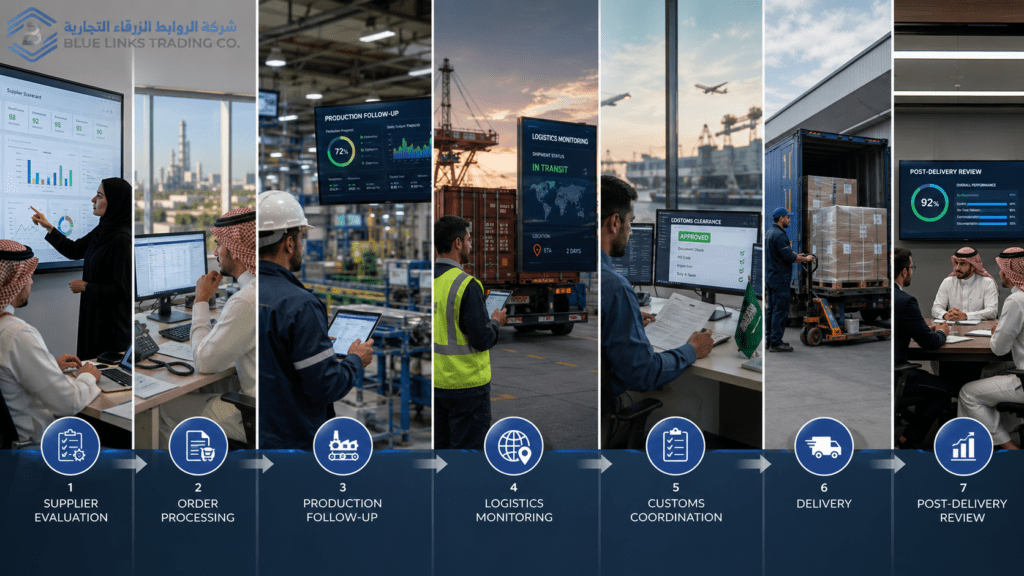
A strong Supplier Performance Management process gives procurement teams a clear path for managing suppliers from the first evaluation stage until final delivery and post-project review. Instead of dealing with supplier issues only when they appear, the process creates a structured way to assess supplier performance, monitor progress, and improve supplier reliability over time.
In Saudi industrial projects, this process is especially important because procurement decisions often involve technical specifications, international sourcing, logistics coordination, customs requirements, site readiness, and strict delivery schedules. Without a clear management process, companies may lose control over supplier performance during the most critical stages of execution.
Supplier Information and Master Data Management
The first step in the supplier performance management process is building accurate supplier information. This includes company details, product categories, technical capabilities, certifications, previous project experience, delivery history, payment terms, documentation quality, and communication records.
Good master data management helps procurement teams avoid confusion when comparing suppliers or reviewing previous performance. It also supports better supplier evaluation because every decision is based on organized information rather than scattered emails, incomplete files, or outdated supplier records.
Supplier Evaluation Before Project Award
Before awarding any order, companies need to evaluate supplier performance from multiple angles. This includes technical capability, production capacity, delivery reliability, financial stability, quality control, documentation readiness, and the supplier’s ability to meet the project’s timeline.
Evaluating supplier performance before the award stage helps reduce supplier risk. A supplier may appear suitable based on price, but if the supplier capabilities do not match the project’s technical or logistical requirements, the company may face delays, quality problems, or unexpected cost increases later.
Supplier Scorecards and Performance Metrics
A supplier scorecard is one of the most practical tools used to measure supplier performance. It allows procurement teams to track key performance indicators such as delivery performance, quality compliance, response time, documentation accuracy, commercial reliability, and after-sales support.
When supplier scorecards are used regularly, companies can identify performance gaps more clearly. They can also compare suppliers fairly, reward strong performance, and address weak performance before it becomes a repeated problem across multiple project phases.
Monitoring Supplier Performance During Execution
Supplier performance should be monitored throughout procurement execution, not only after delivery. This includes tracking order confirmation, production progress, inspection readiness, shipping updates, logistics documents, customs coordination, and site delivery.
For complex projects, active monitoring helps procurement teams detect performance issues early. If a supplier is late in confirming production, slow in sending documents, or unclear about shipping status, the project team can respond before the delay affects the site schedule. This is where structured procurement expediting becomes a critical part of supplier control.
Reviewing Supplier Performance After Delivery
The final stage is reviewing supplier performance after delivery. This review should not be treated as a formality. It should examine whether the supplier met delivery commitments, provided accurate documentation, complied with technical requirements, responded to issues, and supported the project team after handover.
Regular performance reviews help companies improve supplier performance across future projects. They also create a stronger database for supplier selection, risk management, and long-term supplier development. Over time, this makes the procurement function more predictable, measurable, and aligned with project success.
Three Phases of Supplier Performance Management

In practical procurement environments, Supplier Performance Management works best when it is divided into clear phases. This makes it easier for project teams to manage supplier performance from the early selection stage to ongoing monitoring and long-term improvement.
For Saudi industrial projects, these phases help procurement teams stay organized, especially when they are dealing with multiple suppliers, technical materials, specialized equipment, international shipping, and strict project timelines. Instead of managing suppliers reactively, each phase gives the team a clearer method for control and improvement.
Phase One: Supplier Selection and Qualification
The first phase focuses on choosing the right supplier before the project is exposed to unnecessary risk. This includes evaluating supplier capabilities, reviewing technical experience, checking production capacity, verifying quality standards, and assessing whether the supplier can meet the project’s delivery and documentation requirements.
At this stage, supplier evaluation should not depend only on price. Procurement teams need to assess supplier performance history, financial stability, technical compatibility, response speed, and previous experience in similar projects. This helps reduce the risk of selecting a supplier who looks competitive commercially but fails during execution.
Phase Two: Performance Monitoring and Control
The second phase begins after the supplier is approved and the procurement process moves into execution. During this phase, the company must monitor supplier performance through clear performance metrics, regular updates, delivery tracking, documentation checks, and communication follow-up.
This phase is critical because many performance issues appear during manufacturing, order processing, shipping, customs clearance, or final delivery. Monitoring and managing supplier performance allows procurement teams to identify performance gaps early and take corrective action before the project schedule is affected.
Phase Three: Improvement and Long-Term Optimization
The third phase focuses on improving the performance of suppliers over time. After each order or project stage, procurement teams should review supplier performance data, compare results against key performance indicators, and identify areas where the supplier needs to improve.
This phase supports supplier development and stronger supplier relationships. Reliable suppliers can be prioritized for future work, while weaker suppliers can be given clear corrective actions or replaced if performance issues continue. Over time, this creates a more stable supplier base and improves the company’s overall procurement performance.
When these three phases are applied consistently, supplier performance management becomes more than a reporting activity. It becomes a practical management framework that helps companies reduce supplier risk, improve supplier reliability, and support better project outcomes across industrial procurement operations.
How to Build an Effective Supplier Performance Management Strategy

An effective supplier performance management strategy starts with one simple principle: suppliers should be managed according to their real impact on project success. In industrial projects, not every supplier carries the same level of risk. Some suppliers provide standard materials, while others deliver critical equipment, technical systems, or time-sensitive components that can directly affect site progress.
For this reason, companies need a structured strategy that connects supplier performance with project objectives, technical requirements, delivery schedules, risk management, and long-term supply chain reliability. Without this connection, supplier management can become a routine administrative activity instead of a practical tool for improving project outcomes.
Define Clear Supplier KPIs from the Start
The first step is to define clear key performance indicators before the procurement process begins. These KPIs should reflect what the project actually needs from each supplier. Common supplier performance indicators include delivery accuracy, quality compliance, response time, documentation accuracy, cost stability, technical support, and corrective action speed.
When KPIs are clear from the beginning, suppliers understand how their performance will be measured. This reduces confusion, improves accountability, and helps procurement teams evaluate supplier performance based on measurable results rather than general impressions.
Align Supplier Performance with Project Goals
Supplier performance should always be linked to the project’s main goals. If the project depends on fast installation, delivery performance becomes a critical metric. If the project involves specialized technical equipment, quality compliance and technical compatibility become more important. If the project is exposed to logistics complexity, shipment visibility and documentation accuracy become essential.
This alignment helps companies manage supplier performance in a more practical way. Instead of using the same supplier scorecard for every supplier, procurement teams can create a more accurate view of supplier performance based on the real role of each supplier in the project.
Use a Practical Supplier Management Framework
A supplier management framework gives the procurement team a clear structure for evaluating supplier, monitoring performance, reviewing results, and improving supplier relationships. This framework should include supplier qualification, supplier scorecard criteria, performance metrics, review frequency, escalation rules, and corrective action procedures.
For Saudi industrial projects, this framework should also consider local market requirements, international sourcing timelines, customs procedures, technical documentation, and site delivery conditions. This makes supplier performance management more realistic and better connected to actual procurement operations.
Improve Supplier Performance Through Continuous Review
Regular performance reviews are essential for improving supplier performance. A review should not happen only when a major problem occurs. It should be part of the normal procurement management process, especially for critical suppliers who affect delivery, quality, or project risk.
During these reviews, teams should compare performance data against agreed KPIs, identify performance gaps, discuss specific performance issues, and agree on corrective actions. This helps suppliers understand where improvement is needed and gives the company a stronger basis for future supplier evaluation.
Connect Supplier Performance with Risk Management
Supplier risk is one of the most important reasons to implement supplier performance management. Poor supplier visibility can lead to delayed shipments, quality failures, incomplete documentation, cost increases, or sudden delivery disruption. By connecting supplier performance with supply chain project risk, companies can detect weak points earlier and respond before the project is affected.
This is where successful supplier performance management becomes a strategic advantage. It helps procurement teams move from reacting to supplier problems after they happen to preventing supplier-related disruption before it reaches the project site.
Benefits of Supplier Performance Management

The benefits of supplier performance management go beyond simple supplier control. For industrial companies, it creates a clearer, more measurable way to protect project timelines, improve quality, reduce procurement risks, and build a stronger supply chain management process.
In Saudi industrial projects, where delivery schedules, technical specifications, and logistics coordination are often highly sensitive, supplier performance can directly affect the success of the full project. When procurement teams measure supplier performance correctly, they gain better control over cost, quality, timing, and supplier accountability.
Reducing Procurement Delays and Project Disruption
One of the most important benefits of supplier performance management is reducing procurement delays. Delays can happen for many reasons, including late production, slow documentation, shipping problems, customs issues, or weak supplier communication.
By tracking supplier performance regularly, companies can identify early warning signs before they become serious project delays. For example, if a supplier repeatedly sends late production updates or misses document submission dates, the procurement team can act early through escalation, expediting, or alternative sourcing decisions.
This makes supplier performance management a practical tool for improving project continuity. It helps teams avoid last-minute surprises and gives project managers a more reliable picture of material readiness and delivery expectations.
Improving Supplier Reliability and Quality Control
Supplier reliability is not built on promises. It is built on consistent delivery, accurate documentation, technical compliance, and the supplier’s ability to respond when problems appear. Supplier performance management helps companies measure these areas instead of relying only on verbal commitments.
When quality compliance is tracked through performance indicators, inspection results, rejection rates, and corrective actions, companies can see which suppliers are truly reliable. This supports better supplier evaluation and helps reduce repeated quality issues across future procurement cycles.
For industrial projects, this is critical because poor quality can create installation problems, operational failures, safety concerns, or expensive rework. A structured review of supplier performance helps reduce these risks and improves the overall reliability of the project supply base.
Strengthening Supply Chain Management Decisions
Supplier performance management supports stronger supply chain management because it gives procurement teams real performance data. Instead of making decisions based only on price or previous relationships, companies can compare suppliers based on delivery performance, quality, responsiveness, technical capability, and risk level.
This improves decision-making when selecting suppliers for future projects. It also helps companies understand which suppliers should be prioritized, which suppliers need development, and which suppliers may create unnecessary risk if they continue to be used without improvement.
When connected with procurement risks in Saudi Arabia, supplier performance data becomes even more valuable. It helps procurement teams understand where delays, cost pressure, supplier dependency, or logistics weaknesses may appear before they affect the project.
Building More Predictable Supplier Relationships
Strong supplier relationships are important, but they become more effective when supported by measurable performance data. Supplier performance management helps create more transparent relationships because suppliers understand what is expected from them and how their performance will be reviewed.
This reduces misunderstanding and improves accountability. A supplier is no longer judged only by general impressions. Instead, performance is assessed through clear metrics, regular supplier reviews, and documented improvement actions.
Over time, this approach helps build stronger supplier relationships based on trust, performance, and shared responsibility. Reliable suppliers can grow with the company, while weaker suppliers can be improved or replaced according to clear performance evidence.
Improving Cost Control and Long-Term Value
Supplier performance can help companies control costs in ways that are not always visible at the purchasing stage. A low-cost supplier may become expensive if they cause delivery delays, quality failures, repeated follow-up, documentation errors, or site disruption.
Through supplier scorecards and regular performance reviews, companies can understand the real cost of supplier performance. This includes direct costs, hidden costs, operational pressure, and the effect of supplier issues on project schedules.
Effective supplier performance management helps procurement teams focus on long-term value rather than short-term price. It supports better supplier selection, stronger project planning, and more predictable procurement outcomes across Saudi and GCC industrial projects.
Challenges in Supplier Performance Management

Even when companies understand the value of Supplier Performance Management, applying it consistently can be challenging. Many procurement teams still depend on manual follow-up, scattered supplier information, incomplete performance data, or informal communication that makes it difficult to measure supplier performance accurately.
In Saudi industrial projects, these challenges become more serious because suppliers may be supporting complex technical requirements, long lead-time materials, imported equipment, logistics coordination, customs clearance, and strict site delivery schedules. If supplier performance is not monitored properly, small issues can quickly become major procurement and project risks.
Poor Supplier Data and Weak Visibility
One of the most common challenges in supplier performance management is the lack of accurate supplier data. When supplier information is stored across emails, spreadsheets, documents, and separate systems, procurement teams may struggle to get a clear view of supplier performance.
Weak visibility makes it harder to evaluate supplier performance, track supplier history, compare supplier capabilities, or identify performance gaps. This can lead to repeated mistakes, such as working with the same supplier despite previous delivery issues, quality problems, or weak communication.
Inconsistent Performance Metrics
Another challenge is the use of inconsistent performance metrics. Some teams may focus only on delivery time, while others may review quality, documentation, price stability, or response speed. Without a unified supplier scorecard, supplier evaluation becomes uneven and difficult to compare.
To manage supplier performance effectively, companies need clear key performance indicators that are understood by both the procurement team and the supplier. These indicators should be practical, measurable, and connected to real project outcomes, not just internal reporting requirements.
Delayed Communication with Suppliers
Delayed communication is one of the most damaging supplier performance issues. If a supplier does not respond quickly to production updates, technical clarifications, shipment status, or documentation requests, the procurement team may lose valuable time.
In project environments, this delay can affect planning, site readiness, installation schedules, and coordination with other contractors. Stronger supplier relationships can help reduce this issue, but they must be supported by clear communication rules, escalation paths, and regular performance reviews.
Limited Control Over Logistics and Delivery Risks
Many supplier performance challenges appear during logistics execution. A supplier may complete production on time, but delays can still happen during packing, shipping, export documentation, customs clearance, inland transportation, or final site delivery.
This is why supplier performance management should be connected with procurement and logistics coordination. When logistics risks are monitored early, procurement teams can reduce uncertainty, track delivery progress, and respond faster to potential disruption.
Overcoming Supplier Performance Management Challenges
Overcoming these challenges requires a more structured management framework. Companies should collect reliable supplier information, define performance indicators, use supplier scorecards, monitor supplier performance during execution, and review results after each delivery or project phase.
It is also important to address any performance gaps directly. If a supplier repeatedly fails to provide accurate documents, misses delivery dates, or creates technical issues, the procurement team should record the issue, discuss corrective actions, and decide whether supplier development or replacement is the right option.
Successful supplier performance management depends on consistency. When companies measure suppliers regularly and use performance data to guide decisions, they can reduce supplier risk, improve supplier performance, and build a stronger procurement system for future industrial projects.
Technology and Supplier Performance Management

Technology has become an important part of modern Supplier Performance Management, especially in industrial projects where procurement teams need accurate information, faster decisions, and better visibility across supplier activities. Without the right digital structure, it becomes difficult to monitor supplier performance, compare suppliers, or track performance issues across different project phases.
In Saudi industrial projects, supplier management often includes technical sourcing, logistics coordination, documentation control, shipment follow-up, quality review, and supplier communication. Managing all of this manually can increase the risk of missing important updates or failing to identify performance gaps early.
Supplier Performance Management Software and Tools
Supplier performance management software can help companies organize supplier information, track performance metrics, store documentation, and review supplier scorecard results in one place. These tools are not only useful for large procurement departments. They can also support mid-sized industrial companies that need better control over supplier data and project supply activities.
The main value of performance management software is visibility. It helps procurement teams understand which suppliers are meeting expectations, which suppliers require improvement, and which suppliers may create risk if used again without corrective action.
How Data Management Improves Supplier Decisions
Good data management is essential for effective supplier performance management. When supplier data is accurate, organized, and easy to review, procurement teams can make better decisions based on real performance data rather than memory or assumptions.
This includes data on supplier performance, delivery records, quality results, documentation accuracy, response times, technical issues, and previous corrective actions. Over time, this information creates a stronger view of supplier performance and supports more reliable supplier evaluation.
Leveraging Technology to Monitor Supplier Performance
Technology allows companies to monitor supplier performance more consistently. Instead of waiting until the end of a purchase order, procurement teams can track supplier progress throughout the procurement cycle, from order confirmation to manufacturing, inspection, shipping, customs clearance, and final delivery.
This improves the ability to identify performance gaps before they affect the project schedule. It also gives project teams stronger control when managing the performance of suppliers across multiple orders, suppliers, and locations.
How Industrial AI Is Transforming Supplier Performance Management
Industrial AI is beginning to improve the way companies evaluate supplier performance and manage supplier risk. AI-driven systems can analyze performance data, detect repeated delays, identify supplier risk patterns, and highlight specific performance issues that may not be visible through manual review.
For procurement and supply chain management, this can support faster decisions and more proactive risk control. However, AI should not replace professional procurement judgment. It should support experienced teams with better visibility, stronger data analysis, and earlier warning signals.
In practical terms, technology makes supplier performance management more measurable and less reactive. It helps companies move from scattered follow-up to structured tracking supplier performance, improving supplier accountability, and building a more reliable procurement system for industrial projects.
Implementing Supplier Performance Management in Saudi Industrial Projects

Implementing Supplier Performance Management in Saudi industrial projects requires more than creating a supplier list or reviewing delivery status after a delay happens. It needs a clear operating method that connects supplier evaluation, procurement execution, logistics monitoring, risk management, and post-delivery review into one practical system.
For industrial companies, the implementation process should be simple enough to apply consistently, but detailed enough to measure real supplier performance. This balance is important because procurement teams often work under pressure, especially when projects depend on imported equipment, technical materials, long lead times, or multiple suppliers across different regions.
Step-by-Step Guide to Implementing SPM
The first step is to define what supplier performance means for the project. For some projects, delivery speed may be the highest priority. For others, technical compliance, documentation accuracy, or after-sales support may be more important. Once the priorities are clear, procurement teams can set the right performance indicators.
The second step is to collect accurate supplier information. This includes supplier capabilities, previous performance, product range, lead times, certifications, logistics ability, communication quality, and any known supplier risk. This information helps companies evaluate supplier performance before making a procurement decision.
The third step is to monitor supplier performance during execution. Procurement teams should track order confirmation, production updates, inspection progress, documentation readiness, shipping schedules, customs requirements, and site delivery. This creates better visibility and supports faster action when performance issues appear.
The final step is to review supplier performance after delivery. This review should include delivery commitment, quality compliance, communication, documentation, technical support, and overall reliability. The results should be recorded and used for future supplier evaluation and supplier development.
Choosing the Right Supplier Management Solution
Choosing the right supplier management solution depends on the size and complexity of the company’s procurement operations. Some companies may begin with structured supplier scorecards and organized performance reviews, while others may need supplier performance management software to track performance data across multiple suppliers and projects.
The right solution should help procurement teams monitor supplier performance, identify performance gaps, compare suppliers, and support better decision-making. It should not make the process more complicated. The goal is to give the team a clearer view of supplier performance and reduce the risk of depending on incomplete information.
Integrating Supplier Performance with Procurement Operations
Supplier performance management becomes more effective when it is integrated with daily procurement operations. It should not be treated as a separate reporting activity. Instead, it should be connected to supplier selection, quotation review, order management, expediting, logistics coordination, quality inspection, and delivery follow-up.
This integration helps procurement teams make better decisions at every stage. For example, if a supplier has repeated documentation issues, this should affect future supplier evaluation. If another supplier consistently delivers on time with strong technical support, that supplier may become a preferred option for future project phases.
For companies working on complex procurement requirements, linking supplier performance with a structured strategic procurement approach can improve control, reduce uncertainty, and support better long-term supplier decisions.
Using Local Sourcing to Improve Supplier Reliability
Local sourcing can play an important role in improving supplier reliability, especially when projects require faster response, easier communication, shorter delivery cycles, or better availability of technical support. However, local sourcing should still be managed through clear performance metrics and supplier evaluation standards.
A local supplier may offer faster access, but that does not automatically mean stronger supplier performance. Procurement teams still need to assess supplier capabilities, quality compliance, delivery history, documentation accuracy, and ability to support project requirements.
When local sourcing is combined with international sourcing in a balanced way, companies can build a more flexible supply base. This helps reduce supplier dependency, improve performance visibility, and support more resilient procurement operations across Saudi industrial projects.
Supplier Performance Management Best Practices

To make Supplier Performance Management effective, companies need more than performance reports. They need practical habits that can be applied before supplier selection, during procurement execution, and after delivery. These best practices help procurement teams manage supplier performance with more control, consistency, and confidence.
In Saudi industrial projects, supplier performance management best practices should focus on real project risks: late delivery, unclear documentation, weak technical compliance, limited supplier responsiveness, logistics delays, and poor after-sales support. When these areas are managed early, companies can reduce disruption and improve supplier performance across the full procurement cycle.
Choose the Right Supplier Beyond Price
Choosing the right supplier should never depend on price alone. A low-cost supplier may look attractive during quotation comparison, but weak delivery performance, poor documentation, or limited technical support can create higher costs later in the project.
Procurement teams should evaluate supplier capabilities, previous delivery records, technical experience, quality control process, supplier risk, and ability to support the project under pressure. This creates a more realistic view of supplier performance before any commitment is made.
Monitor Supplier Performance Before Problems Escalate
One of the most important supplier performance management practices is early monitoring. Waiting until the delivery date to discover a problem is too late. Procurement teams should monitor supplier performance during order confirmation, production, inspection, shipping, customs clearance, and final delivery.
This kind of tracking supplier performance gives project teams more time to act. If a supplier is slow in confirming production, late in sending documents, or unclear about shipping status, the issue can be escalated before it becomes a major project delay.
Connect Supplier Performance with Risk Management
Supplier performance should always be connected to risk management. Every supplier has a different level of impact on project success. A supplier providing standard materials may carry limited risk, while a supplier delivering specialized equipment or critical components may directly affect project continuity.
By connecting supplier performance with risk management, companies can prioritize monitoring efforts where they matter most. Critical suppliers should receive deeper evaluation, more frequent performance reviews, and clearer escalation procedures.
Maintain Clear Supplier Communication and Accountability
Clear communication is essential for effective supplier performance management. Suppliers should know the required delivery dates, technical specifications, documentation requirements, communication channels, and escalation rules from the beginning.
When expectations are documented clearly, supplier accountability becomes easier to manage. Regular supplier communication also helps identify performance issues early and gives both sides a chance to correct problems before they affect the project.
Use Supplier Scorecards Consistently
A supplier scorecard helps procurement teams measure supplier performance in a structured way. It can include delivery performance, quality compliance, responsiveness, documentation accuracy, commercial reliability, and after-sales support.
The value of a supplier scorecard comes from consistency. If scorecards are used only once or only after problems happen, they lose their purpose. Regular scorecard reviews help companies compare suppliers fairly, identify performance gaps, and support supplier development over time.
Review Supplier Performance After Every Major Delivery
Post-delivery review is a critical part of successful supplier performance management. After every major delivery, procurement teams should assess supplier performance against the agreed key performance indicators and record the results for future decisions.
This review helps companies understand the performance of suppliers more clearly. It also makes future supplier evaluation more accurate because the team can rely on real performance data instead of memory, assumptions, or informal feedback.
When these best practices are applied consistently, companies can improve supplier reliability, reduce supplier risk, and build a stronger procurement system that supports better project outcomes across Saudi and GCC industrial environments.
How Blue Links Trading Company Supports Supplier Performance
In industrial procurement, supplier performance is not improved by monitoring alone. It requires a practical operating model that connects supplier selection, technical sourcing, procurement coordination, logistics follow-up, and delivery support. This is where Blue Links Trading Company can support companies that need a more reliable approach to managing suppliers across Saudi and GCC projects.
As a company working across advanced technologies, project procurement services, general trading, and industrial supply, Blue Links Trading Company focuses on helping clients reduce uncertainty in the procurement process. This includes understanding project requirements, identifying suitable suppliers, coordinating orders, monitoring logistics, and supporting delivery according to the required specifications.
Structured Supplier Selection for Industrial Projects
Choosing the right supplier is one of the most important stages in supplier performance management. A supplier must be evaluated not only by price, but also by technical capability, product quality, delivery history, documentation readiness, response speed, and ability to support the project after delivery.
Blue Links Trading Company supports this process by helping clients approach supplier selection with a project-focused mindset. The goal is to connect supplier capabilities with actual project needs, so that procurement decisions are based on reliability, suitability, and long-term value rather than short-term cost only.
Procurement Coordination and Logistics Monitoring
Supplier performance often depends on what happens after the order is placed. Manufacturing follow-up, order confirmation, documentation accuracy, shipping coordination, customs preparation, and final delivery can all affect the project schedule.
Through professional procurement coordination, companies can monitor supplier performance during execution and reduce the risk of delays caused by weak follow-up or unclear communication. This gives project teams a clearer view of supplier progress and helps them respond faster when performance issues appear.
Technical Supply Support for Saudi and GCC Projects
Many Saudi industrial projects require specialized materials, technical equipment, or advanced solutions that must match strict project requirements. In this environment, supplier performance depends heavily on technical accuracy and the ability to deliver products that fit the intended application.
Blue Links Trading Company supports technical supply by focusing on suitable product selection, supplier communication, documentation, and project requirements. This helps reduce the risk of technical mismatch, incomplete specifications, or delays caused by unclear supplier information.
Building Reliable Supplier Performance Across Project Phases
Successful supplier performance management requires control across the full procurement cycle. It begins with supplier evaluation, continues through order execution and logistics monitoring, and ends with performance review after delivery.
By applying this structured approach, companies can improve supplier performance, build stronger supplier relationships, and make better procurement decisions for future project phases. This is especially important in Saudi Arabia, where industrial development, infrastructure growth, and project complexity continue to increase under the wider direction of procurement in Saudi Vision 2030.
For project owners, contractors, and industrial companies, the value of working with a structured procurement partner is not only in finding suppliers. It is in creating a more controlled, transparent, and reliable supplier performance management process that supports quality, delivery, and long-term project success.
🟦 Frequently Asked Questions About Supplier Performance Management
⚡ Conclusion: Supplier Performance Management Builds Stronger Industrial Projects
In Saudi industrial projects, supplier performance is no longer a secondary procurement concern. It is a direct factor in project continuity, quality control, delivery reliability, cost stability, and long-term operational success. When suppliers are not measured, monitored, and reviewed properly, small issues can quickly become delays, technical failures, logistics pressure, or unexpected project costs.
Supplier Performance Management gives companies a structured way to manage this risk. It helps procurement teams evaluate supplier capabilities, track performance metrics, monitor supplier performance during execution, identify performance gaps, and improve supplier relationships based on real performance data.
As Saudi Arabia continues to develop its industrial, infrastructure, logistics, and energy sectors in line with Saudi Vision 2030, companies need more reliable procurement systems and stronger supplier accountability. This means moving beyond traditional purchasing and building a performance-driven supplier management process that supports quality, compliance, and project delivery.
For companies operating in Saudi Arabia and the GCC, the goal is not only to find suppliers. The real goal is to work with the right supplier, manage supplier performance consistently, and create a supply chain that can support demanding project environments with confidence.
As highlighted in supplier selection in industrial projects, strong procurement decisions depend on more than price. They require supplier evaluation, technical matching, delivery visibility, documentation accuracy, and clear accountability across every stage of the procurement cycle.
Blue Links Trading Company supports this direction through structured procurement coordination, supplier selection, logistics monitoring, technical supply support, and project-focused follow-up. By combining practical procurement experience with a clear view of supplier performance, companies can reduce uncertainty and build stronger project outcomes.
For organizations seeking reliable sourcing, stronger supplier coordination, and more controlled procurement follow-up, procurement and logistics coordination can play a critical role in improving visibility, reducing supplier risk, and supporting smoother delivery across Saudi and GCC industrial projects.
With Blue Links Trading Company, organizations gain more than a supplier — they gain a strategic procurement partner capable of supporting supplier evaluation, supplier coordination, procurement logistics, technical supply support, operational visibility, and long-term supply chain reliability across Saudi Arabia and the GCC region.
Blue Links Trading Company — supporting stronger supplier performance and more reliable industrial procurement in Saudi Arabia.