
The Real Cost of Poor Supplier Selection in Industrial Projects
The Hidden Risk Behind Every Industrial Project Decision
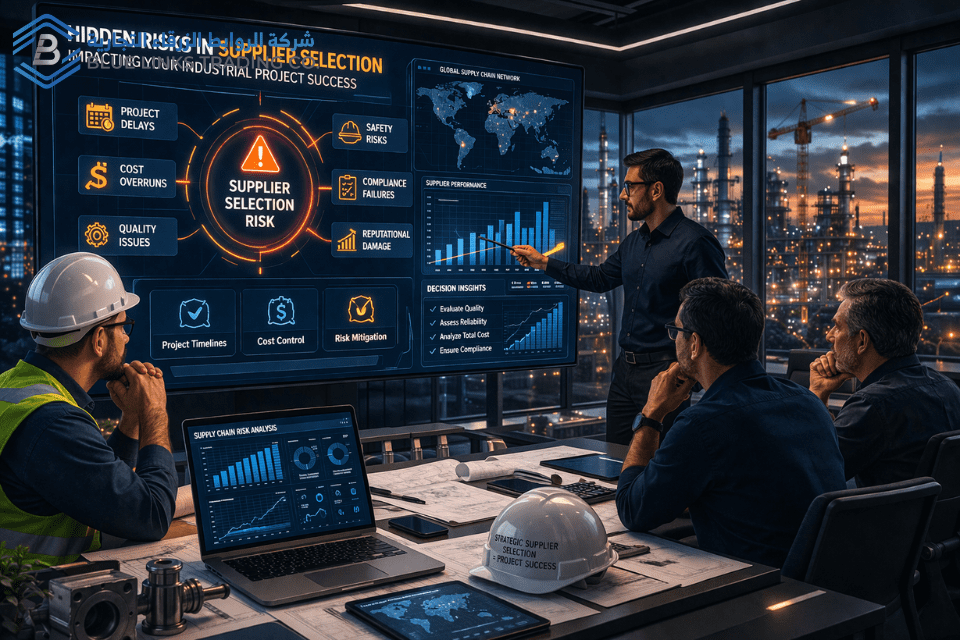
In today’s fast-evolving infrastructure landscape, success is no longer defined solely by execution speed or budget control. It is defined by the quality of decisions made long before the project even begins. One of the most critical — and often underestimated — decisions is Supplier Selection Industrial Projects.
Across Saudi Arabia and the GCC, mega projects are expanding at an unprecedented pace. From smart cities to large-scale infrastructure developments, the margin for error has become extremely narrow. A single weak link in the supply chain can trigger delays, inflate costs, and compromise the entire project lifecycle.
Yet, many organizations still approach supplier selection as a routine procurement step rather than a strategic risk decision. The result? Hidden losses that don’t appear immediately — but compound over time.
According to global infrastructure insights published by McKinsey & Company, inefficiencies in procurement and supplier management are among the leading causes of project overruns worldwide. This highlights a critical reality: poor supplier selection is not just an operational issue — it is a business risk.
In industrial environments where precision, safety, and continuity are non-negotiable, choosing the wrong supplier can mean more than just inconvenience. It can lead to operational downtime, safety hazards, and irreversible financial damage.
This is why forward-thinking companies are shifting their mindset — from simply sourcing vendors to strategically managing Supplier Selection Industrial Projects as a core pillar of project success.
Why Supplier Selection is a Critical Risk Factor

In industrial environments, success is rarely the result of isolated excellence. Instead, it is the outcome of interconnected systems working in harmony. Within this ecosystem, Supplier Selection Industrial Projects plays a defining role — not as a supporting function, but as a core strategic decision that directly impacts project outcomes.
Traditionally, suppliers were viewed as external vendors responsible for delivering materials or equipment. However, this perspective no longer reflects the complexity of modern projects. Today, suppliers are deeply integrated into execution workflows, timelines, and technical performance. In other words, they are not vendors — they are execution partners.
When supplier selection is treated as a transactional process driven by cost alone, the project inherits a hidden layer of risk. Delays in delivery, inconsistencies in quality, and lack of technical alignment can disrupt even the most well-planned schedules. Over time, these issues compound, affecting not only operational efficiency but also stakeholder confidence.
This becomes especially critical in sectors such as infrastructure, energy, and urban development, where precision and reliability are essential. For example, in excavation-related operations, relying on traditional or poorly matched suppliers can significantly increase risk exposure. Advanced approaches such as excavation risk management demonstrate how proper supplier alignment and technology integration can prevent costly project disruptions.
Moreover, large-scale projects in Saudi Arabia and the GCC are increasingly governed by strict regulatory frameworks and performance benchmarks. Any deviation — whether in quality, safety, or delivery timelines — can lead to contractual penalties and long-term reputational damage. This reinforces the idea that Supplier Selection Industrial Projects is not just about procurement efficiency, but about risk control at the highest level.
Forward-looking organizations recognize this shift. They invest in structured supplier evaluation processes, technical compatibility assessments, and long-term partnership strategies. By doing so, they transform supplier selection from a reactive task into a proactive safeguard for project continuity.
Hidden Costs of Poor Supplier Selection in Industrial Projects
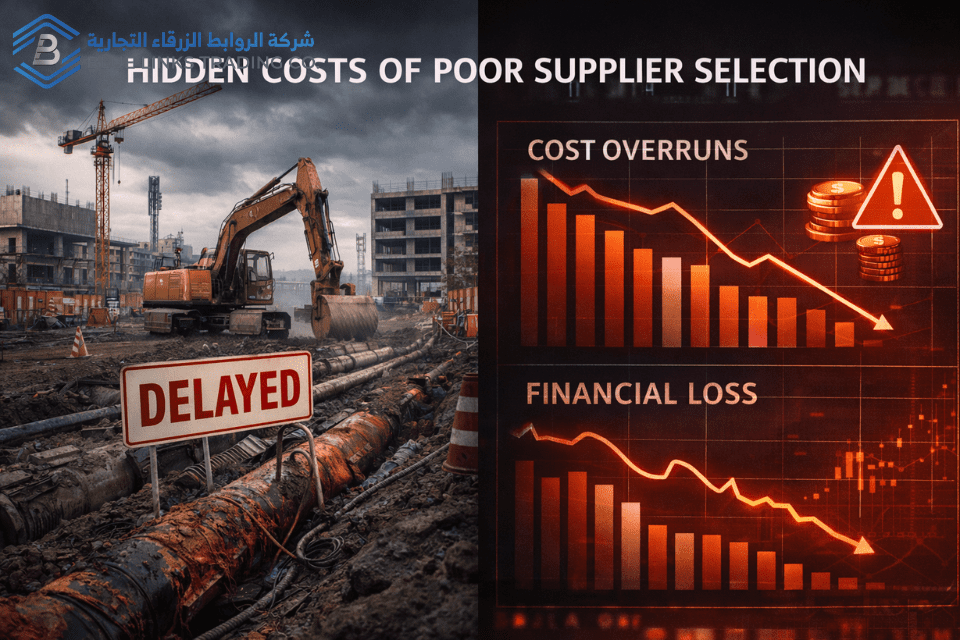
At first glance, selecting a supplier may appear to be a straightforward financial decision. However, in reality, the true cost of Supplier Selection Industrial Projects extends far beyond initial pricing. The most damaging consequences are often hidden — emerging gradually as operational inefficiencies, delays, and risk exposure.
Project Delays and Financial Overruns
One of the most immediate consequences of poor supplier selection is project delay. Late deliveries, incomplete shipments, or misaligned specifications can halt entire workflows. In large-scale infrastructure projects, even a minor delay can cascade into significant financial losses due to idle labor, equipment downtime, and contractual penalties.
In complex supply environments, effective coordination is essential. Without structured oversight such as supply chain management in mega projects, small disruptions quickly escalate into major scheduling conflicts that are difficult to recover from.
Quality Failures and Rework Costs
Low-quality materials or technically incompatible equipment introduce a different type of cost — rework. When components fail to meet project specifications, teams are forced to redo work, replace materials, and reallocate resources. This not only increases direct costs but also impacts overall project efficiency.
In industrial sectors where precision is critical, poor quality can also affect long-term asset performance. Over time, this leads to higher maintenance costs and reduced operational reliability.
Operational Downtime and Productivity Loss
Industrial projects rely on continuous workflow execution. Any interruption caused by supplier-related issues can bring operations to a standstill. Whether due to missing components, delayed equipment, or technical incompatibility, downtime translates directly into lost productivity and revenue.
This is particularly evident in specialized operations such as excavation and infrastructure development, where delays in equipment availability can halt entire phases of work. Advanced solutions like vacuum excavation technology highlight the importance of choosing the right supplier to ensure uninterrupted performance and operational efficiency.
Safety Risks and Compliance Issues
In industrial environments, safety is non-negotiable. Poor supplier selection can introduce significant safety risks, especially when equipment does not meet regulatory standards or lacks proper certification. This increases the likelihood of accidents, legal liabilities, and project shutdowns.
In regions like Saudi Arabia, where projects must comply with strict regulatory frameworks, any deviation can result in serious consequences — from fines to contract termination.
Reputation Damage and Loss of Trust
Beyond operational and financial impacts, there is a less visible but equally critical cost: reputation. When projects experience delays or quality issues, client trust begins to erode. For contractors and project owners, this can lead to lost opportunities, damaged partnerships, and reduced competitiveness in future bids.
In this context, Supplier Selection Industrial Projects becomes a key factor not only in project success, but also in long-term business sustainability.
Ultimately, the real cost of poor supplier selection is not a single expense — it is a chain reaction of risks that affect every layer of the project. Organizations that fail to recognize this often pay a much higher price than anticipated.
A Real Scenario: When Supplier Selection Becomes a Project Risk
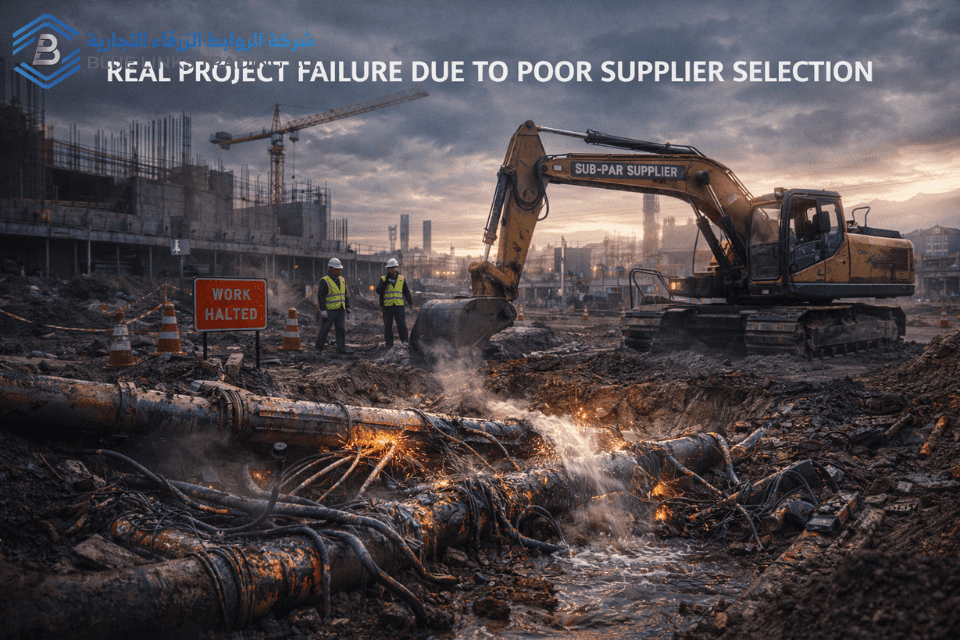
To fully understand the impact of Supplier Selection Industrial Projects, it is important to move beyond theory and examine how these risks unfold in real-world conditions.
Consider a large-scale infrastructure project in Saudi Arabia involving underground utility installation within a densely populated urban zone. The project timeline was tight, and cost optimization was a primary concern during the procurement phase.
In an effort to reduce initial expenses, the project team selected a supplier based primarily on pricing, without conducting a comprehensive technical evaluation. At first, everything appeared to be under control. Materials were delivered, and operations began as scheduled.
However, within weeks, issues started to emerge.
The excavation equipment provided lacked the precision required for working around sensitive underground utilities. As a result, minor damages to existing cables and pipelines began to occur. These incidents, while initially manageable, quickly escalated into serious disruptions.
Work had to be halted multiple times to repair damaged infrastructure. Each interruption caused delays that affected other project phases. Coordination between contractors became increasingly complex, and the overall timeline began to slip.
If the project had relied on advanced, non-invasive excavation approaches such as non-destructive excavation methods, many of these risks could have been avoided. This highlights the critical role of selecting suppliers who not only deliver equipment, but also provide technically aligned solutions.
As delays accumulated, costs increased significantly. What initially appeared to be a cost-saving decision turned into a financial burden. Additional labor hours, equipment replacement, and emergency interventions all contributed to exceeding the original budget.
More importantly, the project’s reputation was affected. Stakeholders began to question execution reliability, and confidence in the project team weakened. In competitive environments, such setbacks can influence future contract opportunities.
This scenario reflects a common pattern seen across many industrial projects. The initial mistake is rarely visible at the moment it is made. It only becomes clear when its consequences begin to unfold across operations, timelines, and relationships.
Ultimately, Supplier Selection Industrial Projects is not about choosing the lowest-cost option. It is about selecting a partner capable of supporting the project under real conditions — where precision, safety, and reliability are essential.
Why Traditional Supplier Selection Approaches Fail
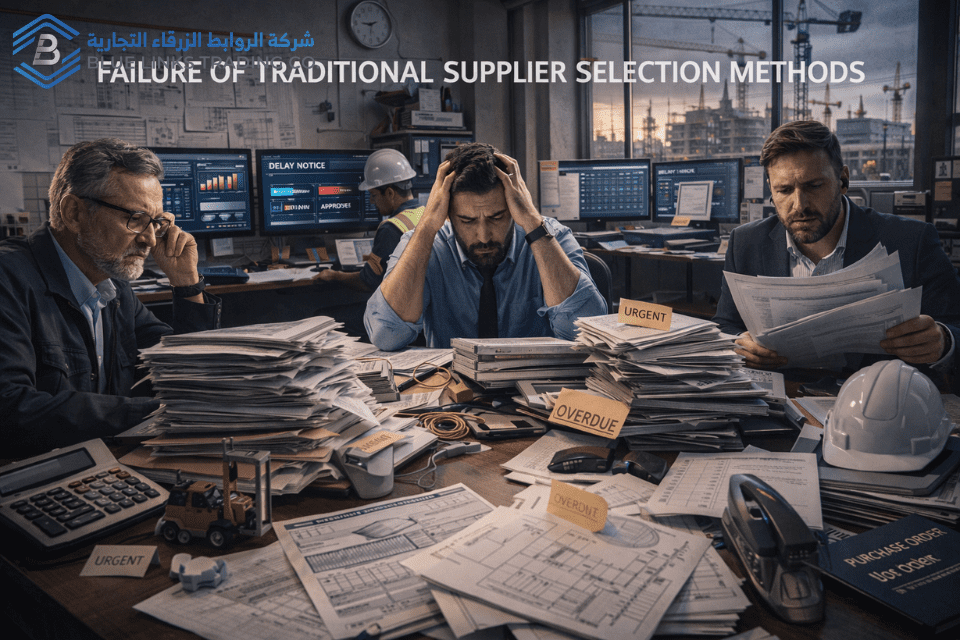
Despite the growing complexity of industrial projects, many organizations still rely on outdated procurement practices. These traditional approaches fail to address the real challenges associated with Supplier Selection Industrial Projects, especially in high-risk environments such as infrastructure and energy sectors.
The problem is not a lack of effort — it is a flawed mindset. Supplier selection is often treated as a transactional process rather than a strategic decision. This creates a gap between what the project requires and what the supplier is actually capable of delivering.
Overreliance on Price-Based Decisions
One of the most common mistakes is selecting suppliers based primarily on cost. While budget control is important, focusing solely on the lowest price often leads to compromises in quality, performance, and reliability.
In industrial environments, the cheapest option rarely represents the best value. Instead, it increases the likelihood of delays, rework, and operational risks — all of which result in higher long-term costs.
Lack of Technical Evaluation
Another critical weakness in traditional supplier selection is the absence of thorough technical assessment. Suppliers may meet basic requirements on paper, but fail to align with the actual operational demands of the project.
For example, in excavation and infrastructure projects, failing to evaluate the technical suitability of equipment can lead to serious execution challenges. Proper planning approaches such as excavation planning in Saudi Arabia demonstrate how integrating technical evaluation into supplier selection significantly reduces project risk.
Limited Visibility Across the Supply Chain
Traditional procurement methods often lack transparency and real-time visibility. Once a supplier is selected, there is minimal oversight of manufacturing progress, logistics, and delivery timelines.
This lack of visibility makes it difficult to identify potential issues early. As a result, problems are only addressed after they have already impacted the project — when corrective actions become more costly and less effective.
Reactive Instead of Proactive Management
Many organizations operate in a reactive mode, addressing supplier-related issues only after they occur. This approach increases uncertainty and reduces the ability to maintain control over project execution.
In contrast, modern industrial projects require proactive supplier management strategies — where risks are identified, monitored, and mitigated before they escalate.
Failure to Build Strategic Partnerships
Finally, traditional approaches fail to recognize the importance of long-term supplier relationships. Treating suppliers as interchangeable vendors prevents the development of trust, collaboration, and shared accountability.
In complex projects, strong partnerships are essential for maintaining consistency, improving communication, and ensuring that all parties are aligned toward a common objective.
Ultimately, these limitations explain why traditional methods are no longer sufficient. As industrial projects continue to evolve, so must the approach to Supplier Selection Industrial Projects. Organizations that fail to adapt risk falling behind — not because of execution ضعف، but because of poor decisions made at the very beginning.
A Smart Supplier Selection Strategy for Industrial Projects
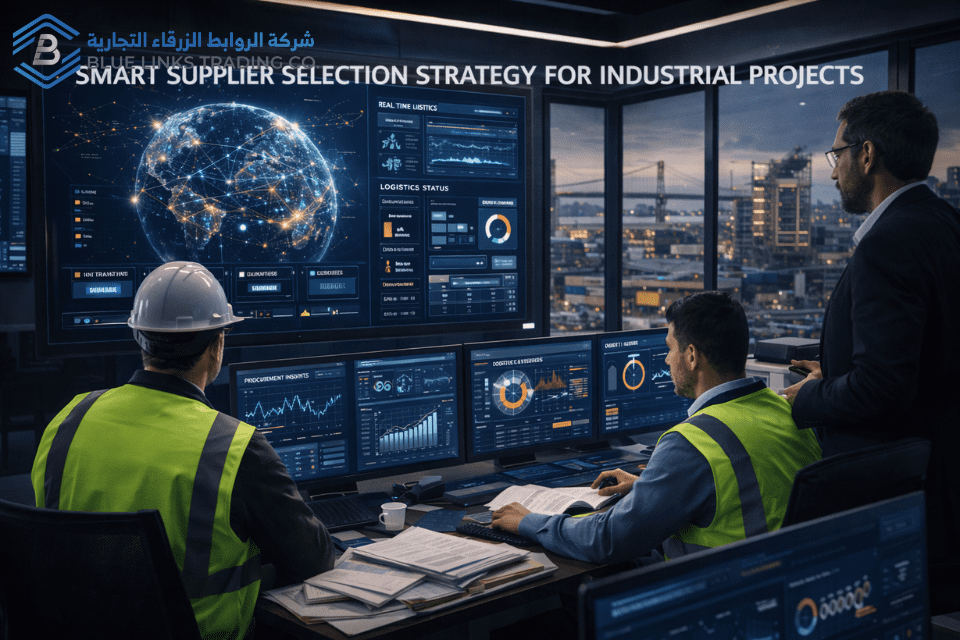
As industrial projects become more complex, relying on traditional procurement methods is no longer sufficient. Organizations that succeed today are those that adopt a structured and strategic approach to Supplier Selection Industrial Projects, focusing not only on cost, but on long-term performance, reliability, and risk mitigation.
A smart supplier selection strategy is not a single step — it is an integrated process that begins before procurement and continues throughout the project lifecycle. This is where advanced methodologies, such as those adopted by leading industrial partners, create a clear competitive advantage.
Supplier Capability Analysis
The first step in any effective strategy is evaluating supplier capabilities beyond surface-level criteria. This includes assessing technical expertise, production capacity, past project performance, and the ability to meet specific operational requirements.
In high-risk environments, this level of analysis ensures that suppliers are not only qualified, but also aligned with the technical and logistical demands of the project.
Integrated Procurement Management
Supplier selection should be closely tied to procurement management. This means maintaining continuous coordination between suppliers, project teams, and logistics operations to ensure that every stage of the process is aligned.
A well-structured procurement strategy reduces miscommunication, eliminates inefficiencies, and ensures that materials and equipment are delivered exactly when and where they are needed.
Real-Time Logistics Monitoring
One of the key differentiators in modern Supplier Selection Industrial Projects is visibility. Real-time monitoring of manufacturing, shipping, and delivery processes allows organizations to identify potential disruptions early and take corrective action before they impact the project.
This proactive approach significantly reduces delays and improves overall project control, especially in large-scale infrastructure environments.
On-Site Technical Support
A truly effective supplier does not stop at delivery. Providing on-site support ensures that equipment is installed correctly, operates efficiently, and meets project specifications from day one.
This level of involvement transforms the supplier from a vendor into a strategic partner, actively contributing to project success rather than simply fulfilling an order.
Technology-Driven Decision Making
Modern projects increasingly rely on advanced technologies to improve accuracy and reduce risk. Integrating solutions such as hydro and suction excavation technologies within supplier strategies ensures higher precision, safer operations, and better long-term outcomes.
These technologies also demonstrate how supplier selection is directly linked to innovation — and how choosing the right partner can elevate the entire project.
Ultimately, a smart approach to Supplier Selection Industrial Projects is about control, visibility, and alignment. It ensures that every supplier decision supports the project’s objectives, rather than introducing new risks.
Organizations that implement this strategy move from reactive problem-solving to proactive risk management — creating a more stable, efficient, and predictable project environment.
How Blue Links Trading Company Eliminates Supplier Risk

In a market where execution speed and reliability define success, companies can no longer afford supplier uncertainty. This is where Blue Links Trading Company (BLT) redefines the concept of Supplier Selection Industrial Projects — not as a procurement step, but as a fully managed, risk-controlled process.
BLT operates with a fundamentally different approach. Instead of simply connecting clients with suppliers, the company acts as a strategic partner that manages the entire supply chain lifecycle — from initial analysis to final on-site delivery.
A Trusted Global Supplier Network
One of the core strengths of BLT is its access to a carefully selected network of international suppliers. Each partner is evaluated based on strict quality, performance, and reliability standards.
This ensures that every component delivered meets the technical and operational requirements of industrial projects in Saudi Arabia and the GCC, reducing uncertainty at every stage.
End-to-End Procurement Management
BLT goes beyond supplier identification by managing the entire procurement process with precision. From order coordination to supplier communication, every detail is handled to ensure alignment with project timelines and specifications.
This integrated approach reflects the principles of industrial procurement in Saudi Arabia, where efficiency and control are essential for delivering consistent results in complex project environments.
Advanced Logistics and Delivery Control
Timely delivery is one of the most critical factors in project success. BLT ensures full visibility across logistics operations, including manufacturing progress, shipping coordination, and customs clearance.
By maintaining real-time oversight, potential disruptions are identified early and addressed proactively — preventing delays before they impact the project.
On-Site Support and Technical Alignment
What truly differentiates BLT is its commitment to supporting clients beyond delivery. The company provides on-site services to ensure that equipment is properly installed, aligned with technical specifications, and ready for immediate operation.
This level of involvement significantly reduces execution risks and ensures that projects maintain operational continuity from day one.
Reducing Cost While Increasing Value
While many organizations focus on reducing upfront costs, BLT focuses on reducing total project cost. By minimizing delays, preventing rework, and ensuring operational efficiency, the company helps clients achieve measurable long-term savings.
This aligns with modern expectations for Supplier Selection Industrial Projects, where value is defined not by price alone, but by overall project performance and reliability.
Ultimately, BLT transforms supplier selection from a potential risk into a strategic advantage. By combining technical expertise, global partnerships, and operational control, the company ensures that every decision made at the procurement stage contributes directly to project success.
The Role of Supplier Selection in Saudi Vision 2030 Projects

Saudi Arabia is undergoing one of the most ambitious infrastructure transformations in the world. Through Vision 2030, the Kingdom is investing heavily in mega projects designed to redefine urban living, industrial capacity, and economic diversification. In this context, Supplier Selection Industrial Projects has become a critical factor in achieving these national objectives.
Projects such as NEOM, The Red Sea Development, and large-scale transportation networks require an unprecedented level of precision, coordination, and efficiency. These are not traditional projects — they are complex ecosystems where every component must perform flawlessly.
According to the official Saudi Vision 2030 platform, the Kingdom aims to build a globally competitive infrastructure supported by advanced technologies and sustainable practices. This vision places significant pressure on project stakeholders to adopt smarter, more reliable procurement strategies.
In such an environment, the margin for error in supplier selection is extremely limited. Any delay in material delivery, mismatch in technical specifications, or failure in equipment performance can disrupt entire project phases and compromise long-term objectives.
This is especially relevant in infrastructure operations involving underground utilities, transportation systems, and energy networks. Advanced approaches such as suction excavation in smart cities demonstrate how integrating the right technologies and suppliers can significantly improve project accuracy, safety, and efficiency.
Moreover, Vision 2030 emphasizes sustainability and resource optimization. This means that projects must not only be completed on time, but also executed with minimal environmental impact and maximum operational efficiency. Achieving this balance requires suppliers who can deliver innovative solutions, not just standard products.
Companies like BLT play a vital role in this transformation by aligning supplier strategies with the broader goals of the Kingdom. By ensuring access to advanced technologies, reliable supply chains, and efficient execution models, they contribute directly to the success of national development initiatives.
Ultimately, Supplier Selection Industrial Projects is no longer a project-level decision — it is a strategic factor that supports the realization of Vision 2030. Organizations that understand this connection are better positioned to deliver successful, future-ready projects.
Key Insights for Better Supplier Selection Decisions

After understanding the risks and challenges associated with Supplier Selection Industrial Projects, it becomes clear that making the right decision requires a structured and informed approach. The following insights summarize the most critical factors that industrial decision-makers should consider.
Key Risks to Avoid
– Choosing suppliers based only on price without evaluating long-term impact.
– Ignoring technical compatibility between supplier solutions and project requirements.
– Lack of visibility across supply chain operations and delivery timelines.
– Reactive problem-solving instead of proactive risk management.
– Weak communication between suppliers and project teams.
Key Factors for Successful Supplier Selection
– Conducting detailed supplier capability analysis before selection.
– Ensuring alignment between supplier expertise and project technical needs.
– Implementing real-time logistics monitoring and coordination.
– Prioritizing reliability, safety standards, and compliance over short-term savings.
– Building long-term partnerships instead of one-time transactions.
Key Outcomes of Smart Supplier Selection
– Reduced project delays and improved timeline control.
– Higher quality execution with minimal rework.
– Increased operational efficiency and productivity.
– Lower overall project cost despite higher initial investment.
– Stronger client trust and long-term business sustainability.
Organizations that apply these principles move beyond basic procurement practices and adopt a more strategic approach to Supplier Selection Industrial Projects. This shift not only improves project performance, but also creates a more resilient and competitive operational model.
🟦 Frequently Asked Questions (FAQ)
⚡ Conclusion: The Right Supplier Is a Strategic Advantage
In industrial environments where precision, speed, and reliability define success, every decision carries weight. Among these decisions, Supplier Selection Industrial Projects stands out as one of the most critical factors influencing project outcomes.
As explored throughout this article, poor supplier selection does not simply result in higher costs — it creates a chain reaction of delays, operational inefficiencies, safety risks, and reputational damage. These consequences often remain hidden at the early stages, but become increasingly visible as the project progresses.
On the other hand, organizations that adopt a strategic approach to supplier selection gain a powerful advantage. They achieve better control over timelines, improve execution quality, and reduce overall project risk. More importantly, they position themselves for long-term success in highly competitive markets.
In fast-growing regions like Saudi Arabia and the GCC, where mega projects demand the highest levels of performance, choosing the right partner is no longer optional — it is essential. This is where working with experienced companies that specialize in supply chain management in mega projects can make a measurable difference in project success.
Blue Links Trading Company represents this new generation of strategic partners. By combining technical expertise, global supplier networks, and end-to-end procurement management, the company helps clients eliminate uncertainty and deliver projects with confidence.
If your next project depends on reliability, efficiency, and long-term performance, the right decision starts with choosing the right partner.
With Blue Links Trading Company, you gain more than a supplier — you gain a strategic procurement partner that understands industrial project risks, supply chain complexity, and the importance of reliable execution in Saudi Arabia and the GCC.
Blue Links Trading Company — helping industrial projects move forward with confidence, control, and long-term value.