

Inside the Project Procurement Process: How Smart Sourcing Drives Project Success
Why the Project Procurement Process Defines Project Success

In today’s infrastructure-driven economy, projects are no longer judged solely by execution quality or engineering precision. What truly determines success—often before the first piece of equipment even reaches the site—is the project procurement process.
Across Saudi Arabia and the GCC, large-scale developments such as smart cities, transportation networks, and energy infrastructure are becoming increasingly complex. These projects rely on tightly coordinated supply chains, specialized equipment, and globally sourced materials. Any weakness in procurement can trigger delays, cost overruns, or even complete project disruption.
The reality is simple: most project failures are not caused by poor construction—they are caused by fragmented sourcing decisions, unreliable suppliers, and inefficient logistics management. This is where a structured and strategic project procurement process becomes a critical advantage rather than a routine operation.
Leading organizations today no longer treat procurement as a back-office function. Instead, they approach it as a core strategic discipline that connects supplier selection, contract management, logistics coordination, and on-site delivery into one seamless system.
Companies operating in the Saudi market, particularly within sectors aligned with Vision 2030, are increasingly recognizing that procurement must evolve. It must move beyond transactional purchasing into a fully integrated model that ensures reliability, speed, and technical alignment from day one.
This article takes you inside the project procurement process, breaking down how modern procurement strategies transform project outcomes—from selecting the right suppliers to ensuring precise and timely delivery on site.
What is the Project Procurement Process?
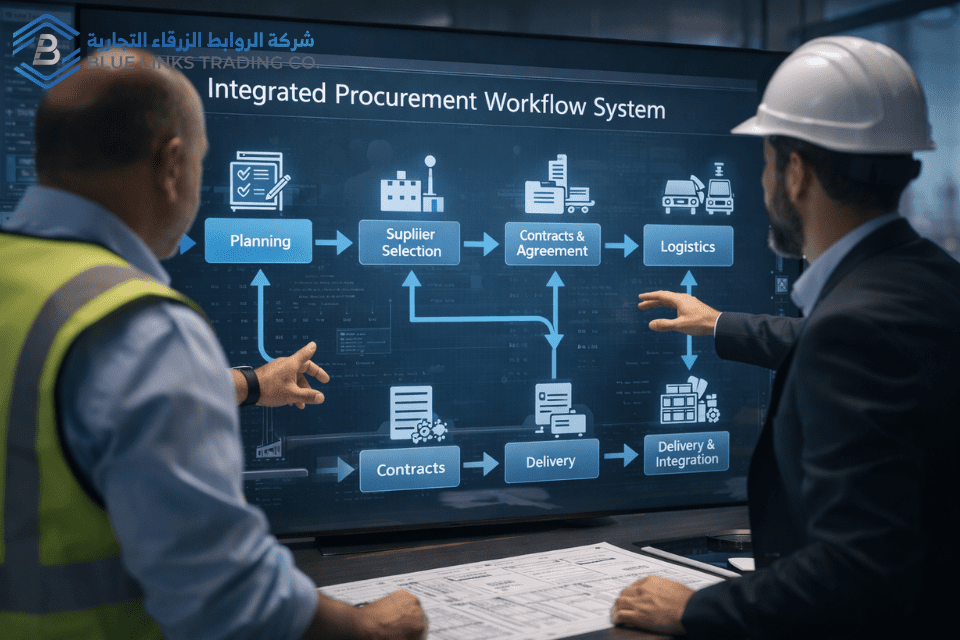
The project procurement process is a structured, end-to-end system that governs how materials, equipment, and services are sourced, managed, and delivered within a project environment. It is not limited to purchasing—it is a strategic workflow that connects planning, supplier selection, contract execution, and logistics into one integrated operation.
In modern infrastructure and industrial projects, procurement has evolved into a critical function that directly impacts timelines, cost control, and overall project performance. A well-defined project procurement process ensures that every component—from technical specifications to final delivery—is aligned with the project’s objectives.
This process typically begins with a detailed understanding of project requirements, followed by identifying and evaluating suppliers based on quality, reliability, and logistical capability. From there, it moves into contract negotiation, order management, production follow-up, and finally, coordinated delivery to the project site.
However, what differentiates high-performing projects from struggling ones is not the existence of a procurement process—but how well it is executed. Projects that suffer from delays often face issues such as poor supplier selection, lack of coordination, or weak logistics oversight. These challenges are explored in more detail in discussions around project procurement delays, where even minor inefficiencies can escalate into major risks.
In contrast, a strategic project procurement process creates visibility across the entire supply chain. It allows project managers to anticipate risks, optimize sourcing decisions, and maintain control over execution timelines.
For companies operating in Saudi Arabia and the GCC, where projects are large-scale and time-sensitive, procurement is no longer a support activity—it is a core driver of project success.
Key Stages of the Project Procurement Process
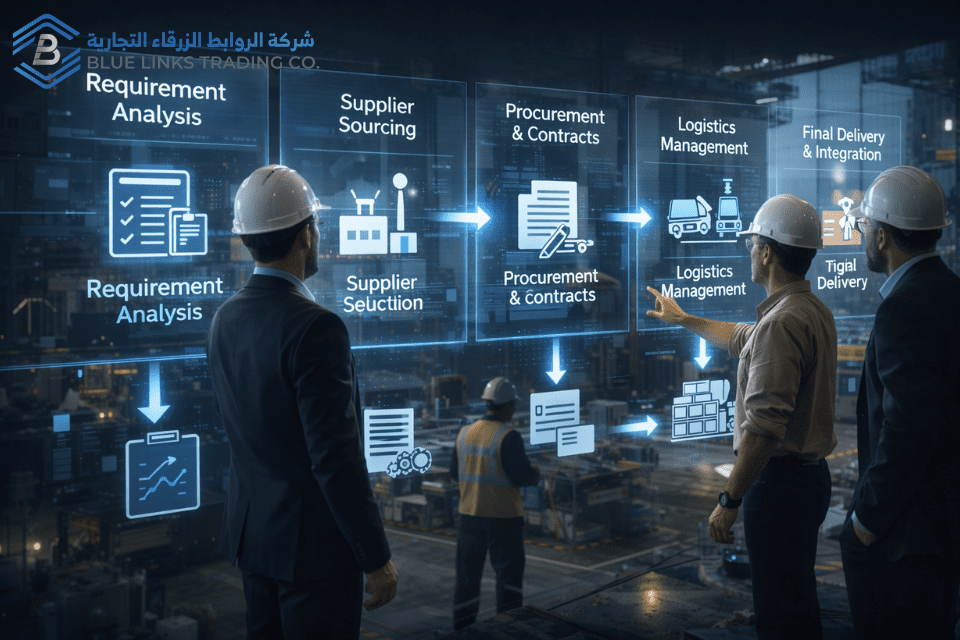
A successful project procurement process does not happen through isolated purchasing decisions. It is built on a sequence of connected stages, where each step affects quality, lead time, budget control, and delivery reliability. When one stage is weak, the entire chain becomes vulnerable.
For that reason, leading industrial companies approach procurement as a controlled operational framework rather than a simple buying activity. From the first technical discussion to final delivery on site, every stage must be handled with precision.
1. Requirement Analysis and Technical Definition
Every effective procurement cycle begins with clarity. Before supplier engagement starts, project teams need a precise understanding of what is required, when it is needed, and how it will be used in the field. This includes technical specifications, compliance requirements, operational conditions, quantities, and delivery priorities.
At this stage, poor definition creates downstream problems. Incomplete specifications often result in supplier confusion, pricing variation, rework, or materials that arrive without meeting actual site needs. A strong start reduces uncertainty and creates a more reliable procurement path.
2. Supplier Identification and Evaluation
Once requirements are defined, the next step in the project procurement process is to identify suppliers who can meet both technical and operational expectations. This is not simply about finding the lowest price. It is about assessing manufacturing capability, product quality, delivery discipline, communication standards, and long-term reliability.
In complex industrial environments, supplier selection often determines whether a project moves forward smoothly or becomes difficult to control. That is why experienced organizations apply structured evaluation criteria instead of relying on reactive decisions. A deeper view of this principle can be seen in how supplier selection in industrial projects directly influences execution quality and commercial confidence.
3. Commercial Alignment and Contracting
After selecting the right supplier, commercial alignment must be handled carefully. This includes pricing, payment terms, lead times, warranty conditions, technical commitments, and documentation requirements. Strong contracting protects both schedule and scope.
This stage is often underestimated. Yet many procurement problems begin when commercial details are not fully aligned with operational reality. A supplier may appear suitable on paper, but if the delivery terms are vague or unrealistic, the project will eventually absorb the risk.
4. Order Management and Coordination
Once agreements are confirmed, procurement moves into execution. Purchase orders must be issued accurately, technical details must be validated, and communication between all stakeholders must remain active. The goal here is not only to place an order, but to maintain control over it throughout its lifecycle.
Order management is where procurement shifts from planning into daily coordination. This requires disciplined follow-up, clear documentation, and rapid response whenever specifications, schedules, or site priorities change.
5. Expediting and Progress Monitoring
A mature project procurement process does not wait passively for suppliers to deliver. It includes active expediting—monitoring manufacturing progress, confirming milestones, following production status, and identifying delays before they become critical.
This stage is especially important in large projects where materials and equipment are tied to sequential site activities. If one item slips without early visibility, the impact can extend far beyond a single shipment. In fast-moving environments, strong follow-up becomes a strategic advantage rather than an administrative task.
6. Logistics and Delivery Management
Even when products are manufactured correctly and on time, the procurement cycle remains incomplete until logistics are properly managed. Shipping, transport coordination, customs handling, route planning, and receiving schedules all influence whether procurement truly supports project delivery.
This is why logistics should never be treated as a separate afterthought. In reality, it is a central part of the project procurement process, particularly in projects that depend on international sourcing and tight milestones. The operational importance of this can be seen in broader discussions around supply chain management in mega projects, where timing and coordination often matter as much as technical quality itself.
7. Site Support and Final Handover
The final stage is not only delivery, but actual readiness for use. In many cases, procurement success depends on whether materials arrive in the right condition, at the right location, with the right documentation, and in full alignment with project specifications.
For specialized equipment or technically sensitive applications, field coordination may also be required to support installation, verification, or handover. This final layer is what transforms procurement from a transactional function into a project-critical discipline.
When all these stages work together, the project procurement process becomes a real performance driver. It helps reduce uncertainty, protect schedules, and improve the probability of successful delivery from the earliest sourcing phase to final site execution.
Why Supplier Selection Defines Project Success

Within any project procurement process, supplier selection is often the most decisive stage. While all phases are interconnected, the quality of the selected supplier directly determines whether the project will move forward smoothly or face continuous operational challenges.
In industrial and infrastructure projects, suppliers are not just vendors—they are execution partners. Their ability to meet technical specifications, maintain production quality, and deliver on time becomes an extension of the project team itself. A weak supplier introduces uncertainty, while a strong one reinforces stability.
One of the most common mistakes in procurement is prioritizing cost over capability. While competitive pricing is important, selecting a supplier based solely on price often leads to hidden costs later in the project. These may include rework, delayed shipments, inconsistent product quality, or logistical complications that disrupt the entire timeline.
A well-structured project procurement process evaluates suppliers through a broader lens. This includes production capacity, past performance, compliance with standards, responsiveness, and the ability to operate within complex project environments. The goal is not to find the cheapest option—but the most reliable one.
In large-scale projects across Saudi Arabia and the GCC, this becomes even more critical. With multiple stakeholders, strict deadlines, and high-value assets, a single supplier failure can impact several phases of execution. This is why experienced procurement teams rely on structured frameworks similar to those used in supplier selection in industrial projects, where decisions are based on measurable criteria rather than assumptions.
Another key factor is alignment. A supplier may have strong technical capabilities, but if communication is weak or expectations are not clearly defined, the working relationship quickly becomes inefficient. Effective supplier selection ensures that both sides operate with the same understanding of scope, timeline, and performance expectations.
It is also important to recognize that supplier selection is not a one-time decision. In a mature project procurement process, it becomes part of a continuous improvement cycle. Performance is monitored, feedback is collected, and supplier relationships are refined over time to strengthen future projects.
Ultimately, successful projects are rarely the result of isolated excellence. They are built on reliable systems and strong partnerships. Supplier selection sits at the center of this system, acting as the foundation upon which procurement efficiency, cost control, and delivery performance are built.
Common Procurement Challenges in Mega Projects

Even with a well-structured project procurement process, large-scale projects often face complex challenges that can disrupt execution if not properly managed. These challenges are not always visible at the beginning, but they tend to escalate quickly once the project enters active phases.
One of the most critical issues is misalignment between procurement planning and actual project timelines. When procurement decisions are made without a clear understanding of site sequencing, materials may arrive too early, too late, or in incomplete batches—creating operational inefficiencies and storage complications.
Another common challenge is supplier inconsistency. Even when suppliers are initially qualified, variations in production quality, communication delays, or limited capacity can impact delivery performance. In high-pressure environments, these inconsistencies can create bottlenecks that affect multiple project stages simultaneously.
Logistics complexity also plays a major role. Projects in Saudi Arabia and the GCC often depend on international sourcing, which introduces additional layers such as shipping coordination, customs clearance, and transport scheduling. Any disruption in this chain can lead to unexpected delays and increased costs.
These risks become even more evident in large infrastructure programs aligned with national development strategies such as Saudi Vision 2030, where execution speed and coordination across multiple sectors are essential. In such environments, procurement is no longer a supporting function—it is a central operational pillar.
A fragmented project procurement process also leads to limited visibility. Without real-time tracking and proactive monitoring, project teams often discover issues too late—after they have already impacted schedules or budgets. This reactive approach increases uncertainty and reduces control over project outcomes.
Additionally, poor risk management remains a recurring problem. Many procurement systems focus on completing transactions rather than identifying potential disruptions early. This includes risks related to supplier performance, logistics delays, regulatory requirements, or technical mismatches.
For this reason, modern procurement strategies emphasize integration. They connect sourcing, logistics, and execution into a single framework that allows teams to anticipate challenges rather than react to them. A strong project procurement process does not eliminate risk—but it significantly improves the ability to manage it effectively.
How Strategic Procurement Reduces Risk and Improves Delivery

In complex infrastructure and industrial environments, the difference between delayed projects and successful delivery often comes down to one factor: how procurement is managed. A well-executed project procurement process transforms procurement from a transactional activity into a strategic control system that actively reduces risk and improves performance.
Strategic procurement is not about purchasing faster—it is about making better decisions earlier. By integrating technical planning, supplier evaluation, logistics coordination, and execution monitoring into one structured framework, organizations gain full visibility over the supply chain. This visibility allows teams to detect potential disruptions before they impact the project.
One of the key advantages of a strong project procurement process is risk anticipation. Instead of reacting to supplier delays or logistical issues, procurement teams continuously monitor progress, validate timelines, and adjust plans when needed. This proactive approach significantly reduces the likelihood of unexpected disruptions.
Cost control is another major benefit. While procurement is often associated with cost reduction, strategic procurement focuses on cost efficiency rather than low pricing. By selecting reliable suppliers, minimizing rework, and avoiding delays, projects can maintain budget stability without compromising quality.
Delivery performance also improves when procurement is aligned with execution. Materials and equipment are delivered according to actual site requirements, ensuring that construction phases are not interrupted. This synchronization between procurement and operations is essential in fast-paced project environments.
A strong project procurement process also enhances collaboration. When suppliers are treated as long-term partners rather than short-term vendors, communication becomes more transparent, expectations are clearer, and overall performance improves. This approach builds stronger supply networks that can support future projects more effectively.
These principles are particularly important in large-scale developments, where multiple stakeholders depend on accurate coordination. Effective procurement strategies—similar to those applied in supply chain management in mega projects—ensure that sourcing decisions, logistics planning, and execution timelines are fully aligned.
Ultimately, strategic procurement creates stability in an otherwise uncertain environment. It allows project teams to move forward with confidence, knowing that materials, equipment, and resources will arrive as expected—supporting both performance and long-term project success.
Procurement in Saudi Vision 2030 Projects

Across Saudi Arabia, the scale and ambition of national projects have redefined how procurement is approached. With the launch of major initiatives under Saudi Vision 2030, procurement is no longer a supporting function—it has become a central driver of execution, efficiency, and long-term sustainability.
Mega projects such as NEOM, the Red Sea Development, and large-scale transportation networks require an advanced project procurement process capable of handling global sourcing, complex logistics, and strict delivery schedules. These projects operate within tightly controlled timelines, where even minor disruptions in procurement can lead to cascading delays across multiple phases.
In this environment, procurement must operate with precision. It must ensure that materials meet technical specifications, suppliers can scale production when needed, and logistics operations are synchronized with construction timelines. This level of coordination requires a highly structured and proactive approach to procurement management.
One of the defining characteristics of projects aligned with Vision 2030 is the integration of technology and innovation. From smart infrastructure to sustainable construction practices, procurement teams must source advanced equipment and solutions that meet evolving industry standards. This includes specialized technologies such as vacuum excavation systems, which are increasingly used in sensitive infrastructure environments.
The growing reliance on advanced solutions highlights the importance of working with procurement systems that can support technical complexity. A well-designed project procurement process ensures that sourcing decisions are not only cost-effective, but also aligned with long-term project performance and safety requirements.
Another critical factor is supply chain resilience. Large projects in Saudi Arabia depend on international suppliers, regional logistics hubs, and coordinated transport networks. Any disruption—whether in manufacturing, shipping, or customs clearance—can impact project timelines. This is why procurement strategies must prioritize flexibility, risk management, and continuous monitoring.
In practice, this means that procurement teams must operate with full visibility across the entire supply chain. They must anticipate challenges, adjust sourcing strategies when needed, and maintain strong relationships with reliable suppliers. Without this level of control, even the most well-planned projects can face unexpected delays.
As Saudi Arabia continues to invest in infrastructure and industrial growth, the role of procurement will only become more critical. Companies that adopt a strategic project procurement process will be better positioned to support these developments—delivering not only materials, but also reliability, speed, and long-term value.
Why Companies Need a Procurement Partner

As projects grow in scale and complexity, managing procurement internally becomes increasingly challenging. What may seem manageable in smaller projects quickly turns into a high-risk operation when multiple suppliers, international logistics, and strict timelines are involved. This is where the role of a strategic partner becomes essential within the project procurement process.
A procurement partner does not simply execute purchase orders—they bring structure, expertise, and control to the entire supply chain. From early-stage planning to final delivery, they ensure that each step is aligned with project goals, reducing uncertainty and improving execution consistency.
One of the main advantages of working with a specialized partner is access to a reliable supplier network. Instead of starting from scratch, project teams benefit from pre-qualified suppliers with proven performance records. This significantly reduces the risk of selecting unverified vendors and improves overall procurement efficiency.
Another key benefit is operational focus. Engineering and project teams are often overloaded with technical responsibilities. Managing procurement on top of that can lead to gaps in coordination and delayed decisions. By integrating a structured project procurement process managed by a dedicated partner, companies can focus on execution while maintaining full control over sourcing and delivery.
Speed is also a critical factor. In large projects, delays are rarely caused by a single issue—they result from cumulative inefficiencies across multiple stages. A procurement partner ensures faster decision-making, better coordination between stakeholders, and proactive problem-solving before issues escalate.
Risk management becomes more effective as well. With continuous monitoring of suppliers, production progress, and logistics, potential disruptions can be identified early. This reduces the likelihood of unexpected delays and helps maintain project timelines.
In addition, a strong procurement partner brings market insight. Understanding pricing trends, supplier capabilities, and logistics dynamics allows for smarter sourcing decisions. This is especially valuable in environments like Saudi Arabia, where large-scale projects require both local expertise and global sourcing capabilities.
For organizations aiming to operate at a higher level of efficiency, integrating a professional partner into the project procurement process is no longer optional—it is a strategic move. It transforms procurement from a reactive function into a controlled system that supports long-term project success.
Real-World Insight: When Procurement Becomes the Turning Point
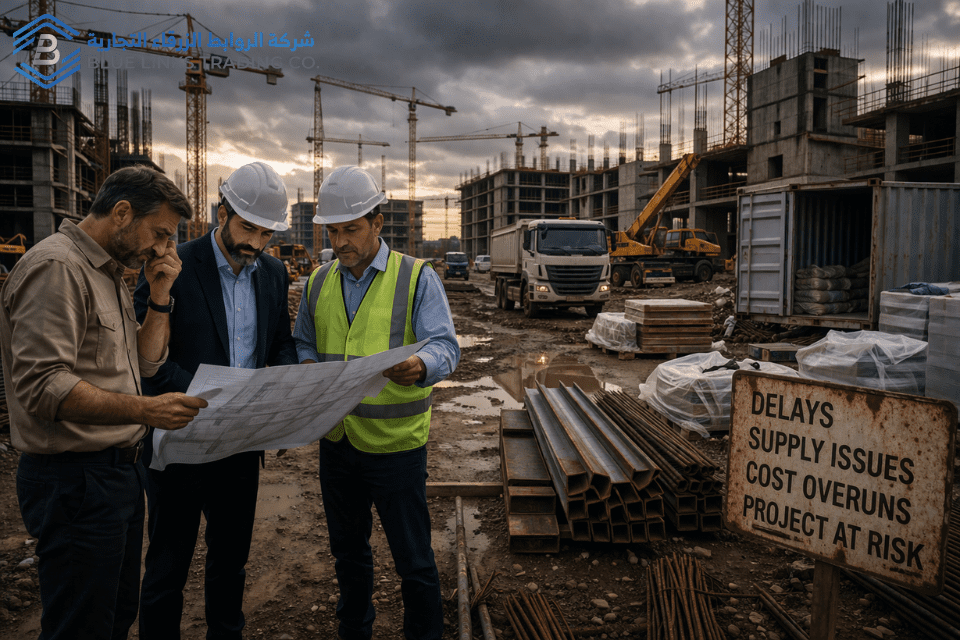
In one infrastructure project in the GCC, a contractor faced repeated delays during the early execution phase. Despite having a strong engineering team and a clear project plan, progress on site was inconsistent. Materials were arriving late, some components did not fully match technical requirements, and coordination between suppliers and site teams was fragmented.
At first, the issue appeared to be related to construction performance. However, a deeper review revealed that the root cause was an unstructured project procurement process. Supplier selection had been rushed, communication channels were unclear, and there was limited follow-up during production and shipping stages.
Once procurement was restructured, the impact became immediately visible. A more disciplined approach was introduced—starting with re-evaluating suppliers based on performance criteria, followed by tighter coordination on order management and continuous monitoring of production timelines.
Logistics planning was also adjusted to align with actual site needs. Instead of reacting to delays, the team began anticipating them. Delivery schedules were optimized, and communication between suppliers and project stakeholders improved significantly.
Within a short period, project flow stabilized. Materials started arriving on time, technical mismatches were reduced, and site operations became more predictable. What initially seemed like a construction issue was, in reality, a procurement challenge.
This scenario reflects a common pattern in large projects. When the project procurement process is weak, even the most capable teams struggle to maintain performance. But when procurement is structured, proactive, and aligned with execution, it becomes a powerful enabler of success rather than a source of risk.
In fast-moving environments, the difference is clear: projects that treat procurement as a strategic system move forward with confidence—while those that rely on fragmented decisions often face unnecessary obstacles.
🟦 Frequently Asked Questions (FAQ)
⚡ Conclusion: Procurement Is the Engine Behind Project Success
In today’s industrial landscape, success is no longer defined only by execution on site. It is shaped much earlier—within the project procurement process, where critical decisions around suppliers, logistics, and coordination determine the direction of the entire project.
As explored throughout this article, procurement is not just about purchasing. A weak process creates a chain reaction of delays, inefficiencies, and operational risks that grow over time. These issues often start small but can quickly escalate into major project disruptions.
On the other hand, organizations that adopt a structured and strategic project procurement process gain a powerful advantage. They improve delivery accuracy, maintain control over timelines, and build resilient supply chains that support long-term performance.
In fast-growing markets such as Saudi Arabia and the GCC, where projects are complex and time-sensitive, procurement must be managed with precision. This is where working with experienced partners in
supply chain management in mega projects
can make a measurable difference in achieving reliable and efficient outcomes.
Blue Links Trading Company represents a new generation of procurement partners. By combining technical expertise, global sourcing capabilities, and end-to-end execution management, the company helps clients transform procurement into a controlled and strategic system.
If your next project depends on reliability, speed, and long-term performance, the right decision starts with building a stronger procurement foundation.
With Blue Links Trading Company, you gain more than a supplier — you gain a strategic procurement partner capable of managing complexity, reducing risk, and ensuring reliable project delivery across Saudi Arabia and the GCC.
Blue Links Trading Company — turning procurement into a competitive advantage.