

Engineering vs Procurement: Who Really Controls Excavation Decisions in Mega Infrastructure Projects?
Excavation Decisions Are Rarely Just Technical Choices

In large infrastructure projects, excavation decisions are often assumed to be purely technical matters. On paper, the process appears straightforward: engineers assess the site, evaluate constraints, and recommend the safest approach. However, in reality, these choices are rarely determined by engineering analysis alone. They are frequently shaped by internal project dynamics involving procurement priorities, contract structures, and governance frameworks.
Within complex project environments, especially in mega infrastructure developments, the authority behind such decisions can become blurred. Engineering teams may focus on protecting infrastructure integrity and minimizing operational risks, while procurement teams are responsible for cost efficiency, vendor selection, and contractual obligations. These competing priorities can create hidden tensions that significantly influence how the final approach is ultimately determined.
This dynamic is particularly relevant in large-scale Saudi infrastructure programs where project complexity, multi-contractor environments, and strict regulatory expectations place intense pressure on decision-making processes. According to the World Bank infrastructure development reports, governance and coordination challenges remain one of the key factors affecting project risk in large infrastructure programs worldwide.
When project decisions related to excavation are influenced by organizational pressures rather than clear governance structures, the consequences can extend far beyond the construction site. Delays, contractual disputes, and accountability conflicts often emerge when responsibility for excavation-related risks is not clearly defined.
This article explores the often-overlooked tension between engineering and procurement teams and examines how excavation planning is shaped by internal project governance rather than purely technical considerations. Understanding these internal dynamics is critical for improving decision ownership, managing project risk, and ensuring smoother delivery of large infrastructure developments.
Engineering Priorities vs Procurement Pressures in Excavation Decisions

In large infrastructure projects, excavation decisions rarely emerge from a single department. Instead, they often develop within a complex interaction between engineering teams and procurement authorities. Each side operates under different responsibilities, performance metrics, and risk perspectives, which can shape how these choices evolve during the project planning stage.
Engineering teams typically approach this process with a strong focus on infrastructure protection and operational safety. Their role involves identifying potential risks to underground utilities, structural stability, and service continuity. Because engineering departments are accountable for technical integrity, they often advocate for conservative strategies that reduce uncertainty and protect the project’s long-term reliability.
Procurement teams, however, operate within a different framework. Their primary responsibility is to manage budgets, contracts, and supplier selection while ensuring that project delivery remains financially efficient. Procurement processes are designed to create competitive bidding environments, optimize costs, and maintain strict compliance with procurement regulations. In many cases, excavation decisions are influenced by how contract structures allocate responsibility and financial exposure among project stakeholders.
This divergence of priorities can generate internal pressure during project planning phases. Engineering teams may recommend approaches that prioritize infrastructure protection, while procurement teams must evaluate whether those recommendations align with contract terms and financial constraints. As a result, project choices related to excavation may gradually evolve through negotiation rather than purely technical evaluation.
In large Saudi infrastructure developments, where multiple contractors and government stakeholders interact within complex governance structures, these tensions can become even more pronounced. Decision-making processes often require balancing engineering recommendations with procurement frameworks that were defined during early project tendering stages.
Understanding this dynamic is essential for improving excavation governance. When organizations recognize how engineering and procurement perspectives intersect, they are better positioned to create clearer accountability structures around these decisions. This topic has been explored further in discussions about Saudi infrastructure governance and excavation planning, where project governance frameworks are shown to play a critical role in how excavation risks are ultimately managed.
Project Governance and the Ownership Gap in Excavation Decisions
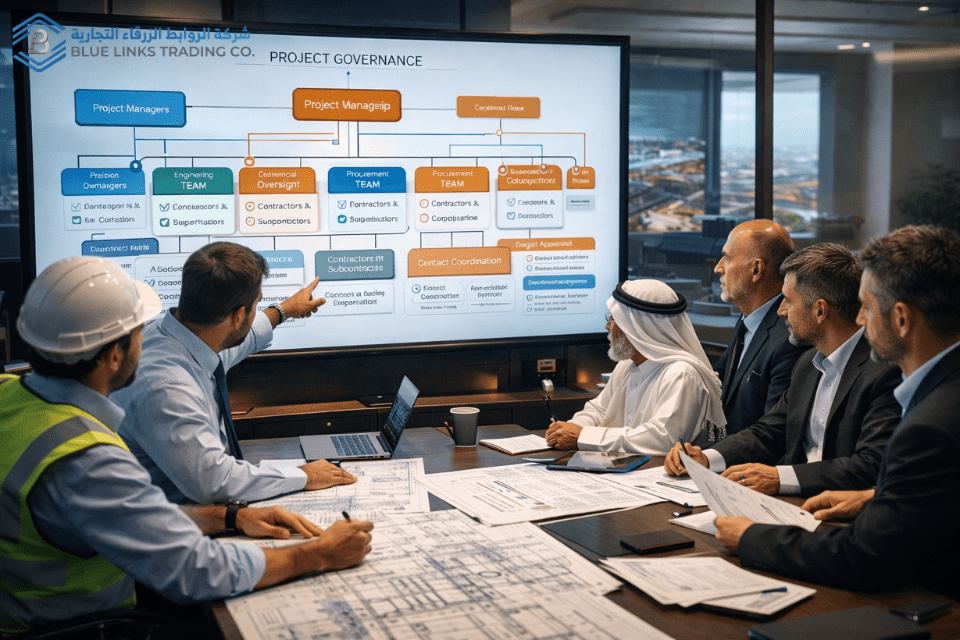
One of the most overlooked challenges in large infrastructure projects is the question of ownership. While excavation decisions are critical to project safety, scheduling, and financial exposure, responsibility for these choices is not always clearly defined within the project organization.
In theory, engineering departments provide technical recommendations while procurement teams ensure that contracts and budgets align with project objectives. However, once projects move from planning to execution, such decisions can become shared across multiple layers of governance. Project managers, contract administrators, procurement authorities, and engineering consultants may all influence the final outcome.
This multi-layered decision structure can unintentionally create what many infrastructure advisors describe as an “ownership gap.” Engineering teams may assume their recommendations have been adopted, while procurement teams may rely on contractual compliance rather than technical oversight. As a result, the chosen approach may be implemented without any single department fully accepting responsibility for the associated risks.
The issue becomes even more significant in mega infrastructure developments where numerous contractors, subcontractors, and regulatory authorities interact within the same project environment. Governance frameworks are designed to coordinate these interactions, yet excavation-related choices can still become fragmented across contractual boundaries.
In Saudi Arabia’s rapidly expanding infrastructure sector, governance clarity has become increasingly important as projects grow in scale and complexity. Industry discussions around excavation planning in Saudi Arabia highlight how decision ownership plays a crucial role in managing operational risks across large construction programs.
When ownership of these decisions is not clearly defined, project leaders may face uncertainty about who ultimately controls excavation strategy and who carries responsibility when unexpected issues arise. This governance gap can influence not only project risk but also accountability structures throughout the entire infrastructure delivery process.
When Excavation Decisions Turn Into Project Risk

When excavation decisions are influenced by competing organizational priorities rather than clearly defined governance structures, the consequences can quickly escalate into significant project risks. What initially appears to be an internal coordination issue between engineering and procurement teams can ultimately affect project timelines, contractual relationships, and financial exposure.
In many large infrastructure projects, engineering teams may identify potential concerns related to infrastructure protection or service continuity during the planning stage. However, once procurement frameworks and contractual commitments are established, project approaches related to excavation may be adjusted to align with cost structures, delivery schedules, or vendor agreements. These adjustments can unintentionally shift operational risk back onto the project environment.
This situation becomes particularly sensitive in projects involving complex underground networks such as utilities, transportation systems, and urban infrastructure. Planning choices made without clear alignment between engineering recommendations and procurement obligations may lead to delays, unexpected field conditions, or disputes between contractors and project owners.
Risk management experts have long highlighted that unclear decision authority is a common contributor to infrastructure project challenges. Reports from the OECD infrastructure governance framework emphasize that strong governance structures are essential for ensuring accountability in complex infrastructure delivery programs.
For project leadership teams, these decisions therefore represent more than operational planning steps. They reflect governance choices that influence risk distribution across contractors, consultants, and project authorities. When decision ownership is unclear, responsibility for excavation-related incidents can quickly become contested among stakeholders.
This is why many infrastructure advisors increasingly emphasize the importance of structured excavation risk management frameworks. By aligning engineering recommendations, procurement processes, and governance oversight, organizations can significantly reduce uncertainty around excavation planning and prevent internal conflicts from escalating into project-wide risks.
Strategic Governance for Better Excavation Decisions

As infrastructure projects grow larger and more complex, excavation decisions are becoming increasingly tied to project governance rather than purely operational planning. The interaction between engineering expertise and procurement frameworks is not inherently problematic; in fact, both functions are essential for delivering infrastructure projects efficiently. The real challenge lies in ensuring that these choices are guided by clear authority, transparent communication, and well-defined accountability structures.
In mega infrastructure developments across Saudi Arabia, where multiple contractors, consultants, and government entities operate within the same project ecosystem, decision clarity is critical. Planning choices that lack clear ownership can create uncertainty across the entire project chain. When responsibilities are distributed across engineering departments, procurement teams, and project management offices without clear alignment, risk exposure increases for everyone involved.
Strong governance structures help prevent this fragmentation. By defining how such decisions are evaluated, approved, and documented, project organizations can reduce internal conflicts and ensure that both technical expertise and procurement responsibilities contribute constructively to the final outcome.
This governance perspective is increasingly important in Saudi Arabia’s rapidly evolving infrastructure landscape, where large-scale developments demand careful coordination between technical planning, procurement strategies, and regulatory expectations. Broader discussions around non-traditional excavation approaches in Saudi Arabia illustrate how infrastructure innovation must be supported by equally strong decision-making frameworks.
Ultimately, these decisions should not be viewed solely as operational choices made on construction sites. They represent strategic governance moments where engineering integrity, procurement responsibility, and risk accountability intersect. When organizations recognize this intersection and establish clear decision ownership, excavation planning becomes not just safer, but also more aligned with the long-term success of large infrastructure programs.
Frequently Asked Questions About Excavation Decisions
Why are excavation decisions important in infrastructure projects?
Excavation decisions influence project safety, scheduling, and financial exposure. Because these activities interact with underground utilities and infrastructure systems, poor governance around excavation planning can increase project risks and delays.
Who typically controls excavation decisions in large projects?
These decisions are usually influenced by multiple stakeholders including engineering teams, procurement departments, project managers, and contractors. Clear governance frameworks are necessary to ensure accountability and coordination.
How do procurement processes influence excavation decisions?
Procurement frameworks affect excavation planning through contract structures, vendor selection, and budget constraints. These factors often shape how engineering recommendations are implemented during project execution.
Why do excavation decisions sometimes create project conflicts?
Conflicts may arise when engineering priorities focused on risk reduction intersect with procurement priorities centered on cost control and contractual compliance. Without clear governance, these choices can become a source of internal project tension.
The Future of Excavation Decisions in Complex Infrastructure Projects

As infrastructure programs continue to grow in scale and complexity, excavation decisions will increasingly reflect the strength of a project’s governance rather than simply the conditions on the ground. Engineering expertise remains essential for protecting infrastructure integrity and minimizing technical risk. Procurement frameworks, on the other hand, ensure financial discipline, contractual clarity, and efficient project delivery. The real challenge lies not in choosing between these perspectives, but in aligning them within a transparent decision-making structure.
When these decisions are guided by clear authority and well-defined accountability, projects are better equipped to balance safety, cost efficiency, and operational reliability. Without that clarity, however, the interaction between engineering recommendations and procurement priorities can easily create gaps in responsibility that expose projects to avoidable risks.
In rapidly expanding infrastructure environments such as Saudi Arabia’s mega development landscape, project planning choices around excavation carry broader implications. Delays, service disruptions, and contractual disputes can quickly escalate into reputational and financial consequences for project stakeholders. This is why excavation governance is increasingly viewed as a strategic leadership responsibility rather than a purely technical planning task.
Ultimately, the most successful infrastructure projects recognize that these decisions are not simply operational steps in construction planning. They represent critical governance moments where engineering integrity, procurement discipline, and project leadership must converge. When organizations establish clear decision ownership and transparent coordination between departments, excavation planning becomes a source of project stability rather than uncertainty.