

When Excavation Mistakes Trigger Infrastructure Project Crises

Why Excavation Mistakes Can Instantly Trigger Project Crises
In large infrastructure environments, even a small operational error can trigger consequences far beyond the construction site. Among the most sensitive of these errors are Excavation Mistakes, which often occur at the exact moment when projects interact with complex underground infrastructure networks. When excavation work intersects with utilities, transportation systems, or essential public services, the margin for error becomes extremely narrow.
Unlike routine construction challenges, Excavation Mistakes can immediately escalate into critical incidents that force entire projects to pause. The disruption may not begin with technical complexity but with the sudden realization that a single activity has affected systems that thousands of people depend on daily. In major development environments, where infrastructure networks are dense and interconnected, the consequences of such incidents can unfold rapidly.
Large infrastructure projects often operate under tightly coordinated schedules involving multiple contractors, engineering teams, and project authorities. When excavation incidents occur, operations can halt within minutes as teams attempt to assess the scope of disruption. These situations quickly shift projects from routine execution into emergency response mode, where coordination, communication, and risk containment become immediate priorities.
The vulnerability of excavation activities in complex environments has been widely acknowledged in industry discussions around infrastructure risk. Many strategic assessments, such as those discussed in excavation risk management strategies, emphasize how excavation work represents one of the most sensitive phases of infrastructure delivery due to its proximity to critical underground systems.
In regions experiencing rapid infrastructure expansion, the exposure becomes even more pronounced. Major development programs frequently involve dense networks of power, telecommunications, water systems, and transportation infrastructure built over decades. As explained in discussions surrounding excavation risks in Saudi infrastructure projects, excavation activities often occur within environments where underground systems overlap and intersect in ways that are difficult to fully visualize from the surface.
When Excavation Mistakes intersect with such environments, the impact extends far beyond operational disruption. Infrastructure incidents can rapidly evolve into project-level crises involving emergency coordination between contractors, infrastructure operators, and government stakeholders. In some cases, disruptions to utilities or public infrastructure require immediate investigation and coordinated response efforts across multiple authorities.
Industry infrastructure reports have repeatedly highlighted how construction incidents affecting underground infrastructure can trigger significant operational disruption. For example, infrastructure risk analyses published by the World Bank infrastructure program note that disruptions to critical networks during construction projects can rapidly cascade into broader economic and service impacts if not contained quickly.
For project leaders and infrastructure decision-makers, the key lesson is that Excavation Mistakes are rarely isolated site issues. Instead, they often represent the starting point of complex institutional events involving operational shutdowns, emergency coordination, and heightened scrutiny across the project organization. Understanding how these incidents unfold is therefore essential for anyone responsible for managing risk within large infrastructure programs.
How Excavation Mistakes Escalate Inside Large Infrastructure Projects

In large infrastructure developments, the immediate impact of Excavation Mistakes rarely remains confined to the location where the incident occurs. Once a disruption affects underground systems or project operations, the situation often expands quickly across multiple layers of the project environment. Large construction programs typically involve complex coordination between contractors, infrastructure operators, engineering teams, and project authorities, which means a single incident can disrupt a wide network of ongoing activities.
When excavation incidents occur, the first visible effect is often operational disruption. Work zones may be closed temporarily while project teams attempt to understand what happened and determine whether critical infrastructure has been affected. In projects where multiple contractors operate simultaneously, these disruptions can quickly create coordination challenges as teams pause work, re-evaluate safety conditions, and reassess project sequencing.
This is where Excavation Mistakes begin to move beyond operational concerns and enter the realm of project crisis management. The disruption of underground infrastructure—such as power distribution, telecommunications, or water systems—can force project leadership to shift from routine execution to emergency coordination. Decision-making timelines compress dramatically, and communication channels across contractors, consultants, and project authorities become significantly more intense.
In many infrastructure environments, the complexity of underground networks makes these incidents particularly sensitive. Projects developed over decades often contain overlapping infrastructure layers that are difficult to fully visualize during active construction. As highlighted in discussions on traditional excavation risks in Saudi mega projects, excavation activities frequently intersect with legacy infrastructure systems whose documentation may vary in accuracy or completeness.
When Excavation Mistakes intersect with such environments, project teams must quickly assess the broader implications. A disruption to one utility network can cascade into delays affecting other contractors or project phases. For example, temporary shutdowns may prevent adjacent construction activities from continuing, while infrastructure operators investigate whether service stability has been compromised.
The escalation is not purely operational. As disruptions expand, pressure begins to build inside the project organization. Construction leaders must rapidly gather information, coordinate with infrastructure authorities, and determine whether the incident represents a localized disruption or a broader infrastructure risk. These situations often trigger urgent project meetings, incident assessments, and coordinated responses between contractors and infrastructure stakeholders.
International infrastructure studies have frequently noted how construction incidents involving underground networks can escalate quickly within complex projects. Research highlighted by the OECD infrastructure policy program emphasizes that infrastructure systems are highly interconnected, meaning disruptions during construction can propagate through multiple operational layers if not contained effectively.
For large development programs, this escalation dynamic is what transforms Excavation Mistakes into project crises. What begins as a localized incident at the excavation site can quickly affect construction schedules, contractor coordination, and operational stability across the wider infrastructure environment. Once this escalation begins, the focus of project leadership shifts from routine delivery toward crisis containment and risk control.
Contractual and Legal Fallout After Excavation Incidents

As infrastructure incidents escalate, Excavation Mistakes often move beyond operational disruption and begin to affect the contractual framework that governs large construction projects. Major infrastructure developments are typically built around complex agreements between project owners, contractors, subcontractors, and infrastructure operators. When excavation incidents interrupt construction activities, these contractual relationships can quickly come under strain.
The first contractual concern usually relates to responsibility for the disruption. If excavation work affects underground utilities or critical infrastructure, project stakeholders may initiate formal investigations to determine how the incident occurred and whether contractual obligations were fully respected. These investigations are rarely limited to site conditions; they often examine planning documentation, coordination procedures, and communication between contractors involved in the work.
When Excavation Mistakes force project shutdowns or delay construction schedules, financial and legal implications can quickly follow. Contractors may face claims related to project delays, service disruptions, or additional recovery costs. At the same time, project owners must determine whether the incident triggers liability provisions outlined in construction agreements.
In large infrastructure environments, the presence of multiple contractors can further complicate the situation. Responsibility for excavation work may involve several parties operating within the same construction zone, making it necessary to carefully examine how responsibilities were distributed. As discussed in industry perspectives related to excavation planning in complex infrastructure environments, project coordination and planning procedures often play a critical role in determining how excavation activities interact with existing infrastructure systems.
Insurance considerations may also become part of the response process. Construction projects frequently include insurance coverage designed to address incidents affecting infrastructure systems. When Excavation Mistakes lead to service disruption or infrastructure damage, insurers may initiate technical reviews to determine whether claims fall within the scope of coverage or whether contractual liability applies to specific project participants.
In highly visible infrastructure projects, the legal implications of excavation incidents may extend even further. Public infrastructure disruptions can attract the attention of regulators, infrastructure operators, and government authorities responsible for ensuring the reliability of critical services. Although these investigations may focus on operational stability, they can also influence how contractual accountability is ultimately determined.
For project leaders and infrastructure stakeholders, this legal dimension reinforces the broader risk associated with Excavation Mistakes. What begins as a localized operational incident can evolve into a complex contractual situation involving claims, liability assessments, and negotiations between project participants. In such cases, the excavation incident becomes not only a construction challenge but also a legal and contractual event that can shape the future trajectory of the project.
Institutional and Reputational Consequences of Excavation Incidents
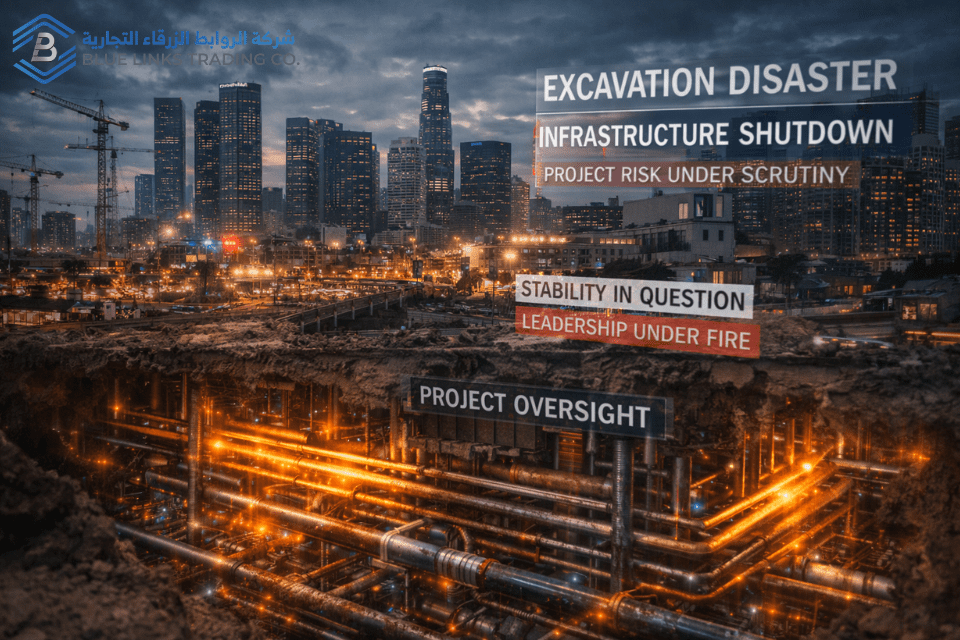
Beyond operational disruption and contractual implications, Excavation Mistakes can also produce lasting institutional consequences within large infrastructure projects. Modern infrastructure programs operate under intense scrutiny from government authorities, investors, contractors, and the public. When excavation incidents disrupt essential systems, the incident often becomes more than a construction challenge—it becomes a matter of project credibility.
In large development environments, infrastructure projects are expected to maintain operational reliability while construction progresses. When Excavation Mistakes interrupt services or create instability within underground infrastructure networks, stakeholders may begin questioning the project’s overall risk management practices. Even if the technical disruption is resolved quickly, the perception of instability can influence how the project is viewed by decision-makers and oversight bodies.
For contractors and project leadership teams, reputation plays a critical role in long-term project participation. Infrastructure programs often extend across multiple phases and involve partnerships between numerous public and private entities. When excavation incidents escalate into widely discussed project disruptions, the organizations involved may face increased scrutiny regarding their planning processes and operational discipline.
In many cases, incidents involving Excavation Mistakes can draw attention from stakeholders responsible for protecting critical infrastructure networks. This may include infrastructure operators, municipal authorities, and agencies responsible for public services. Their primary concern is not simply the immediate disruption but whether similar incidents could occur again within the same development program.
Within rapidly developing infrastructure environments, maintaining public and institutional trust is essential. Discussions surrounding modern construction practices—such as those explored in suction excavation approaches in smart cities—often highlight how infrastructure stability is becoming an increasingly important consideration in urban development planning.
Infrastructure projects that interact with energy and telecommunications networks face particularly high expectations regarding operational reliability. As noted in infrastructure development discussions related to power and telecom infrastructure environments, maintaining service continuity during construction is critical because these systems support essential economic and public services.
For project executives, the broader lesson is clear. Excavation Mistakes should never be viewed solely as localized construction errors. In complex infrastructure environments, they represent potential institutional risk events capable of affecting project stability, contractual relationships, and organizational credibility. Once such incidents occur, the challenge for leadership is not only resolving the immediate disruption but also reinforcing confidence in the project’s ability to manage risk responsibly.
🟦 Frequently Asked Questions About Excavation Mistakes
Strategic Conclusion: Why Excavation Mistakes Demand Crisis-Level Awareness

Large infrastructure projects operate within environments where operational precision and institutional accountability are closely intertwined. When Excavation Mistakes occur, the consequences can extend far beyond the excavation site itself. What may initially appear as a localized disruption can rapidly evolve into a complex project crisis involving operational shutdowns, internal investigations, contractual negotiations, and reputational scrutiny.
For infrastructure leaders, the most important insight is that excavation incidents often represent the starting point of a broader escalation process. The interconnected nature of modern infrastructure systems means that disruptions in one area can quickly affect project coordination, stakeholder confidence, and the stability of essential services.
Understanding the institutional implications of Excavation Mistakes is therefore essential for anyone responsible for managing infrastructure delivery. By recognizing how quickly excavation incidents can escalate, project leaders can approach excavation-related risks with the level of strategic awareness required in large infrastructure environments.
In the end, the true impact of excavation incidents is not defined solely by what happens underground. It is defined by how those incidents ripple across the project ecosystem—affecting schedules, contracts, accountability structures, and the credibility of the organizations responsible for delivering critical infrastructure.