

Why Excavation Risk Is Rising in Modern Infrastructure
Why Excavation Risk Is Increasing in Modern Infrastructure

In modern infrastructure environments, excavation risk is no longer viewed as a simple construction concern. Instead, it has become a complex challenge shaped by the rapid transformation of urban infrastructure systems.
As cities expand and infrastructure networks become denser and more interconnected, the conditions surrounding underground work have changed significantly. These evolving environments mean that excavation activities today operate within far more sensitive and complex infrastructure ecosystems than in previous decades.
Historically, excavation was largely associated with construction logistics and ground conditions. However, modern infrastructure projects now operate within layers of buried assets including power distribution networks, telecommunications cables, water pipelines, gas lines, and digital connectivity systems. The increasing density of these underground networks means that even routine ground disturbance can expose
projects to higher levels of uncertainty and potential disruption.
Large-scale infrastructure development programs, particularly in rapidly expanding regions, have accelerated the pace of construction activity. Governments and infrastructure authorities are investing heavily in transportation systems, utilities, and smart city technologies. In such environments, the consequences of excavation risk extend far beyond the immediate work zone, potentially affecting energy supply, communications infrastructure, and essential public services.
This growing complexity is especially visible in urban infrastructure corridors where multiple systems often share limited underground space. Projects involving transportation networks, energy infrastructure, and
utility upgrades frequently intersect within the same environments. As highlighted in discussions about infrastructure development in smart city environments, modern cities rely on increasingly layered underground systems that must be carefully managed during any ground-related activity.
Global infrastructure organizations have also emphasized that underground asset congestion is becoming one of the most critical risks facing infrastructure projects. Reports from institutions such as the World Economic Forum highlight how the rapid expansion of urban infrastructure is creating increasingly complex subsurface environments that require new approaches to risk awareness and coordination.
As a result, understanding the drivers behind rising excavation risk requires looking beyond construction practices themselves. The real shift lies in how modern infrastructure systems have evolved. From high-density underground networks to multi-stakeholder project environments, the structure of today’s infrastructure ecosystems is fundamentally reshaping how excavation-related risks emerge and how their consequences can propagate across interconnected systems.
Growing Underground Infrastructure Density

One of the most significant factors driving the increase in excavation risk today is the rapid growth of underground infrastructure density in modern cities. Over the past few decades, urban environments have evolved into highly layered subsurface networks where multiple utility systems coexist within limited underground corridors. These networks include power distribution cables, telecommunications infrastructure, water pipelines, gas lines, and fiber-optic networks that support digital connectivity.
As cities expand and populations grow, infrastructure providers continue to add new systems beneath existing ones rather than replacing them. This incremental expansion has created complex underground environments where assets installed decades apart must now operate side by side. In such conditions, excavation activities are no longer interacting with a single infrastructure layer but with a dense and interconnected network of critical systems.
The implications of this density are significant. When excavation takes place in a crowded underground corridor, the margin for error becomes extremely small. A minor disturbance to the ground can potentially affect multiple utilities simultaneously, increasing both the probability and the consequences of infrastructure disruption. As a result, excavation risk is increasing not simply because excavation activity has grown, but because the environments in which excavation occurs have become far more sensitive and complex.
Infrastructure operators are particularly concerned about this challenge in urban corridors that host both energy and communication networks. These environments often combine high-voltage power lines with fiber-optic connectivity systems that support digital services and essential communications. Discussions around protecting such networks frequently appear in projects dealing with power and telecommunications infrastructure,
where underground asset congestion requires careful planning and coordination before any ground disturbance occurs.
This issue is not limited to one region. Global infrastructure assessments have repeatedly identified underground asset congestion as a growing challenge in urban development. According to research published by the World Bank, expanding cities are increasingly forced to accommodate multiple infrastructure systems within limited urban space, resulting in more complex subsurface environments and higher exposure to operational risks.
In this context, the rise of excavation risk is closely tied to how modern infrastructure networks evolve. As more utilities compete for underground space, excavation activities must operate within increasingly constrained environments where even small disruptions can propagate across interconnected infrastructure systems.
The Expansion of Smart Cities and Digital Infrastructure

Another major factor contributing to rising excavation risk is the rapid expansion of smart city infrastructure and digital connectivity systems. Modern urban development increasingly relies on integrated technologies that connect transportation networks, utilities, public services, and communication platforms. These systems depend on extensive underground networks that support fiber-optic connectivity, data transmission, monitoring sensors, and intelligent infrastructure management systems.
Unlike traditional infrastructure, smart city environments introduce multiple layers of digital assets beneath the surface. These assets often operate alongside existing utilities such as water pipelines, power cables, and telecommunications corridors. The result is a highly complex subsurface environment where physical infrastructure and digital systems coexist within the same underground space.
As cities integrate more digital technologies, the consequences of excavation risk extend beyond physical infrastructure damage. A disruption to underground connectivity networks can affect data services, smart traffic systems, and communication platforms that support daily urban operations. In highly connected cities, even localized underground disturbances may trigger wider operational challenges across multiple infrastructure systems.
These concerns are particularly visible in infrastructure corridors that support digital networks and communication systems. Projects involving underground utilities often intersect with criticalconnectivity infrastructure similar to the environments discussed in power and telecom infrastructure projects, where protecting sensitive underground networks becomes a priority during ground activities.
International infrastructure studies also highlight the growing complexity introduced by digital urban systems. Research from organizations such as the Organisation for Economic Co-operation and Development (OECD) shows that smart city development significantly increases infrastructure interdependence, meaning that disruptions to underground assets can cascade across multiple urban systems.
As digital infrastructure continues to expand, excavation risk becomes closely linked to the reliability of modern urban services. The challenge is no longer limited to protecting physical utilities; it now involves safeguarding the digital networks that support transportation, communications, and essential public services within increasingly connected cities.
Accelerated Infrastructure Development and Project Pressure

In many regions, the pace of infrastructure development has increased dramatically over the past decade. Governments and infrastructure authorities are launching large-scale transportation, utility, and urban expansion programs designed to support economic growth and population expansion. While these initiatives bring major benefits, they also create new conditions that contribute to rising excavation risk across infrastructure projects.
Large infrastructure programs often operate under ambitious timelines. Transportation corridors, utility upgrades, and urban development zones frequently run multiple construction activities in parallel within the same geographic areas. This acceleration places significant pressure on project planning, coordination, and field execution. Under such conditions, excavation work must often be carried out in environments where multiple contractors, infrastructure operators, and engineering teams are active simultaneously.
When project timelines tighten, the margin available for careful coordination between stakeholders can become limited. Even small misalignments in scheduling or information exchange may increase the exposure to excavation risk, particularly in areas where underground assets are already densely concentrated. In these environments, excavation activities become highly sensitive to the broader project ecosystem rather than operating as isolated construction tasks.
Infrastructure programs that involve multiple contractors and procurement chains can further increase coordination complexity. Large infrastructure developments typically require extensive collaboration between engineering firms, suppliers, logistics providers, and project management teams. Discussions surrounding procurement coordination in complex developments often appear in topics such as supply chain management in mega infrastructure projects, where coordination across different project participants plays a crucial role in maintaining project continuity.
Global infrastructure assessments also highlight how accelerated development environments can increase operational exposure. According to research published by the McKinsey Global Institute, infrastructure megaprojects
frequently face coordination challenges due to the number of stakeholders involved and the pressure to maintain construction schedules. These factors can amplify risks associated with ground activities, particularly in infrastructure corridors where multiple systems intersect.
As infrastructure programs continue to expand in scale and speed, excavation risk is increasingly shaped by project environment dynamics rather than excavation activities alone. The challenge lies in managing excavation within fast-moving development ecosystems where multiple stakeholders, overlapping timelines, and dense underground networks interact simultaneously.
Multi-Stakeholder Infrastructure Environments

Modern infrastructure projects rarely operate under the control of a single organization. Instead, they typically involve complex ecosystems of stakeholders including government authorities, infrastructure operators, engineering consultants, contractors, and specialized service providers. Within these environments, coordination between multiple entities becomes a critical factor influencing excavation risk.
Each stakeholder in an infrastructure project is responsible for a specific component of the overall system. Utility providers manage energy and communication networks, transportation authorities oversee mobility infrastructure, while engineering consultants supervise design and technical compliance. When excavation activities take place within such interconnected systems, misalignment between these parties can significantly increase operational uncertainty.
For example, underground infrastructure records may be maintained by different entities using different data standards or documentation systems. In large urban developments, infrastructure corridors may contain assets installed by various organizations over several decades. When this information is fragmented or difficult to access, excavation teams may face increased uncertainty about the exact location or condition of underground utilities. Under these circumstances, excavation risk becomes closely tied to how effectively project stakeholders communicate and share infrastructure information.
Coordination challenges are particularly visible in large infrastructure ecosystems where procurement processes, contractor networks, and supply chains interact simultaneously. In such projects, collaboration between engineering teams and procurement systems becomes essential to ensure project continuity. Discussions about managing such coordination often appear in topics related to industrial procurement and infrastructure supply systems, where multiple project participants must align operational planning with infrastructure delivery requirements.
Infrastructure governance studies consistently highlight stakeholder coordination as a key risk factor in complex development environments. According to the United Nations Department of Economic and Social Affairs,
large infrastructure initiatives increasingly require integrated management frameworks to ensure that multiple actors operate within a coordinated system. Without effective collaboration, operational fragmentation can amplify infrastructure vulnerabilities.
As infrastructure ecosystems grow more complex, the rise in excavation risk cannot be understood solely through construction activities. Instead, it reflects the broader challenge of managing interconnected stakeholders within highly integrated infrastructure environments where each participant influences how underground systems are accessed, protected, and maintained.
Infrastructure Sensitivity and the Expanding Impact of Excavation Risk
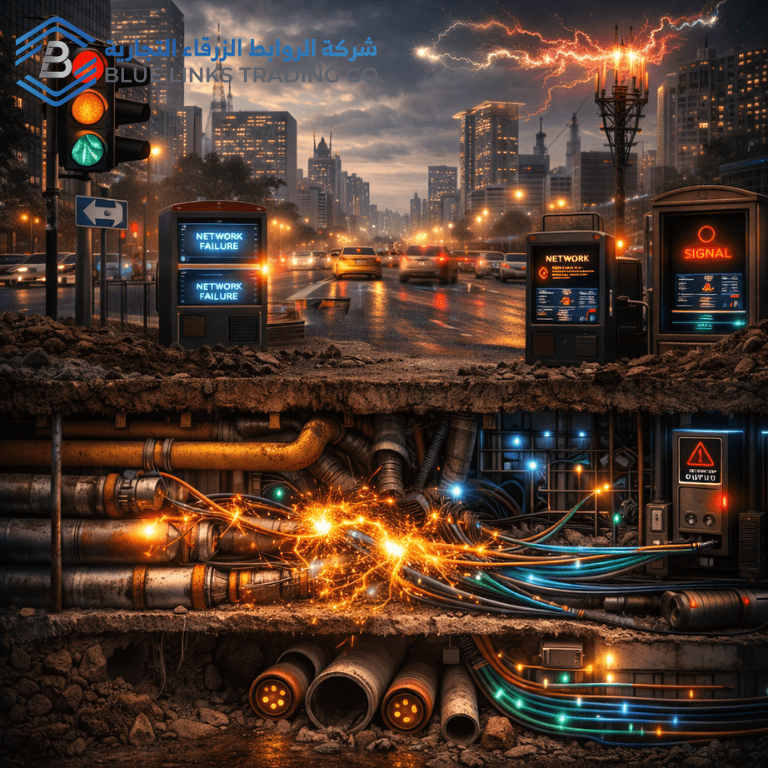
As infrastructure systems become more interconnected, the consequences of excavation risk are no longer limited to localized construction disruptions. Modern infrastructure networks operate as highly integrated systems where energy, communications, transportation, and public utilities depend on one another. When underground assets are disturbed, the impact can propagate far beyond the immediate work area.
In the past, excavation incidents might have affected a single utility line or a limited service zone. Today, however, urban infrastructure networks often support multiple services simultaneously. Power distribution systems, digital connectivity networks, water pipelines, and transportation infrastructure frequently share the same underground corridors. In these environments, any disturbance to subsurface assets can create cascading operational effects across several systems at once.
The growing sensitivity of infrastructure networks is particularly evident in sectors that support essential services. Energy supply systems, telecommunications networks, and transportation corridors must operate with high reliability because they form the backbone of modern urban life. Discussions about protecting infrastructure corridors often appear in sectors such as transportation and road infrastructure projects, where maintaining continuity of underground utilities is essential to avoid disruptions that could affect large populations.
Water and sanitation systems also illustrate how interconnected infrastructure environments have become. Underground water pipelines and wastewater networks frequently run alongside other utilities, creating shared subsurface spaces where infrastructure reliability depends on careful coordination during ground activities. Projects addressing such environments are often discussed within contexts similar to water and wastewater infrastructure systems, where protecting buried assets plays a critical role in maintaining service continuity.
Global infrastructure research consistently emphasizes the growing systemic sensitivity of urban networks. According to analysis published by the International Energy Agency, modern infrastructure systems are increasingly interdependent, meaning that disruptions affecting one network can quickly propagate to others. This interconnected structure increases the potential consequences associated with
excavation risk in dense urban environments.
As a result, the challenge surrounding excavation risk today is not only about preventing damage to individual utilities. It is about protecting the stability of entire infrastructure ecosystems that support essential services for cities, industries, and public institutions. The growing sensitivity of these networks explains why excavation-related incidents now carry far greater operational and societal implications than they did in the past.
🟦 Frequently Asked Questions About Excavation Risk
Understanding Excavation Risk in an Era of Infrastructure Complexity

The rise of excavation risk in modern infrastructure projects reflects a broader transformation in how cities and infrastructure systems are built. Dense underground utility networks, expanding digital infrastructure, accelerated development programs, and multi-stakeholder project environments have collectively reshaped the conditions surrounding excavation activities.
What once appeared to be a routine construction task now operates within highly sensitive infrastructure ecosystems where multiple networks coexist beneath the surface. Power systems, telecommunications infrastructure, water pipelines, and transportation corridors are increasingly interconnected, meaning that disruptions affecting underground assets can quickly influence multiple services simultaneously.
As infrastructure systems continue to evolve, managing excavation risk requires greater awareness of the broader environments in which excavation takes place. The challenge is no longer limited to construction practices alone. Instead, it involves understanding how infrastructure complexity, project coordination, and urban development pressures interact within modern cities.
Recognizing these dynamics is essential for infrastructure planners, project managers, and utility operators working in today’s development environments. As cities continue to grow and infrastructure networks expand, the ability to anticipate and manage excavation risk will play a critical role in maintaining the reliability and resilience of modern infrastructure systems.