

How Procurement Logistics Coordination Controls Project Timelines
Logistics Management in Projects and Its Role in Execution Success

In today’s fast-paced industrial environment, successful project delivery depends heavily on how well logistics and procurement are aligned. Many infrastructure projects face unexpected delays not because of execution issues, but due to weak coordination between procurement and logistics functions. This is where Procurement Logistics Coordination becomes a critical factor in ensuring project success.
From the start of a project, logistics planning plays a central role in defining delivery timelines, managing materials and equipment, and ensuring that every stage aligns with project schedules. Poor coordination can lead to disruption across the supply chain, causing project delays, cost overruns, and reduced project performance.
For project managers and procurement teams, achieving reliable and efficient logistics execution is no longer optional—it is a necessity. Whether dealing with construction projects, global supply chains, or complex infrastructure projects, integrating procurement strategies with logistics management ensures that resources are allocated effectively and milestones are achieved within budget.
In large-scale operations, the ability to maintain equipment availability, coordinate transport providers, and manage delivery of materials directly impacts the overall project timeline. Without effective procurement processes and proactive planning, even well-structured projects can experience significant delivery delays and financial impact.
This article explores how Procurement Logistics Coordination influences project timelines, enhances logistics performance, and helps organizations maintain control over project delivery in highly demanding environments.
Understanding Procurement and Logistics Coordination in Projects

The Role of Procurement in Supply Chain and Project Planning
Procurement is not limited to sourcing materials and equipment; it is a strategic function that directly influences project timelines and overall project performance. Effective procurement processes ensure that the right supplier is selected, materials are delivered on time, and procurement planning aligns with project schedules. Without proper coordination, even the most efficient procurement strategies can fail to support project delivery.
In modern infrastructure projects, procurement teams must work closely with logistics teams to maintain reliability across the supply chain. This coordination ensures that procurement decisions are aligned with logistics execution, preventing delays and minimizing disruptions that can impact project completion.
Logistics Coordination as a Core Element in Project Management
Logistics management plays a crucial role in handling transportation, storage, and delivery of materials. However, without precise coordination between procurement and logistics operations, projects often face delivery delays and cost overruns. This highlights the importance of Procurement Logistics Coordination as a unified approach rather than two separate functions.
Project managers rely on efficient logistics systems to ensure that materials arrive at the right time and location. Any breakdown in coordination can affect project milestones, disrupt allocation of resources, and create unnecessary financial impact. Therefore, integrating logistics planning with procurement processes is essential for maintaining smooth project execution.
Why Procurement Logistics Coordination is Critical for Project Timelines
The connection between procurement and logistics directly impacts delivery timelines and project schedules. When coordination is strong, organizations can reduce delays, improve logistics performance, and achieve cost savings. On the other hand, poor coordination leads to misalignment between supplier availability and logistics execution, resulting in project delays and operational inefficiencies.
In complex construction projects, where multiple logistics activities take place across the supply chain, maintaining coordination among procurement teams, logistics providers, and project teams is essential. This ensures that materials flow seamlessly from source to site, supporting timely project delivery and enhancing overall project success.
How Logistics Influences Project Timelines in Infrastructure Projects

The Direct Link Between Logistics Planning and Project Timelines
In large-scale infrastructure projects, logistics planning is one of the most critical factors that define whether a project stays on schedule or faces delays. Poor logistics planning often leads to misalignment between procurement processes and delivery timelines, resulting in delays that affect the entire project lifecycle. This is where Procurement Logistics Coordination plays a decisive role in maintaining control over project timelines.
When logistics teams fail to synchronize with procurement teams, issues such as late material delivery, equipment unavailability, and inefficient allocation of resources begin to surface. These challenges directly impact project schedules and can quickly escalate into cost overruns and reduced project performance.
How Delays Occur Across the Supply Chain
Delays rarely originate from a single point; they often develop across the supply chain due to weak coordination between multiple stakeholders. From supplier delays to transportation bottlenecks, every stage introduces risk. According to global infrastructure insights published by the World Bank infrastructure sector, inefficient supply chain management is one of the leading causes of project delays in emerging markets.
In construction projects, the inability to manage logistics execution effectively can lead to disruptions across the supply chain. For example, a delay in material delivery may halt on-site operations, affecting project milestones and overall project completion. This highlights the importance of integrating logistics activities with procurement planning from the start of a project.
The Hidden Cost of Poor Logistics Coordination
Beyond delays, poor logistics coordination introduces significant financial impact. Delivery delays increase transportation costs, create idle time for project teams, and affect equipment availability. These issues contribute to cost overruns and reduce the efficiency of logistics operations.
Organizations that fail to establish strong coordination between procurement and logistics often struggle with decision-making, leading to reactive rather than proactive responses. In contrast, companies that adopt structured coordination frameworks can improve delivery timelines and maintain projects within budget.
A deeper understanding of how delays originate can be explored through advanced project procurement practices, as discussed in project procurement process strategies, where aligning procurement planning with logistics execution significantly reduces risks associated with delays.
Maintaining Reliability Through Coordination
Reliability is a key factor in successful project delivery. Without precise coordination among procurement teams, logistics providers, and project managers, maintaining consistent logistics performance becomes difficult. This often results in disruptions that affect the overall project.
To ensure delivery success, organizations must focus on proactive coordination, continuous monitoring, and efficient logistics management. This includes working closely with suppliers, managing logistics resources effectively, and ensuring that every stage of the supply chain operates in alignment with project goals.
In high-risk environments such as infrastructure and energy projects, managing excavation and site operations also plays a critical role in preventing delays. Advanced approaches such as excavation risk management help reduce disruptions and improve logistics execution in complex project conditions.
Hidden Risks of Poor Procurement and Logistics Coordination

Disruptions Across the Supply Chain and Project Execution
One of the most critical risks in large-scale projects is disruption across the supply chain caused by weak coordination between procurement and logistics functions. When procurement teams and logistics teams operate in isolation, even minor delays can escalate into major disruptions affecting the overall project execution.
In complex logistics operations, coordination across multiple stakeholders—suppliers, transport providers, and project teams—is essential. Without proper alignment, organizations often experience delays in delivery of materials, miscommunication, and inefficiencies that impact project timelines and project performance.
Cost Overruns and Financial Impact on Projects
Poor coordination between procurement processes and logistics execution frequently leads to cost overruns. When materials and equipment do not arrive on time, project teams face idle time, increased transportation costs, and additional expenses related to reallocation of resources.
These delays not only affect project schedules but also create a significant financial impact on the overall project. According to insights aligned with global capital projects research by McKinsey, ineffective coordination in logistics and procurement is a major contributor to budget overruns in infrastructure projects.
Misalignment Between Procurement and Logistics Teams
A common issue in many projects is the lack of coordination between procurement teams and logistics providers. While procurement focuses on sourcing materials at competitive cost, logistics teams are responsible for transportation and delivery timelines. Without Procurement Logistics Coordination, these functions often work toward conflicting priorities.
This misalignment results in delivery delays, inefficient logistics activities, and reduced reliability in project execution. Organizations that fail to integrate logistics planning with procurement strategies often struggle to maintain consistency across the supply chain.
Impact on Project Milestones and Delivery Timelines
Project milestones are highly sensitive to delays in logistics execution. Any disruption in material delivery or equipment availability can push back key milestones, affecting overall project completion. In construction projects, where timing is critical, even a small delay can cascade into larger issues across the project timeline.
Effective coordination between procurement and logistics ensures that each milestone is supported by timely delivery of resources. Without this alignment, project managers face continuous challenges in maintaining project schedules and achieving delivery success.
Risk Management in Logistics and Proactive Planning
Managing risks in logistics requires a proactive approach that integrates procurement planning with logistics management. Organizations must anticipate potential disruptions, identify risks early, and implement strategies to mitigate them before they impact project delivery.
Advanced planning and coordination across the supply chain help reduce uncertainties and improve logistics performance. A practical approach to managing these risks can be seen in procurement risks in Saudi Arabia, where aligning procurement and logistics reduces exposure to delays and enhances overall project reliability.
How Leading Companies Optimize Procurement Logistics Coordination

Integrating Procurement and Logistics Teams for Better Alignment
Leading organizations understand that strong coordination between procurement and logistics teams is essential for improving project delivery. Instead of operating as separate functions, successful companies integrate procurement teams with logistics teams to ensure seamless coordination across the supply chain.
This integration allows better planning and coordination from the start of a project, ensuring that materials and equipment are sourced, transported, and delivered in alignment with project timelines. By adopting a unified approach to Procurement Logistics Coordination, companies can significantly reduce delays and improve overall project performance.
Advanced Logistics Planning and Proactive Decision-Making
Efficient logistics planning plays a key role in preventing delays and improving logistics execution. Companies that invest in advanced logistics systems and proactive decision-making can anticipate potential disruptions and respond before they impact project schedules.
This includes optimizing transport routes, managing logistics resources effectively, and ensuring precise coordination between all stakeholders. Strategic planning frameworks, such as those outlined in supply chain management in mega projects, demonstrate how proactive planning improves logistics performance and reduces delivery delays.
Supplier Coordination and Procurement Efficiency
Supplier management is a critical component of procurement processes. High-performing organizations establish strong relationships with reliable suppliers to ensure consistent material delivery and reduce risks associated with supply chain disruptions.
Through effective procurement strategies and coordination between procurement and logistics teams, companies can enhance procurement efficiency, reduce cost overruns, and maintain equipment availability throughout the project lifecycle.
Leveraging Technology for Logistics Optimization
Technology plays a crucial role in improving logistics management and enhancing coordination across the supply chain. Advanced logistics systems enable real-time tracking of materials, better inventory management, and improved coordination among logistics providers.
By integrating digital tools into logistics planning and procurement platforms, organizations can improve visibility across logistics activities, optimize allocation of resources, and ensure efficient logistics execution across all project phases.
Ensuring Project Delivery Within Budget and Timeline
The ultimate goal of strong coordination is to ensure that projects are delivered within budget and on schedule. By aligning procurement planning with logistics operations, companies can maintain control over project schedules, reduce financial impact, and improve overall project success.
Organizations that adopt structured coordination frameworks are better positioned to achieve cost savings, improve delivery timelines, and ensure reliable project completion, even in complex infrastructure projects.
Technology and Equipment in Logistics and Project Management

The Role of Advanced Logistics Systems in Project Execution
Modern infrastructure projects rely heavily on advanced logistics systems to ensure efficient logistics execution and accurate coordination across the supply chain. These systems enable project managers to monitor logistics activities in real time, manage logistics resources effectively, and maintain alignment between procurement planning and logistics operations.
By leveraging digital platforms and smart logistics management tools, organizations can enhance decision-making, improve logistics performance, and reduce delivery delays. This level of visibility allows project teams to maintain control over delivery timelines and ensure that materials and equipment are available when needed.
Impact of Equipment Availability on Project Timelines
Equipment availability is a critical factor that directly affects project timelines and overall project delivery. Delays in equipment mobilization can disrupt construction projects, delay project milestones, and increase the risk of cost overruns.
Ensuring the timely availability of specialized equipment requires strong coordination between procurement processes and logistics operations. Organizations that prioritize Procurement Logistics Coordination can align supplier schedules with logistics execution, ensuring that equipment is delivered at the right time and location.
Advanced equipment solutions, such as those used in MTS DINO suction excavators, demonstrate how technology can improve efficiency in construction logistics by reducing manual work, accelerating material handling, and minimizing disruptions during project execution.
Non-Destructive Excavation and Its Role in Reducing Delays
In high-risk environments, traditional excavation methods often lead to unexpected delays and safety risks. Non-destructive excavation technologies provide a more efficient alternative by allowing precise removal of materials without damaging underground utilities.
This approach enhances logistics execution by reducing the risk of disruption and ensuring continuous workflow on-site. A practical application of this can be seen in
non-destructive excavation in Saudi airports, where advanced logistics planning and equipment integration help maintain project timelines in highly sensitive environments.
Integrating Logistics Technology with Procurement Planning
The integration of logistics technology with procurement planning is essential for achieving precise coordination in complex logistics operations. By aligning procurement platforms with logistics systems, organizations can streamline procurement processes, improve inventory management, and ensure efficient material delivery across all project phases.
This integration enables coordination among procurement teams, logistics providers, and project managers, ensuring that every stage of the supply chain operates efficiently. It also supports proactive planning, allowing organizations to anticipate challenges and optimize resource allocation before delays occur.
Enhancing Delivery Success Through Innovation
Innovation in logistics and project management is no longer optional—it is a necessity for achieving delivery success. Companies that invest in advanced logistics solutions and modern equipment can improve project performance, reduce delays, and enhance overall project execution.
By combining technology, efficient logistics planning, and strong coordination across the supply chain, organizations can achieve reliable project delivery, maintain cost control, and ensure that projects are completed within budget and on schedule.
Logistics in Construction Projects Case Study

A Real Scenario of Delay Caused by Poor Coordination
In one of the large-scale infrastructure projects, the project team faced unexpected delays during the execution phase despite having a well-defined project plan. The issue was not related to engineering or construction complexity, but rather to weak coordination between procurement teams and logistics providers.
The procurement team successfully sourced high-quality construction materials from a reliable supplier. However, due to poor logistics planning and lack of coordination across the supply chain, the delivery of materials was delayed. Transport providers were not aligned with project schedules, leading to disruption in logistics operations and affecting project milestones.
As a result, project teams experienced idle time, equipment availability issues, and increasing pressure on project timelines. This misalignment caused cost overruns, extended project schedules, and negatively impacted overall project performance.
How Procurement Logistics Coordination Resolved the Issue
To address these challenges, the project managers implemented a structured approach to Procurement Logistics Coordination. This included integrating procurement processes with logistics execution and improving coordination among all stakeholders involved in the project.
The team adopted proactive logistics planning, aligned supplier delivery schedules with project timelines, and enhanced communication between procurement teams and logistics teams. This improved coordination across the supply chain and reduced delivery delays significantly.
A more detailed understanding of how coordination can eliminate delays can also be explored through
project procurement delays, where aligning procurement planning with logistics execution improves delivery timelines and reduces risks.
Results and Key Outcomes
After implementing improved coordination strategies, the project saw a significant improvement in logistics performance. Delivery timelines became more predictable, equipment availability improved, and project milestones were achieved on time.
The financial impact was also reduced, as better coordination minimized unnecessary transportation costs and optimized resource allocation. Ultimately, the project was brought back on track, demonstrating how effective logistics management and procurement coordination can transform project execution.
Key Lessons from the Case Study
This case highlights that even well-planned projects can fail without proper coordination between procurement and logistics. It also shows that proactive planning, precise coordination, and strong communication are essential for achieving project success.
Organizations that invest in improving logistics functions and integrating procurement strategies into their project management frameworks are more likely to achieve reliable project delivery and avoid costly delays.
Key Insights for Improving Logistics and Project Performance
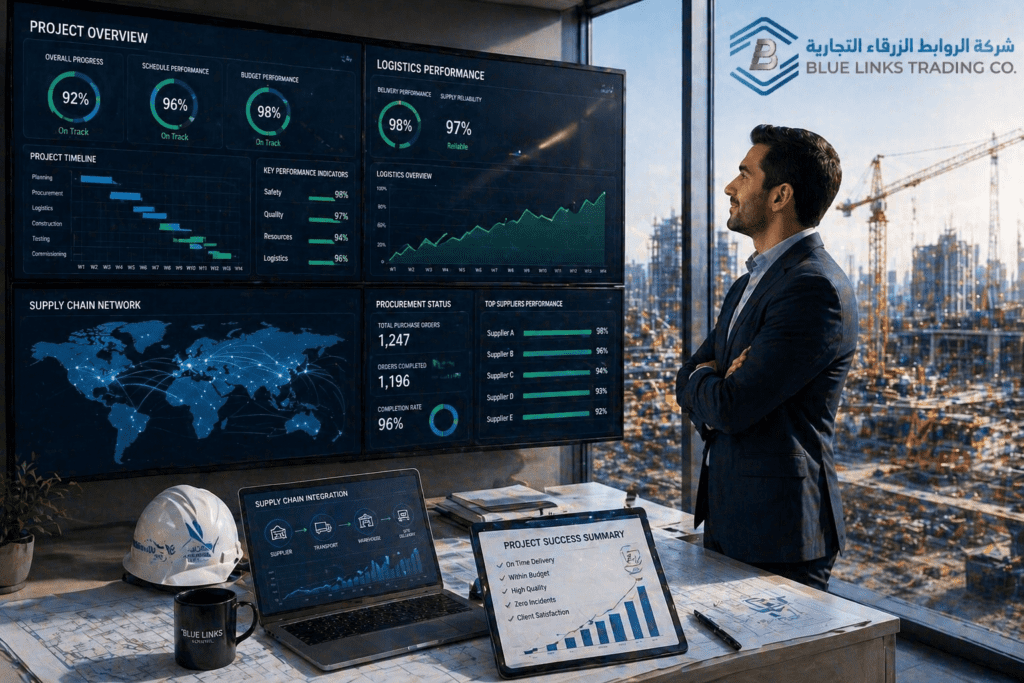
Strategic Coordination as a Foundation for Project Success
Successful project delivery depends on the ability to integrate procurement processes with logistics management in a structured and proactive manner. Strong coordination across the supply chain ensures that materials and equipment are delivered on time, supporting project timelines and reducing the risk of delays.
Organizations that adopt advanced logistics planning and precise coordination strategies are better equipped to manage complex logistics operations and maintain control over project schedules. This approach enhances reliability, improves logistics performance, and ensures that projects are completed within budget.
Balancing Cost Control and Logistics Efficiency
Effective logistics management is not only about speed—it is also about maintaining cost control. By aligning procurement strategies with logistics execution, companies can reduce unnecessary transportation costs, optimize allocation of resources, and achieve cost savings without compromising project quality.
This balance between efficient logistics and financial discipline plays a critical role in improving overall project performance and ensuring long-term sustainability in infrastructure projects.
The Importance of Proactive Planning and Decision-Making
Proactive planning is essential for managing risks and avoiding delivery delays. Organizations must anticipate potential disruptions, align logistics resources with project requirements, and ensure coordination among procurement teams, logistics providers, and project managers.
By strengthening leadership and decision-making skills, companies can enhance logistics execution, improve coordination across the supply chain, and achieve better delivery success in complex project environments.
🟦 Frequently Asked Questions (FAQ)
⚡ Conclusion: Coordination Defines Project Timelines
In today’s high-pressure project environments, logistics is no longer a support function—it is a decisive factor in project success. As explored throughout this article, Procurement Logistics Coordination directly influences project timelines, supply chain stability, and the ability to maintain control over complex logistics operations.
Projects rarely fail due to execution alone. In many cases, the real issues begin much earlier—during procurement planning, supplier coordination, or logistics execution. What appears to be a minor delay in material delivery can quickly escalate into project delays, cost overruns, and disruption across the entire supply chain.
Organizations that continue to treat procurement and logistics as separate functions often struggle to maintain reliable project delivery. In contrast, companies that adopt an integrated coordination approach gain stronger visibility, improved logistics performance, and better control over delivery timelines.
In fast-evolving markets such as Saudi Arabia and the GCC, where infrastructure projects are becoming more complex, working with experienced partners in
supply chain management in mega projects
can significantly reduce uncertainty and improve project delivery outcomes.
Blue Links Trading Company provides a strategic approach to logistics and procurement by combining supplier expertise, advanced logistics planning, and deep understanding of the local market. This enables clients to transform logistics challenges into structured, reliable systems that support long-term project success.
If your next project depends on speed, accuracy, and execution confidence, the right results begin with stronger coordination between procurement and logistics.
With Blue Links Trading Company, you gain more than a service provider—you gain a strategic coordination partner capable of reducing delays, optimizing logistics performance, and ensuring reliable project delivery across Saudi Arabia and the GCC.
Blue Links Trading Company — turning logistics complexity into project certainty.