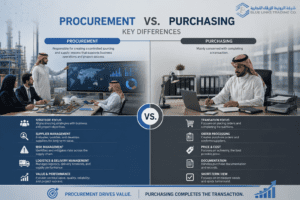

How Strong Supply Chains Reduce Supply Chain Project Risk in Saudi Arabia

Saudi Arabia is entering one of the most ambitious infrastructure and industrial expansion phases in its modern history. From smart cities and transportation networks to energy facilities and giga-projects, the scale of development is creating enormous pressure on procurement operations, logistics coordination, and material availability. As projects become larger and more technically complex, managing Supply Chain Project Risk is no longer a secondary operational concern. It has become a strategic priority directly linked to project continuity, financial stability, and execution reliability.
In many large-scale projects, delays are no longer caused only by engineering or construction challenges. A significant percentage of operational disruption now originates from procurement bottlenecks, supplier instability, transportation interruptions, and weak coordination between project stakeholders. Even technically strong projects can suffer major setbacks when supply chains fail to adapt quickly to changing market conditions.
This shift is especially visible across Saudi infrastructure projects connected to Vision 2030. The demand for faster execution, higher technical standards, and stricter compliance requirements has increased the importance of resilient industrial supply chains. According to the Saudi Vision 2030 initiative, industrial growth, logistics transformation, and infrastructure modernization are central pillars of the Kingdom’s long-term economic strategy.
As a result, contractors, procurement managers, and infrastructure developers are increasingly investing in stronger procurement planning, diversified sourcing strategies, and advanced logistics systems to reduce Supply Chain Project Risk. Organizations are no longer evaluating suppliers based only on pricing. Today, operational reliability, technical support, response speed, and long-term coordination capabilities are becoming critical decision-making factors.
The impact of supply chain resilience becomes even more important in technically sensitive sectors such as excavation, utilities, transportation infrastructure, oil and gas operations, and smart city development. In these environments, even minor disruptions in equipment delivery or logistics scheduling can create serious operational consequences. This is why many infrastructure contractors are integrating specialized solutions such as procurement logistics coordination into their project execution strategies to maintain operational continuity and reduce scheduling conflicts.
The growing complexity of industrial procurement in Saudi Arabia also requires better alignment between sourcing decisions and project risk planning. Companies operating in high-pressure infrastructure environments now understand that reducing Supply Chain Project Risk depends on more than procurement speed alone. It requires visibility, coordination, technical readiness, and proactive communication across the entire supply ecosystem.
This reality is reshaping how industrial projects approach procurement operations across the GCC. Instead of treating procurement as a simple purchasing function, leading organizations are building integrated supply chain frameworks designed to support long-term project stability. The increasing focus on supply chain management in mega projects reflects this transformation across Saudi Arabia’s infrastructure sector.
Understanding Supply Chain Project Risk

The term Supply Chain Project Risk refers to any disruption, instability, or operational weakness within the supply chain that can negatively affect project execution. These risks may emerge during procurement, manufacturing, transportation, warehousing, customs clearance, supplier coordination, or field delivery operations. In industrial and infrastructure projects, even small disruptions can quickly escalate into serious delays and financial losses.
Unlike traditional operational risks, supply chain-related risks are often interconnected. A delayed shipment can affect equipment installation schedules. A supplier issue can delay engineering activities. Poor logistics visibility can create coordination conflicts between contractors and subcontractors. This chain reaction is one of the main reasons why modern infrastructure developers are investing heavily in supply chain resilience.
In Saudi Arabia, the challenge becomes even more complex due to the scale and speed of ongoing national development projects. Large construction environments require continuous material flow, specialized technical equipment, and synchronized procurement schedules. Without proper planning, projects may experience cost overruns, idle labor, scheduling pressure, and operational disruption.
Many procurement failures are not caused by a single mistake. Instead, they develop gradually through weak coordination, reactive planning, or limited supplier visibility. This is why companies increasingly rely on structured project procurement processes to improve operational control and reduce exposure to unpredictable disruptions.
Another important factor influencing Supply Chain Project Risk is supplier dependency. Some projects rely too heavily on a limited number of suppliers or specific international markets. While this approach may initially appear cost-effective, it creates vulnerability when transportation delays, geopolitical instability, or manufacturing interruptions occur. Diversification and supplier evaluation have therefore become essential parts of modern procurement strategies.
Global studies continue to show that supply chain resilience is now directly linked to project competitiveness and business continuity. According to research published by IBM Supply Chain Insights, organizations with stronger supply chain visibility and proactive risk management capabilities recover faster from operational disruptions and maintain better project performance under pressure.
In industrial sectors such as utilities, transportation, and excavation, project risks become even more sensitive because operational environments are highly interconnected. Excavation delays, infrastructure conflicts, or equipment failures can rapidly affect surrounding systems and schedules. This explains why many contractors now focus heavily on excavation risk management as part of broader project risk reduction strategies.
Ultimately, reducing Supply Chain Project Risk requires more than reacting to problems after they happen. It requires predictive planning, supplier transparency, logistics coordination, and operational flexibility. Companies capable of building these capabilities are more likely to maintain execution stability in Saudi Arabia’s rapidly evolving infrastructure landscape.
Why Strong Supply Chains Matter in Saudi Arabia

Saudi Arabia’s infrastructure transformation is creating one of the most demanding industrial environments in the region. Massive investments in transportation, energy, tourism, logistics, and smart city development are increasing pressure on procurement operations and material delivery systems. In this environment, reducing Supply Chain Project Risk has become essential for maintaining project continuity and protecting long-term investments.
Projects connected to Vision 2030 are operating under strict timelines, complex technical requirements, and high stakeholder expectations. Delays that once seemed manageable can now create cascading operational problems affecting contractors, suppliers, government entities, and project owners simultaneously. As a result, supply chain resilience is no longer viewed as a support function. It is now considered a core part of strategic project execution.
This shift is particularly important in sectors that rely heavily on specialized equipment, industrial procurement, and coordinated logistics operations. Infrastructure developers increasingly require supply chains capable of adapting quickly to operational changes while maintaining high standards of safety, quality, and delivery performance.
One major challenge facing Saudi projects today is the increasing complexity of supplier coordination. Large infrastructure environments often involve multiple vendors, international shipments, technical inspections, customs procedures, and synchronized delivery schedules. Without strong operational visibility, these interconnected processes can create significant Supply Chain Project Risk.
This is why many industrial organizations are strengthening relationships with experienced procurement and logistics partners capable of managing operational complexity more effectively. Companies investing in strategic partnerships in Saudi supply chain operations are often better positioned to maintain project stability during periods of uncertainty.
Saudi Arabia’s geographic scale also increases the importance of reliable logistics coordination. Projects operating in remote industrial zones, desert environments, railway corridors, and large urban developments require precise transportation planning and continuous supply chain visibility. Delays in one region can quickly affect activities across multiple project phases.
The challenge becomes even greater when projects involve technically sensitive operations such as utility excavation, telecommunications infrastructure, airport development, or oil and gas expansion. In these sectors, operational delays are not only expensive — they can also create safety risks and regulatory complications. This explains the growing industry focus on advanced operational planning and specialized technical support systems.
In recent years, many contractors have started integrating modern excavation technologies into broader risk mitigation strategies to reduce operational uncertainty. The adoption of non-traditional excavation solutions in Saudi Arabia reflects the market’s increasing focus on safer and more predictable infrastructure operations.
Another important reason why strong supply chains matter is the rising expectation for sustainability and operational efficiency. Saudi Arabia’s industrial transformation is increasingly aligned with environmental responsibility, smart infrastructure systems, and digital monitoring technologies. Supply chains that lack adaptability or operational transparency may struggle to meet future regulatory and performance expectations.
For this reason, procurement leaders are placing greater emphasis on supplier evaluation, predictive planning, and technical readiness. Strong supply chains are now expected to support:
- Operational continuity
- Project schedule stability
- Cost control
- Technical compliance
- Safety performance
- Rapid response capabilities
Organizations capable of building these capabilities significantly reduce their exposure to Supply Chain Project Risk while improving overall project resilience.
Common Causes of Supply Chain Project Risk
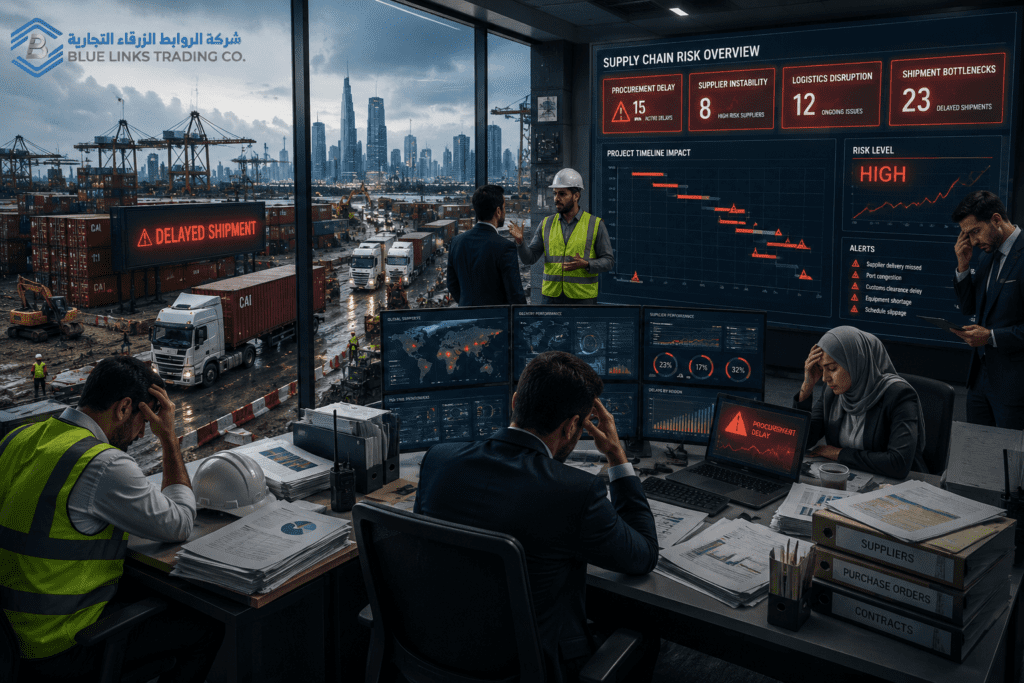
Most infrastructure disruptions do not begin with catastrophic failures. In many cases, Supply Chain Project Risk develops gradually through operational inefficiencies, poor coordination, or delayed decision-making. Over time, these small issues accumulate and eventually impact procurement schedules, field operations, and project execution timelines.
One of the most common causes of supply chain instability is procurement delay. Delayed approvals, incomplete technical specifications, supplier communication gaps, and inconsistent sourcing strategies can slow down procurement cycles significantly. In large industrial projects, even a short procurement delay can affect multiple downstream activities simultaneously.
This issue becomes particularly dangerous when procurement operations are disconnected from logistics planning. Many organizations still treat sourcing and transportation as separate operational functions, despite their strong interdependence. Modern infrastructure projects increasingly require integrated procurement expediting systems to accelerate approvals, monitor manufacturing progress, and maintain delivery accuracy.
Supplier instability is another major contributor to Supply Chain Project Risk. Some suppliers may struggle with production capacity, quality consistency, technical support limitations, or financial instability. In highly specialized industrial sectors, replacing suppliers during active project phases can create serious operational disruption.
Material shortages also continue to affect global and regional supply chains. Fluctuations in raw material availability, transportation bottlenecks, geopolitical tension, and rising manufacturing demand can create unpredictable procurement environments. Saudi Arabia’s rapid infrastructure expansion increases competition for certain industrial materials and technical equipment, making supply planning more complex than before.
Logistics disruption is equally critical. Transportation delays, customs clearance complications, port congestion, and weak shipment visibility can all interrupt project schedules. Infrastructure projects operating under strict deadlines often have limited tolerance for transportation uncertainty. This explains why logistics monitoring has become central to modern supply chain management strategies.
Another underestimated source of Supply Chain Project Risk is poor communication between project stakeholders. Procurement teams, logistics coordinators, engineering departments, contractors, and suppliers frequently operate using separate workflows and disconnected reporting systems. Without centralized visibility, decision-making becomes slower and operational risks become harder to detect early.
The growing complexity of excavation and infrastructure work adds another layer of operational risk. In many cases, inaccurate excavation planning or poor site coordination can trigger delays that extend far beyond the excavation phase itself. This is one reason why infrastructure developers are increasingly prioritizing advanced excavation planning in Saudi Arabia as part of broader operational risk management frameworks.
Global market volatility also plays an important role. Currency fluctuations, shipping cost increases, trade restrictions, and geopolitical uncertainty continue to reshape international procurement environments. Organizations relying on rigid procurement structures often struggle to adapt quickly when market conditions change unexpectedly.
Technology gaps can further increase operational vulnerability. Companies that still depend heavily on manual tracking systems, fragmented communication methods, or outdated procurement workflows may face reduced visibility across their supply networks. In contrast, digitally integrated supply chains are often better equipped to anticipate disruption and respond proactively.
Ultimately, the most dangerous aspect of Supply Chain Project Risk is that it rarely comes from a single source. Most operational failures emerge from multiple interconnected weaknesses occurring simultaneously. This is why resilient organizations focus not only on solving individual problems, but on strengthening the entire operational ecosystem surrounding procurement, logistics, supplier management, and project execution.
How Strong Supply Chains Reduce Project Risk

Reducing Supply Chain Project Risk requires a proactive operational strategy rather than reactive problem-solving. In modern industrial environments, resilient supply chains are built through visibility, coordination, flexibility, and long-term planning. Organizations that treat supply chain management as a strategic function are often more capable of maintaining stable project performance under pressure.
One of the most effective ways to reduce operational risk is supplier diversification. Relying heavily on a single supplier or region creates vulnerability during periods of disruption. Strong supply chains typically maintain multiple sourcing channels, backup suppliers, and alternative logistics pathways to improve operational continuity when unexpected issues arise.
Supplier evaluation also plays a critical role in minimizing Supply Chain Project Risk. Modern procurement decisions must consider more than pricing alone. Technical capabilities, production reliability, delivery performance, compliance standards, and after-sales support are all important indicators of supplier stability.
This is especially important in infrastructure sectors involving technically sensitive operations such as utilities, transportation systems, and excavation projects. Contractors increasingly prioritize suppliers with proven experience in complex operating environments, particularly when projects involve advanced technical equipment or high-risk field conditions.
Procurement visibility is another major factor influencing supply chain resilience. Companies with real-time monitoring capabilities are often able to detect delays earlier, respond faster, and maintain stronger operational control. Integrated procurement systems improve coordination between sourcing teams, logistics managers, and project stakeholders, reducing communication gaps that often contribute to operational instability.
Many industrial organizations are now strengthening procurement transparency through advanced coordination models such as industrial procurement systems in Saudi Arabia, where procurement planning is closely aligned with logistics operations and project scheduling requirements.
Logistics flexibility is equally important for reducing Supply Chain Project Risk. Infrastructure projects operating across large geographic regions require adaptable transportation strategies capable of responding to environmental, operational, and scheduling challenges. Delays in transportation can rapidly affect workforce allocation, equipment readiness, and contractor coordination.
To address these challenges, many organizations are adopting predictive logistics planning and shipment monitoring technologies. These systems provide better visibility into delivery timelines, customs clearance progress, and transportation bottlenecks before they escalate into larger operational issues.
Another critical strategy is improving technical readiness before project execution begins. In many cases, delays are caused not by procurement failure itself, but by incomplete planning, unclear specifications, or operational misalignment between suppliers and project teams. Strong technical preparation helps reduce uncertainty and improves decision-making accuracy throughout the project lifecycle.
This growing focus on operational preparation explains the increasing importance of technical readiness planning across Saudi infrastructure projects, particularly in sectors where operational downtime creates significant financial and scheduling pressure.
Risk mitigation also depends heavily on communication efficiency. Strong supply chains maintain continuous coordination between procurement teams, logistics managers, suppliers, field engineers, and contractors. This communication structure improves operational agility and allows organizations to respond faster when disruptions occur.
Technology integration is becoming another defining factor in modern risk reduction strategies. Digital procurement platforms, predictive maintenance systems, automated tracking tools, and real-time reporting dashboards help organizations identify operational vulnerabilities earlier and maintain stronger oversight across complex supply networks.
Companies investing in predictive operational systems are often more successful in controlling Supply Chain Project Risk because they can identify patterns before failures occur. This is one reason why many industrial operators are increasingly integrating predictive maintenance technologies into broader operational continuity frameworks.
Ultimately, resilient supply chains do not eliminate all project risk. However, they significantly reduce the likelihood of severe operational disruption. In Saudi Arabia’s rapidly expanding industrial environment, organizations with stronger procurement coordination, supplier visibility, logistics flexibility, and technical readiness are better positioned to maintain stable execution performance despite market uncertainty.
The Role of Industrial Procurement in Risk Reduction
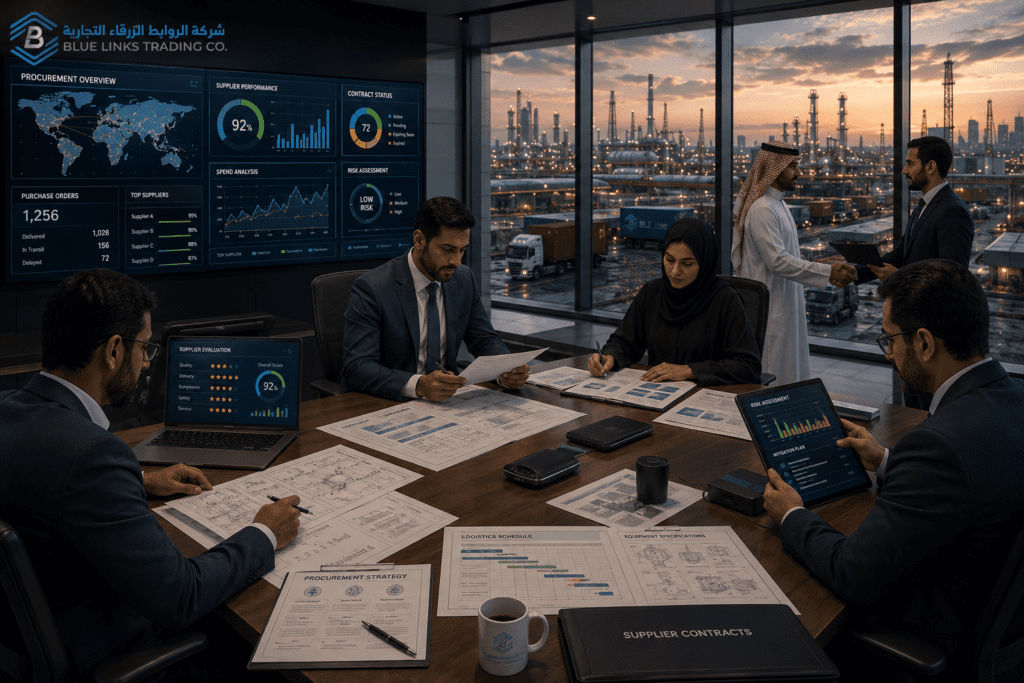
Industrial procurement has evolved far beyond traditional purchasing activities. In modern infrastructure environments, procurement directly influences project continuity, financial stability, operational efficiency, and execution reliability. As projects become larger and more technically demanding, procurement strategy plays a central role in controlling Supply Chain Project Risk.
Many procurement failures begin long before materials reach the project site. Weak supplier evaluation, incomplete technical specifications, delayed approvals, or poor coordination between departments can create operational bottlenecks that gradually affect the entire project lifecycle. This is why procurement planning must now be integrated into broader project risk management strategies.
In Saudi Arabia, procurement complexity continues to increase due to the scale of ongoing infrastructure expansion. Mega projects require large volumes of specialized materials, advanced equipment, technical services, and synchronized logistics operations. Without structured procurement control, maintaining schedule stability becomes significantly more difficult.
One of the most important responsibilities of industrial procurement teams is maintaining delivery predictability. Infrastructure projects depend heavily on precise timing. Delayed equipment delivery, missing technical components, or inconsistent supplier communication can rapidly affect installation schedules, workforce allocation, and contractor coordination.
This is why organizations increasingly prioritize advanced supplier assessment models when selecting procurement partners. Strong procurement operations evaluate suppliers based on:
- Technical expertise
- Production capacity
- Delivery consistency
- Operational responsiveness
- Compliance standards
- Long-term reliability
Modern procurement teams also focus heavily on reducing dependency risks. Overreliance on a small supplier network can increase vulnerability during periods of global instability or transportation disruption. Diversified sourcing strategies improve operational flexibility and reduce exposure to unexpected supply interruptions.
The growing complexity of Saudi infrastructure development has also increased the importance of strategic supplier selection processes. Companies seeking to reduce Supply Chain Project Risk are investing more heavily in supplier selection strategies for industrial projects that prioritize operational resilience alongside cost efficiency.
Procurement visibility is another major factor influencing project stability. Organizations with limited insight into supplier performance, production progress, or shipment tracking often struggle to respond effectively when disruptions occur. In contrast, integrated procurement systems improve operational transparency and support faster decision-making during high-pressure project phases.
The relationship between procurement and logistics is equally important. Procurement schedules that ignore transportation realities often create unrealistic delivery expectations. Successful industrial projects require close alignment between sourcing decisions, logistics planning, customs coordination, and field execution timelines.
This operational integration becomes especially critical in sectors involving excavation, utilities, transportation corridors, and oil and gas infrastructure. Projects operating in these environments often face strict technical and safety requirements, making procurement delays significantly more expensive and operationally disruptive.
Industry research continues to confirm the growing importance of resilient procurement systems. According to insights published by Deloitte’s supply chain risk analysis, organizations with integrated procurement visibility and stronger supplier collaboration are more capable of maintaining operational continuity during periods of uncertainty.
Ultimately, industrial procurement is no longer just about acquiring materials at competitive prices. It has become a strategic operational discipline directly connected to project success. Companies capable of building structured procurement frameworks, diversified supplier networks, and coordinated logistics operations are significantly better equipped to reduce Supply Chain Project Risk in Saudi Arabia’s evolving industrial market.
Technology and Smart Supply Chain Operations

Technology is rapidly transforming how industrial organizations manage procurement, logistics, and operational continuity. In Saudi Arabia’s expanding infrastructure environment, digital systems are becoming essential tools for reducing Supply Chain Project Risk and improving decision-making accuracy across complex projects.
Traditional supply chain models often depended heavily on manual coordination, fragmented communication channels, and reactive problem-solving. While these methods may have worked in smaller operational environments, they are increasingly ineffective in modern infrastructure projects involving multiple suppliers, contractors, logistics providers, and technical stakeholders.
Today, organizations are investing in smart operational systems capable of improving visibility across procurement and logistics activities in real time. These technologies help project teams monitor supplier performance, shipment status, inventory availability, maintenance schedules, and operational risks before disruptions escalate.
One of the biggest advantages of digital supply chain systems is predictive visibility. Instead of responding to delays after they occur, organizations can identify warning signals earlier and adjust procurement or logistics strategies proactively. This capability significantly reduces exposure to Supply Chain Project Risk, especially in projects operating under strict delivery timelines.
Digital procurement platforms are also improving coordination between suppliers and contractors. Automated workflows help accelerate approvals, reduce administrative delays, and improve communication accuracy between operational teams. This reduces procurement bottlenecks and supports more stable project execution.
In sectors involving excavation, infrastructure utilities, and transportation systems, technology integration becomes even more important because operational disruptions often affect multiple project phases simultaneously. Infrastructure developers increasingly rely on smart operational systems capable of monitoring field conditions, equipment performance, and maintenance requirements continuously.
This operational shift is closely connected to the growing adoption of advanced excavation and infrastructure technologies across Saudi Arabia. Many contractors are integrating specialized systems such as GPR-supported suction excavation technologies to improve underground visibility and reduce operational uncertainty during critical infrastructure work.
Smart maintenance systems are also helping organizations reduce operational downtime. Equipment failures often create serious scheduling pressure in industrial projects, particularly when replacement components or technical support are not immediately available. Predictive monitoring technologies improve maintenance planning by identifying performance issues before equipment breakdown occurs.
Data analytics is becoming another critical component of modern supply chain resilience. Organizations capable of analyzing procurement trends, transportation performance, supplier reliability, and operational patterns are better positioned to anticipate disruption and improve long-term planning accuracy.
In Saudi Arabia, this transformation aligns closely with the Kingdom’s broader digital modernization goals. Industrial operators are increasingly expected to adopt technology-driven operational models capable of improving efficiency, sustainability, and project resilience simultaneously.
Smart infrastructure development is further accelerating the importance of integrated supply chain operations. Projects connected to smart cities, transportation networks, and advanced industrial zones require highly coordinated procurement systems capable of supporting continuous operational flow. This explains the growing industry focus on smart city excavation and infrastructure coordination as part of broader infrastructure modernization strategies.
Another important technological trend influencing Supply Chain Project Risk is remote operational monitoring. Real-time dashboards, GPS-enabled logistics systems, automated reporting tools, and cloud-based procurement platforms now allow decision-makers to track project performance from multiple locations simultaneously.
These capabilities improve operational agility during periods of uncertainty. When disruptions occur, organizations with stronger digital visibility are often able to adapt faster, communicate more effectively, and reduce operational downtime more efficiently than competitors relying on fragmented systems.
Ultimately, technology alone does not eliminate supply chain risk. However, organizations that combine digital visibility with strong procurement strategy, supplier coordination, and operational planning are significantly more capable of maintaining stable project execution in Saudi Arabia’s increasingly complex industrial landscape.
Real Challenges Facing Saudi Infrastructure Projects
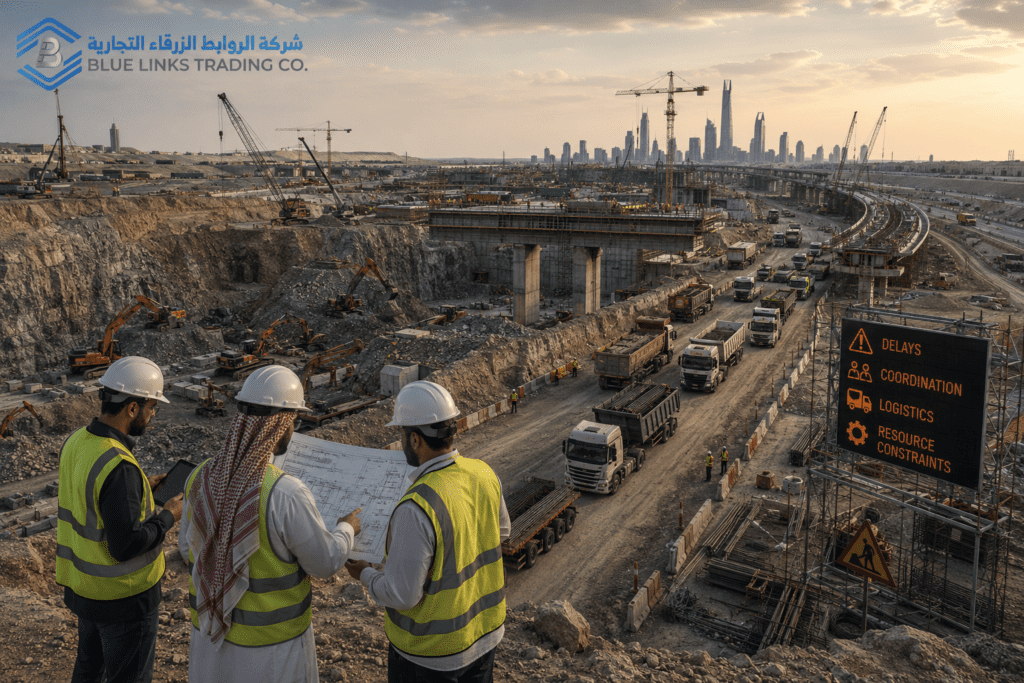
Saudi Arabia’s infrastructure sector is expanding at an unprecedented scale. From transportation corridors and utility networks to smart cities and industrial facilities, projects are becoming larger, faster, and technically more demanding. While this growth creates enormous economic opportunity, it also increases operational exposure to Supply Chain Project Risk.
One of the most common challenges facing infrastructure developers today is schedule pressure. Large projects often operate under aggressive delivery timelines driven by investment targets, regulatory commitments, and stakeholder expectations. When procurement delays or logistics disruptions occur, project teams may struggle to recover lost time without increasing operational costs significantly.
This challenge becomes especially severe when multiple contractors depend on synchronized procurement schedules. Delayed equipment delivery can interrupt engineering activities, workforce coordination, field installation, and testing procedures simultaneously. In many cases, the financial impact extends far beyond the original procurement issue itself.
Infrastructure complexity also creates coordination challenges between suppliers, logistics operators, subcontractors, and technical teams. In high-density construction environments, even minor operational disruptions can affect multiple project phases at once. This is one reason why many contractors now prioritize operational visibility and early risk identification throughout the project lifecycle.
Excavation-related operations represent another major source of operational uncertainty. Underground utility congestion, inaccurate site information, poor excavation planning, and traditional digging methods can all contribute to infrastructure damage and costly delays. In some cases, excavation mistakes may create safety incidents, regulatory issues, or service interruptions affecting surrounding infrastructure systems.
This growing operational concern explains the increasing demand for advanced excavation risk management in Saudi infrastructure projects, particularly in urban development zones where underground utility networks are becoming increasingly complex.
Environmental conditions also influence Supply Chain Project Risk across Saudi Arabia. Projects operating in desert regions, remote industrial areas, or high-temperature environments often face additional logistics and operational challenges. Transportation scheduling, equipment reliability, workforce coordination, and maintenance planning all become more difficult under harsh operating conditions.
Infrastructure expansion in sectors such as railways, airports, utilities, and oil and gas further increases procurement complexity because projects require highly specialized technical equipment and coordinated delivery schedules. Delays involving critical infrastructure components can rapidly affect operational continuity across interconnected systems.
Many infrastructure developers are therefore adopting more specialized operational strategies designed specifically for high-risk environments. For example, contractors increasingly rely on specialized suction excavation solutions for Saudi railway projects to reduce infrastructure damage risk while maintaining safer and more controlled excavation operations.
Another challenge affecting Saudi projects is global market volatility. International shipping fluctuations, rising procurement costs, geopolitical uncertainty, and changing supplier availability continue to reshape industrial supply chains worldwide. Organizations without diversified procurement strategies may struggle to maintain stable operations during periods of external disruption.
Technical workforce coordination is equally important. Large infrastructure projects often involve multinational teams operating under complex technical standards and strict safety requirements. Weak communication between operational departments can increase project exposure to scheduling conflicts, procurement errors, and execution delays.
At the same time, regulatory expectations are evolving rapidly. Infrastructure developers are increasingly expected to meet higher standards for operational safety, sustainability, environmental compliance, and digital reporting. Supply chains lacking flexibility or technical maturity may find it difficult to adapt to these changing requirements efficiently.
Despite these challenges, many organizations across Saudi Arabia are successfully improving operational resilience by strengthening procurement visibility, supplier coordination, logistics planning, and technical readiness. Companies capable of building integrated operational ecosystems are significantly more prepared to reduce Supply Chain Project Risk while maintaining stable execution performance across large-scale infrastructure projects.
Why Reliable Supply Chain Partners Matter
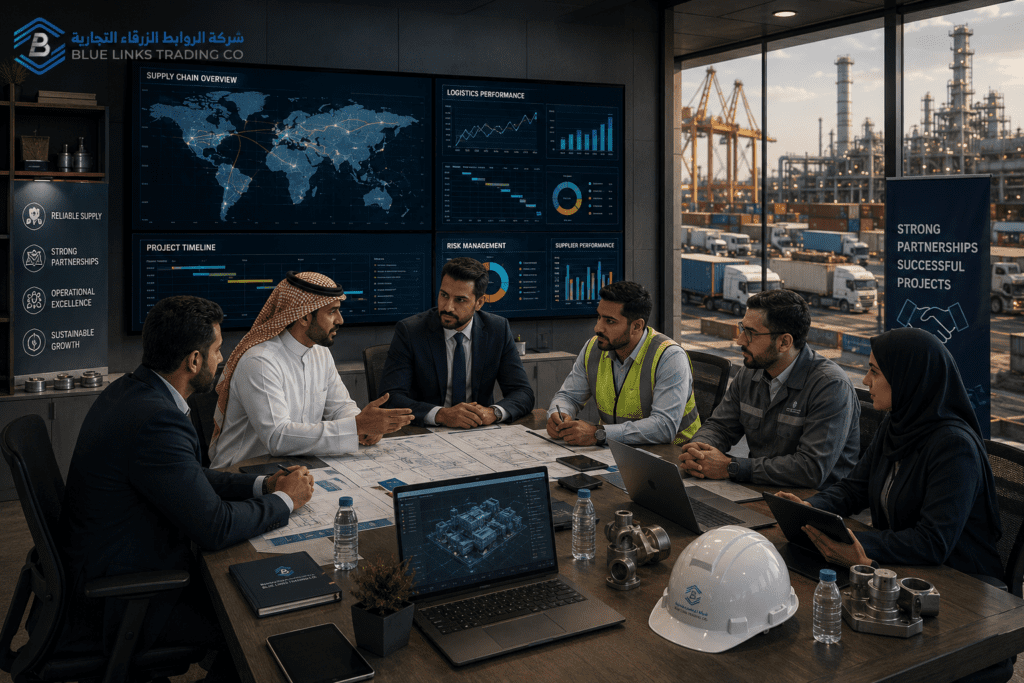
Strong supply chains are not built through procurement systems alone. They depend heavily on the quality, reliability, and operational maturity of the partners involved throughout the project lifecycle. In Saudi Arabia’s industrial sector, choosing the right supply chain partner can significantly reduce Supply Chain Project Risk and improve long-term project stability.
Many infrastructure disruptions occur because suppliers and logistics providers are selected primarily based on short-term cost considerations. While competitive pricing remains important, modern industrial projects require partners capable of supporting operational continuity under complex and rapidly changing conditions.
Reliable supply chain partners contribute far beyond product delivery. They support technical coordination, operational planning, logistics visibility, maintenance readiness, compliance requirements, and field responsiveness. These capabilities become especially valuable during periods of uncertainty when projects face scheduling pressure or operational disruption.
In large infrastructure environments, communication speed can directly affect project outcomes. Procurement delays, shipment issues, or technical clarification requests require rapid coordination between suppliers and project teams. Partners lacking operational responsiveness often increase exposure to Supply Chain Project Risk because problems remain unresolved for longer periods.
This is why many industrial organizations now prioritize long-term operational relationships instead of transactional procurement models. Strategic supplier collaboration improves visibility, accelerates communication, and creates stronger alignment between procurement activities and project objectives.
The importance of operational trust becomes even more critical in sectors involving excavation, utilities, transportation infrastructure, and industrial maintenance. These environments require suppliers capable of providing not only equipment, but also technical expertise, operational guidance, and after-sales support.
For example, contractors working in high-risk excavation environments increasingly rely on experienced providers of vacuum excavation technologies to improve operational safety, reduce infrastructure damage, and maintain more controlled field operations.
Another important advantage of reliable supply chain partners is operational adaptability. Infrastructure projects rarely proceed exactly as planned. Design adjustments, environmental conditions, procurement changes, or scheduling modifications may require rapid operational response. Suppliers with strong technical capabilities and flexible logistics systems are often better equipped to support these evolving project requirements.
Local market experience is equally important for reducing Supply Chain Project Risk. Partners familiar with Saudi Arabia’s regulatory environment, transportation infrastructure, customs procedures, and industrial standards are typically able to manage operational challenges more efficiently than suppliers with limited regional experience.
Technical support also plays a major role in operational resilience. Equipment downtime, maintenance requirements, or unexpected field issues can quickly affect project schedules when support systems are weak or delayed. Organizations increasingly prioritize suppliers capable of providing rapid troubleshooting, spare parts availability, and specialized field assistance when needed.
This growing emphasis on operational continuity is one reason why many infrastructure developers are strengthening partnerships with experienced providers of advanced MTS DINO suction excavation systems, particularly in technically sensitive infrastructure projects where operational reliability is essential.
Transparency is another defining characteristic of strong supply chain partnerships. Reliable partners maintain clear communication regarding production timelines, shipment schedules, technical limitations, and operational risks. This visibility allows project teams to make faster and more informed decisions when adjustments become necessary.
The future of industrial procurement in Saudi Arabia will likely depend increasingly on collaborative operational ecosystems rather than isolated supplier relationships. As projects grow more interconnected, companies capable of building trusted procurement and logistics partnerships will gain stronger operational resilience and reduced exposure to disruption.
Ultimately, reducing Supply Chain Project Risk requires more than strong internal systems. It depends on building a reliable network of procurement, logistics, and technical partners capable of supporting stable project execution across every stage of the operational process.
Future of Supply Chain Risk Management in Saudi Arabia

Saudi Arabia is rapidly becoming one of the world’s most ambitious infrastructure and industrial development markets. As projects continue to increase in scale and complexity, the future of supply chain management will depend heavily on resilience, digital transformation, operational flexibility, and predictive planning. Managing Supply Chain Project Risk will remain central to maintaining sustainable project growth across the Kingdom.
One of the biggest future trends is the shift toward fully integrated supply chain ecosystems. Instead of treating procurement, logistics, engineering, and field operations as separate functions, organizations are increasingly combining these activities into unified operational frameworks capable of improving visibility and reducing response time during disruptions.
Digital transformation will continue playing a major role in this evolution. Smart procurement systems, AI-driven forecasting, predictive logistics monitoring, automated reporting platforms, and cloud-based coordination tools are expected to become standard operational requirements across large infrastructure projects.
These technologies will help organizations identify operational vulnerabilities earlier while improving decision-making speed and supply chain transparency. Companies capable of combining digital intelligence with strong procurement strategy will likely experience lower exposure to Supply Chain Project Risk in future infrastructure environments.
Saudi Arabia’s continued investment in smart cities, logistics hubs, renewable energy projects, and transportation infrastructure will also increase demand for highly specialized procurement capabilities. Infrastructure developers will require suppliers capable of supporting technically advanced operations while maintaining strict delivery performance standards.
This transition is already influencing excavation and utility infrastructure strategies across the Kingdom. The growing adoption of advanced suction excavation technologies in road infrastructure projects reflects the market’s increasing focus on safer, more controlled, and lower-risk operational models.
Sustainability is expected to become another defining factor in future supply chain operations. Organizations will increasingly evaluate procurement systems not only based on speed and cost efficiency, but also environmental performance, resource optimization, and long-term operational sustainability.
Supply chain resilience will also become more closely connected to national infrastructure security. As Saudi Arabia expands its industrial and transportation networks, maintaining stable procurement operations will become increasingly important for economic continuity and strategic development objectives.
Another important trend is regional localization. Many organizations are expected to strengthen local supplier networks and regional manufacturing partnerships to reduce dependency on unstable international supply routes. This approach improves operational flexibility while supporting industrial growth inside the Kingdom.
The future will also require stronger workforce integration. Procurement specialists, logistics coordinators, engineers, project managers, and technical operators will need closer operational alignment to manage increasingly interconnected infrastructure environments effectively.
Industry research from the World Economic Forum continues to emphasize the growing importance of resilient and digitally integrated supply chains for maintaining long-term infrastructure stability and economic competitiveness worldwide.
At the same time, operational risk management is expected to become far more predictive than reactive. Companies will increasingly rely on data-driven forecasting models capable of identifying supply chain vulnerabilities before disruptions occur. Organizations investing early in operational intelligence and infrastructure resilience will likely gain significant competitive advantages in Saudi Arabia’s evolving industrial market.
Ultimately, the future of Saudi infrastructure development will depend not only on engineering capability or financial investment, but also on the strength and adaptability of the supply chains supporting these projects. Companies capable of building resilient procurement systems, trusted supplier partnerships, and digitally integrated logistics operations will be significantly better prepared to reduce Supply Chain Project Risk while supporting the Kingdom’s long-term development ambitions.
🟦 Frequently Asked Questions (FAQ)
Conclusion
As Saudi Arabia continues accelerating its infrastructure and industrial transformation, supply chain resilience is becoming a decisive factor in project success. Procurement instability, logistics disruption, supplier dependency, and operational coordination failures now represent some of the most significant threats facing modern infrastructure projects.
Organizations capable of strengthening procurement visibility, supplier collaboration, logistics flexibility, and technical readiness are significantly better positioned to reduce Supply Chain Project Risk while maintaining stable execution performance under demanding operational conditions.
The future of successful infrastructure development in Saudi Arabia will depend not only on engineering capability, but also on the ability to build resilient, intelligent, and adaptable supply chain ecosystems capable of supporting long-term operational continuity.
To learn more about advanced industrial procurement strategies, excavation technologies, and infrastructure risk reduction solutions, explore the expertise and operational solutions offered by
Blue Links Trading Company.